Everyone has a favourite song – a tune that makes them think of times with their friends or a loved one. Maybe it’s a song that reminds them of a special occasion, or it’s just a brilliant anthem.
Or perhaps it’s your favourite song because it’s factually accurate?
Maybe not. That’s probably a good thing too as a number of chart-toppers and best-selling songs have been particularly creative with their lyrics.

The songwriters are using poetic licence – changing some of the facts or rules to make the narrative of the song more interesting, effective or in some cases, to fit the rhythm or rhyme.
BBC Bitesize takes a cheeky look at a few of the things some songs have technically got wrong.
1 – The Lion Sleeps Tonight by various artists
While the song is more commonly known today for its inclusion in The Lion King and in an episode of Friends, the origins of The Lion Sleeps Tonight go back much further.
The original version of the song, called Mbube, meaning lion in Zulu, was created in 1939 by South African singer Solomon Linda. It was later re-recorded by American folk group The Weavers – controversially, as Linda was not credited for his work at the time.
Linda’s version repeated the phrase ‘Uyimbube’ – Zulu for ‘You are a lion’ – but The Weavers misheard the lyric and changed it for the made-up word Wimoweh, which also became the song’s new title.
A later version created by American band The Tokens kept the Wimoweh refrain but also introduced lyrics, albeit slightly inaccurate ones. In the modern version, we hear “In the jungle, the mighty jungle, the lion sleeps tonight.”
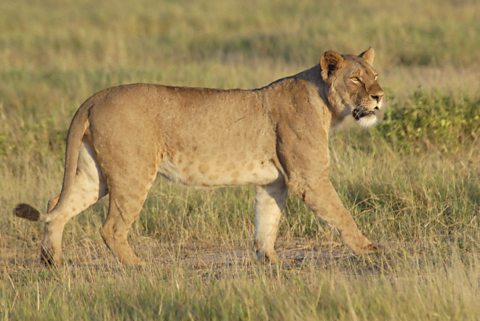
In fact, lions are primarily nocturnal animals, meaning they generally sleep during the daytime, rather than at night as suggested in the song – using the cover of darkness to hunt for prey.
They are also frequently referred to as the king of the jungle – despite not living there. Lions actually live in grasslands or savannahs.
There is a happy ending to this song’s story, though. Linda originally sold his song to the South African recording company Gallo Records for 10 shillings, less than $2 at the time. The song has since gone on to make more than $15 million and Linda’s family received a financial settlement recognising the song’s original creator.
2 – Year 3000 by Busted
We’ll have to wait the best part of a thousand years to verify just how accurate Busted’s vision of the future really is.
The song claims that by the year 3000, we’ll all be living underwater, which could be a terrifying premonition of the effects of climate change on the planet.
We’re also informed that someone’s great, great, great granddaughter is "pretty fine" – but it’s unlikely they’d still be alive at the time.
Based on figures released by the Office of National Statistics (ONS), in 2018, the average age at which people in the UK became parents for the first time was 30.6 for women and 33.6 for men.
Similarly, life expectancy for children born in 2018 is predicted by the ONS to be 87.6 years for boys and 90.2 for girls.
Using that data, if a boy was born in 2018 and had a daughter, who in turn had a daughter and so on, with everyone following the average age patterns, his great, great, great granddaughter would be born in 2174.
Based on the current life expectancy, they would live for around 90 years, taking them to 2264 – some 700 years short of fulfilling Busted’s prophecy.
Even if you take into consideration the likelihood that rates will increase - current ONS data shows a projection that boys born in 2043 will have a life expectancy of 90.4 years, with girls at 92.6 years, while the age parents have their first child has risen by just over four years since its lowest point in the 1970s - the great, great, great granddaughter might get to see in the 24th Century, but the year 3000 seems unlikely.
And while some scientists believe that certain sub-atomic particles may travel back in time, the technology for us to travel back and forth thanks to a flux capacitor, such as in Back to the Future films, does not exist.
3 – Pride (In the Name of Love) by U2
Irish band U2 released Pride in 1984, a song about Dr Martin Luther King, who led the American civil rights movement in the 1950s and 1960s.
The third verse begins with the lines: “Early morning, April four, shots ring out in the Memphis sky.”
The lyric is recounting Dr King’s assassination in 1968 – but the murder actually took place in the evening, just after 6pm.
U2’s lead singer and the writer of the song’s lyrics, Bono, has admitted this line was a mistake on his part – and he often replaces the word morning with evening during live performances.
4 – Don’t Stop Believing by Journey
Another classic from the 1980s, American band Journey’s best-known song gained popularity in recent years after appearing on the hit TV show Glee.
The track – which is the best-selling digital track recorded in the 20th Century, with more than seven million copies sold – makes a fairly basic geographical mistake in its opening verse.
The lyrics refer to “Just a city boy, born and raised in south Detroit,” but don’t mention the fact that no such place exists.
Detroit, the largest city in the US state of Michigan and the original home of car manufacturer Ford, is next to the American/Canadian border, directly south of the city itself. The two countries are separated by the Detroit River.
The only South Detroit that exists is a restaurant in the Canadian city of Windsor, a few blocks away from the waterfront.
Former lead singer of the band Steve Perry, one of three writers of the song, admitted he'd got it wrong in a 2012 interview, revealing that he'd used South Detroit because it sounded and felt better than east, north or west.
Speaking to the website Vulture in 2012, Perry said: “It’s only been in the last few years that I’ve learned that there is no South Detroit. But it doesn’t matter.”
5 – Hello by Adele
Adele’s 2015 comeback song Hello was an incredible success around the world.
The ballad topped the charts in 36 countries, going triple platinum in the UK, selling over 1.8 million copies.
But how does it fare on the scale of factual accuracy?
After having already mentioned that she is in California, Adele sings that “There’s such a difference between us, and a million miles.”
So where on earth could the person Adele is singing to be, if they’re a million miles away?
Assuming the singer-songwriter was in Los Angeles in California, the furthest city with a population of more than 100,000 people would be Saint-Paul on the island of Réunion, a French territory in the Indian Ocean.
However, Réunion is only 18,429km from Los Angeles – just under 11,500 miles. Given the circumference of the Earth is only 24,901 miles, it is impossible for anyone to be a million miles away, and still be on the planet.
But what of space? Could Adele’s song be about a friend or ex on a mission to the Moon?
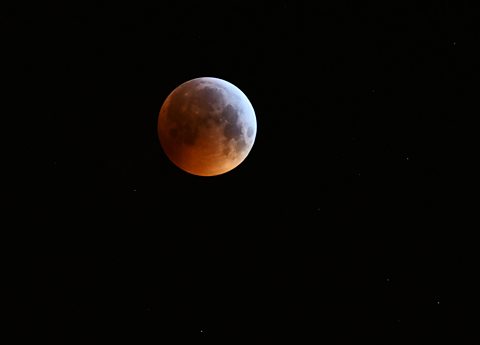
Only if they have got very, very lost. The Moon is an average distance of 384,400km away from our planet, or just under 240,000 miles.
The furthest any human has ever gone from Earth was on the Apollo 13 mission in 1970 when the crew of Jim Lovell, Fred Haise and Jack Swigert found themselves 400,171km (248,655 miles) from home while passing over the far side of the Moon.
There are unmanned satellites around a million miles from Earth, such as the Deep Space Climate Observatory, but it seems unlikely that Adele co-wrote a heartfelt ballad dedicated to the technology used to produce space weather alerts and forecasts.

Six blockbuster films that got history wrong
From Bohemian Rhapsody to Titanic, movie-makers have been very creative with historical timelines.
Hot or not? Is the summer hit a timeless phenomenon?
Will the phenomenon of the song of the summer stand the test of time?

Three ways we transform language without realising
How a new pair of trainers have come to be as iconic as the Mona Lisa