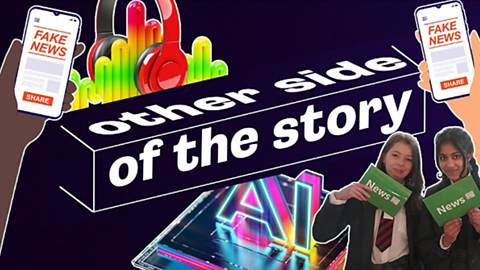
Once again, the 2025 Met Gala has seen fake images of celebrities going viral on social media, fooling even seasoned fashion experts.
These are the latest in a string of viral AI-generated “fakes” including a recent image of Donald Trump dressed as the Pope, which was criticised after the US President shared it on social media.
As AI technology evolves, distinguishing what is real and what is fake is getting harder. According to a 2024 Ofcom report, 69% of children aged 12–17 say they feel confident in judging whether something they see online is real or fake. But confidence doesn’t always guarantee accuracy.
So, did the Met Gala AI images fool you? Here are some top tips on how to spot the real from the AI.
1. Check for visual anomalies
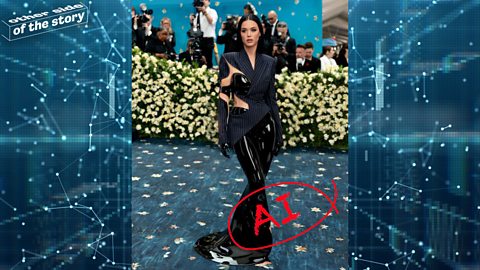
Fans labelled Katy Perry's look as the ‘outfit of the night’, awarding her the ‘best dressed’ title on X even though the image wasn’t real.
While the AI-generated image of Perry in a cut-out pinstripe blazer and black latex maxi skirt may have fooled many, a closer inspection reveals subtle flaws. AI images often show inconsistencies such as uneven lighting, distorted features and overly smooth skin textures.
One clear giveaway is the detail around Perry's waist, where the dress seems to blend into her skin, which is often a sign of an AI creation.
Perry later confirmed the image was fake by sharing it on Instagram, with the caption, “Couldn’t make it to the MET, I’m on The Lifetimes Tour (see you in Houston tomorrow IRL)”.
This is the second year in a row that a fake image of Katy Perry at the Met Gala has gone viral.
2. Examine the background
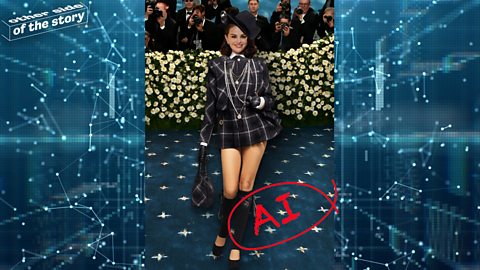
This picture of Selena Gomez supposedly at the 2025 Met Gala may seem real at first but take a closer look and you’ll notice there are several inconsistencies.
Not only does it look as though Gomez is missing a left hand, but the glove on her right hand appears to be blended into the bag she's carrying.
Other details to look out for include the photographers in the background who are distorted and stretched, with one photographer on the left even appearing to be missing a face. Also, the overly smooth skin texture could be a giveaway of something being highly edited.
When evaluating the authenticity of AI-generated images, scrutinising the photograph is crucial. AI often struggles to create seamless and realistic backgrounds, leading to odd or mismatched elements that can easily reveal the image’s artificial nature.
3. Reverse image search
If you've checked for visual anomalies, examined the background and are still none the wiser, another good option is to do a reverse image search.
This will identify other places on the internet that the photo exists and can be helpful when trying to determine if a picture is AI or real.
A reverse search can also lead you to the original source of the image, which may identify the picture as AI-generated, through the use of hashtags or the source's name. Another thing to note is whether the image comes from a trusted website.
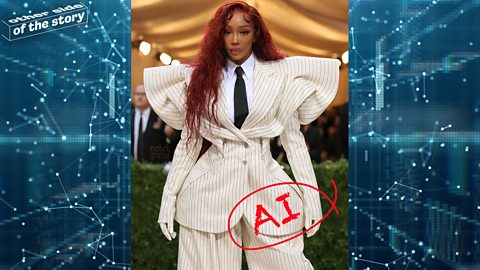
With this image of SZA, X has labelled the post to make users aware that it is AI-generated.
As creating AI images becomes easier and more accessible, it's important to be critical about what you are viewing online. This can help ensure that you are not spreading misinformation.

Not sure if the news you’re seeing on social media is true or false? Can you always tell if the things you see online are real or fake?
Learn how to get the other side of the story with our quizzes, videos and explainers about media skills and viral trends including popular food myths.

Other Side of the Story
Back to our homepage for more quizzes and explainers about fake news, viral trends and media skills.