Revision season is well underway, and if you are studying for your GCSE or National exams you may be feeling a bit snowed under with all the past papers, notes and study guides. Let's face it, revising can get a bit dull, especially those marathon solo sessions with no end in sight. If only there was a better way, which there is!
As always, Bitesize has your back. We've pulled together some ways for you to spice up those revision sessions and help you know how to study properly for your exams, by making it much more fun. Check out our tips below.

Make sure you are using flashcards properly
If you are just reading your flashcard notes over and over, not only is this a really boring way to revise, but you aren't using them to their full potential. But don't worry – we've got some tips to help you get back on flash-track and really mix up your revision sesh, making it much more productive.
How to create flashcards
- Good flashcards will have a couple of keywords or a question on one side and then the answer or explanation on the other.
- The best way to use flashcards is to test yourself! Use the keywords or question on the first side to prompt you, then try recalling from memory what's on the other side. You can write down what you've recalled or just do it in your head.
- Many of us make the mistake of flipping the flashcard too soon, but you really want to try to recall what's on the flashcard from memory first before you flip the card to see the answer.
- If what you've recalled from memory is wrong or incomplete, don't worry. This exercise is all about showing you what you don't yet remember so you can work on getting it right next time. Take some time to read the correct information, then try again. Repeat this until you get it spot on every time!
- If you have difficulties reading or writing flashcards then you could try using voice notes, speech-to-text or flashcard apps on your phone or computer.
Check out some more tips on how to make a good flashcard here.
Take a study break
You've hit the studying wall and, no matter how hard you try, you can't focus on your History revision – anything is more interesting than King John and the Magna Carta right now… that bird in the tree, your nan's old knitting magazines, you'd even consider volunteering to do the ironing…But what if we told you that it's better to break your studying up into manageable chunks? That's right – you have permission to have a study break!
One way to get started and to stay focused is to plan shorter, more focused study sessions – concentrated studying for 20-25 minutes – and then 5-10 minutes to do whatever you want: check your phone, message your friends, stand up and stretch. After your distraction time, knuckle back down and re-focus your attention with another round of studying. You'll be surprised at how much you get done when you create those more manageable study sessions that allow you to stay focused.
Find out more about setting study goals, and taking regular breaks from studying here.
Variety is the spice of life… or revision
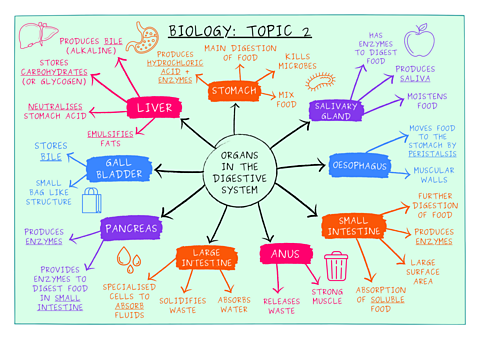
It's a good idea to interact with what you're learning in lots of different ways, this is known as dual coding and it should help you have a much better understanding of the topic. For example, when you read a text passage explaining something, you could try to draw an image that captures what you've just read. This could be in the form of a mind map or a flow chart – adding an image to illustrate something you read can help you visualise how different ideas are linked to each other more easily.
Dual coding will really help boost your understanding of the topic because you are using multiple different learning methods to understand a topic and solidify it in your mind. Here are some more tips on how to use duel coding in your revision.
Learn from the experts
Our expert memory hacks are a game changer that can really ramp up your revision and make it feel more fun.
Rather than using passive revision techniques such as reading through notes, you can use active methods to really solidify the things you need to learn into your memory. Mnemonics is one technique that you can use to remember all kinds of things, for example in physics, the visible light spectrum can be remembered by Richard Of York Gave Battle In Vain… the more bizarre the better. You can use things that are personal to you to help you remember.
Another technique you can use is the 'memory palace', which can help you visualise and remember sequences by linking words to objects in an imaginary room. You can write a story using the objects and tell the story from memory to recall that list of words.

Do some exercise!
You probably know that exercise benefits your physical health, but did you know that exercise can also boost your memory, improve focus and concentration, and increase energy levels? And all of these things can help with your revision and academic performance!
You can plan exercise into your revision timetable. Make sure you regularly take a break from your books to do something active. If you're feeling tired whilst revising, taking fifteen minutes out to do something active is a great way to boost your energy levels.
You can even revise when exercising, download an episode of the Bitesize revision podcast and listen to it whilst you workout!

If you need support
You should always tell someone about the things you’re worried about. You can tell a friend, parent, guardian, teacher, or another trusted adult. If you're struggling with your mental health, going to your GP can be a good place to start to find help. Your GP can let you know what support is available to you, suggest different types of treatment and offer regular check-ups to see how you’re doing.
If you’re in need of in-the-moment support you can contact Childline, where you can speak to a counsellor. Their lines are open 24 hours a day, 7 days a week.
There are more links to helpful organisations on the BBC Bitesize Action Line page for young people.
Revision: Top revision tips
Smart revision advice from those who've been there.

Five tips to help boss your GCSE Maths revision
We look at some simple hacks, tips and tricks to help you boss your GCSE Maths revision.
Revision: What to do if you've left it late
Some last-minute revision tips to help you make the most of your remaining prep time.