Experts, well-established organisations and trusted news outlets. These are some of the people we look to when we need a reliable source to back up whether something we see online is fake news or not. That includes when we want to check the weather forecast for the next few days.
But when it comes to predicting rain, sun or snow, absolute certainty is not easy. As the experts have explained before, it’s a difficult thing to forecast with accuracy - and there can be fake or wildly inaccurate weather stories on our socials proving a distraction.
BBC Weather and the Met Office, the UK’s national weather service are among the experts - and they’re about to start working together, with the aim of bringing us the most accurate weather info possible.
The team say it will be “the most trusted service” in the country but how can we be sure? BBC Bitesize Other Side of the Story asked them a few questions.
How will BBC Weather and the Met Office work together?
A Met Office spokesperson told Other Side of the Story: "The Met Office supplies the trusted forecast data and guidance for BBC Weather presenters.
"Working with the Met Office, the BBC will produce hundreds of UK-wide, local and global forecasts every week on TV and radio, alongside forecasts on the BBC Weather app and website.
"The BBC and the Met Office work together as partners but remain independent organisations, with their own graphics and weather symbols. The forecast data should be consistent, although there may be times when the way the conditions are represented don’t exactly match. Forecasts are monitored closely to ensure any variations are not confusing or misleading."

What makes the Met Office a reliable source?
The spokesperson continued: "The Met Office has been working on weather forecasts for over 170 years and has undertaken huge leaps forward in technology and processes to improve forecasts.
"Met Office forecasts are backed by scientific research, state-of-the-art technology and expert meteorologists. This process helps the Met Office maintain high scientific standards and continue to increase the accuracy of its weather forecasts.
"Part of the Met Office’s role is to conduct and provide impartial science, data and insight. People, the government and different industries can then use this information to make better decisions around the weather and climate.
"Met Office data, gathered from a range of sources, adheres to strict national and international standards and rigorous quality assurance processes are in place to ensure high standards are maintained. We continually test, verify and refine our data and processes to maintain these high standards.
"This not only ensures the Met Office produces reliable and trustworthy information, it means that new and innovative science can continue to be developed in a way that can be trusted."

“Where is it snowing right now?” - how accurate will the new forecasts be?
The spokesperson said: "Thanks to new technology, four-day forecasts from the Met Office and BBC are now as accurate as the forecast for the next day was only 30 years ago.
"Even with modern computer power, forecasting further ahead can be tricky because even very small changes in atmospheric conditions can mean big changes for the conditions we may experience.
"The Met Office has done new research on medium-range forecasting to create what we believe is the best forecast, every hour for the next 10 days. Remember, if you've got something important happening, keep checking back because the weather can and will change!"
“Is there a snowstorm coming?” - what do you say to people who look to their socials for weather information?
Misleading weather stories can spread online because dramatic headlines attract attention and clicks, particularly around extreme weather. Social media algorithms can spread stories by showing people similar content repeatedly, even when the information is wrong or misleading, creating an echo chamber.
Met Office presenter Aidan McGivern explains that “As a general rule, look for information from meteorologists, scientists, government organisations, universities, international expert bodies and independent factcheckers. Check that it is up to date and consider whether the source has the expertise to support its claims, or a reason to mislead. If you’re unsure about a claim, check it against other reliable sources before sharing it.”
How accurate are BBC Weather and the Met Office?
Even with modern computer power, forecasting further ahead can be tricky because even very small changes in atmospheric conditions can mean big changes for the conditions we may experience. For example, if there's a 20% chance of rain, it means that out of 100 situations with similar weather, it should rain on 20 of those occasions. That also means it won't rain on 80 occasions when those conditions occur.
Met Office presenter Aidan McGivern adds “Forecasting is not just about giving one possible outcome, instead we look at the range of possibilities and how likely they are. By presenting forecasts that communicate uncertainty, we better enable people to make informed decisions so they can stay safe and thrive.
“We run forecast models multiple times with minor changes in starting conditions to explore how the weather could develop. When the results are similar, it gives us greater confidence in the forecast, the opposite is true when outputs differ.”
This article was published in November 2026

Not sure if the news you’re seeing on social media is true or false? Can you always tell if the things you see online are real or fake?
Learn how to get the other side of the story with our quizzes, videos and explainers about media skills and viral trends including popular food myths.
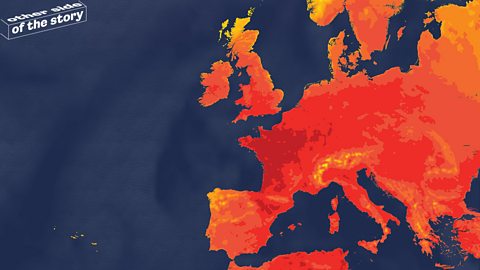
What do the colours on the weather map mean?
Why we're seeing darker reds appear in warmer summers
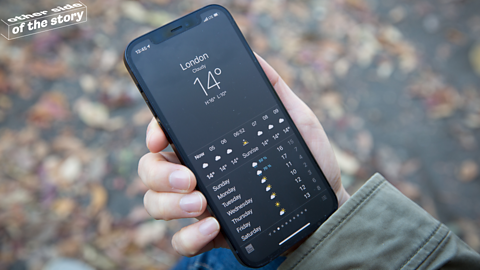
How accurate is your weather app?
Separate fact from fiction in the weather chat you see online.
Other Side of the Story
Back to our homepage for more quizzes and explainers about fake news, viral trends and media skills.