Although the ongoing global pandemic means it will look very different this year, millions of people across the globe will be preparing to celebrate Diwali this weekend.
It’s a five-day festival of lights, and traditionally marked by lighting lamps in people’s homes - the word Diwali comes from the Sanskrit word deepavali, meaning "rows of lighted lamps".
How the festival can still be celebrated during the Coronavirus pandemic
The festival is something of a moveable feast as the Hindu calendar is based on the cycles of the Moon, but it always falls in either October or November. This year, Diwali is on 14 November and will finish on 19 November.
Diwali in Hinduism
The festival's traditions vary slightly, religion by religion. The National Hindu Students' Forum in the UK explain that Hindu people “celebrate by remembering the story of Ram Bhagwan's victory over Raavan, decorating their houses and filling them with lamps and cooking delicious food which is shared with friends, family and neighbours”. Fireworks are also a common feature of the festival - in the UK the legal time you’re allowed to set them off until is extended for one night, specifically for Diwali. It is an important date in the Hindu calendar because it is a symbolic celebration of the “triumph of good over evil, light over dark and knowledge over ignorance.”
Jainism and Diwali
For Jain people, some of the activities they’ll participate in are similar, but their reason for celebrating is slightly different. Diwali for the Jain faith is celebrated for two reasons: Firstly, to remember the final liberation or death of Mahāvīra (an important figure for Jain people, who’s name means ‘great hero’ in Sanskrit). Secondly, Mahāvīra’s chief disciple Indrabhūti Gautama's enlightenment. A spokesperson for Young Jains explained that in lots of ways, the way the festival is celebrated is very similar to that of the Hindu tradition: “We traditionally light candles and organise large social gatherings with good food and music. Some of the members will fast during this period.”
Another difference is that it’s less common for Jain people to use fireworks, due to concerns about the environment and wildlife. While members of both faiths light candles, the act of doing so holds different significance in the Jain faith: “When we light a diya (earthen lamp) the activity involves using an already lit diya to light another… this is the light of self realisation; as one diya can light another, a lit (knowledgeable/realised) soul can help another soul light, or realise true knowledge.”
Sikhism: Bandi Chhor Divas
For Sikh people, Diwali coincides with another celebration called Bandi Chhor Divas. This celebrates the release from prison and return to Amritsar of the sixth guru or spiritual leader, Guru Hargobind, in 1619. In the Sikh faith, it’s celebrated in conjunction with, and in much the same way as Diwali. A spokesperson for the British Organisation of Sikh Students said that in normal years “we dress up in our traditional sikhi bana (attire), wearing beautiful damallas (turbans) and swords before heading off to our local Gurdwara.”
Other festive activities include lighting candles, eating the langar or feast, and receiving a parsaad (sweet dish).
The festival is especially popular with children: “The kids love the festival of Bandi Chhor. Every year we turn on our 'Christmas' lights on Bandi Chhor day!”
Covid-19 has had a massive impact on the celebrations for all of the three religions this year, as it has with pretty much every religious celebration since it struck - families in parts of the UK won’t be able to gather and public firework displays have been cancelled, but many people are still going to be celebrating online.
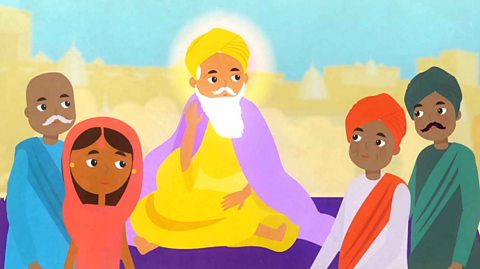
What is Sikhism?
An easy guide to the 500 year old faith.
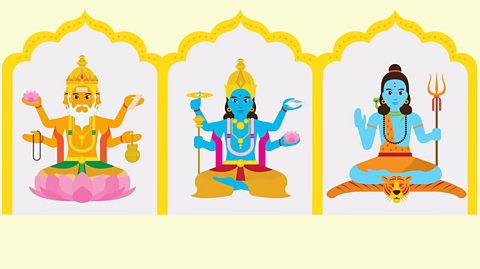
What is Hinduism?
Learn about the religion of Hinduism, its gods and its holy book.
More Primary Religious Education content
If you have a child in KS2, check out these RE resources.