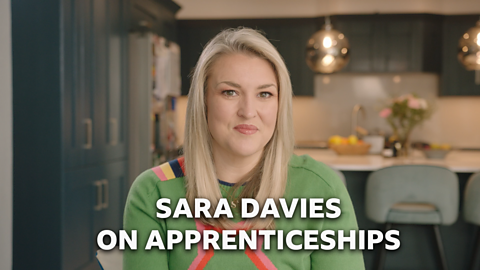
Businesswoman and entrepreneur, Sara Davies is founder of the multi-million pound business, Crafter's Companion, and also a former investor on Dragons' Den.
As part of National Careers Week 2026 Sara talks to Bitesize Careers about her career journey to date, and shares some inspirational tips on how to succeed in business and life as well as how she felt when she made her first million pounds. Here what Sara has to say in our first ever Bitesize Careers Talk.
So many times I'd let that imposter syndrome hold me back and stop me from reaching my full potential, and now I don't ever let it hold me back. You learn an awful lot more from the mistakes you make than the successes that you have. You are good enough, and the only thing that is holding you back is you. It's your career, you're in control of it, you're in charge of where it goes, and it's within your gift to make it immensely successful. If you believe in yourself. Hi, I'm Sara Davies, I'm a businesswoman and entrepreneur, and I'm here to tell you all about my career journey for BBC Bitesize as part of National Careers Week. Now, I can remember when I was at school, I just I had no idea what it is I wanted to be when I grew up, and I really enjoyed school and I can remember I really liked my history teacher, so I thought maybe I'll be a history teacher when I grew up because she's really cool and I could be just like her. And I mean, that's the whole thing of just having no idea. Now, I grew up in a family where we had a family business, so my mum and dad had the local wallpaper and paint shop in the village, and because I'd grown up having to help out in the shop, you know, my Saturday mornings would be spent serving customers. So I always had a bit of an interest in the family business, just so that I could help out, but I didn't think that was going to be my career. I didn't think I'd grow up and take over the family business, and it wasn't until I was maybe 13, 14, maybe even 15, and I started doing business studies at school as well. And I can remember doing the business studies lessons, and I didn't I didn't really feel like I was learning anything because all the stuff we'd be talking about in business studies was just stuff that felt really common sense to me. And looking back, I understand that it felt like common sense because I'd grown up in that environment, whereas to other people they were learning that. So I found it really interesting, I really got into it, and I used to do really well in the exams for business studies. So I guess from that I thought, well, I'll do business studies for my GCSE, and then it went to I'll do business studies at A-level, and then it was like, well, I think I'm quite good at this. I'll go off to university and do business studies and I'll learn about the world of business so that I can teach my mum and dad how it should be done in the 21st century. So that was always my motivation. So the history teacher, that aspiration became a long forgotten dream. Maybe that would become a business studies teacher now, or maybe I actually might just go and take over the family business. So I went off to university to do a management degree, and it was one of those degrees where you do a couple of years studying, and then you go off into the big wide world of work and do a year's work placement, and then you're supposed to come back and put everything that you've learned in the real world back into the theory and write about it. So that was the kind of structure of what I was doing, and in that year that I went and did my placement, and I'm a proper country bumpkin. So most of the placements, all the other kids went off to London or to the big cities, and I didn't want to do that. So I organised my own placement, and I ended up working for this tiny little craft company. And I mean, craft was an industry, honestly, I didn't even really know existed. I had no idea that all these people made handmade cards, and it was a multi-million pound industry. So I had my eyes well and truly opened. So I worked for this little company, and I fell in love with the crafting, and it wasn't doing the crafting. It was all the people who crafted they, they love it so much. It's more than a hobby to them, It's a real passion and they just seem like lovely customers. And I thought, well, I want to start the business in this industry because these customers are always happy. They don't complain. You know, it's just wonderful and it seems a lot better than wallpaper and paint. So I had to learn to craft, and back in those days, like YouTube wasn't a thing and I had to take night classes in how to craft, I did a City and Guilds night class in crafting. I learned how to craft so that I could know more about the industry, and I had loads of ideas for the business. Went to the woman who ran the business, said he's all my ideas. And she looked at us like I had three heads. She's like, no, no, I'm the crafter. You're just the business studies student, so you can tell me about business, but basically don't tell me how to craft. So all these ideas, I went back into my final year of uni, was still feeling like I was studying so that I had the skills to take over the family business, but I had all these ideas for a crafting business that she hadn't wanted to pick up and run with, and the problem with me is if I have an idea, we're doing it yesterday. I can't wait for anything. So I chatted to my dad and he said, okay, if this is what you want to do, just do it. So next thing I know, I started the crafting business as a bit of a side hustle on evenings and weekends in my last year of uni, so I was juggling it around all of my uni work and then doing bits in an evening. And I started the business, built the business up, and by the time I graduated the following summer, I'd graduated with the intent of coming and taking over the family business, but within nine months, the little crafting side hustle that had started had become bigger than my mam and dad's shop. You know, we were turning over more money in that business, making more profit than their business that had been gone for 25 years. So I was like, huh, I guess I'm in the craft industry then! I moved back home, my dad built me a little office, my best friend's mum came to work for me, and the thing is, I'd never run a business. I'd watched my mam and dad do it, I'd learned how to do it from a textbook, but the reality of doing it was a whole different ballpark, and what I found is I just had to learn on the job. You know, I almost had to make it up as I was going along, and what I learned quite quickly is you learn an awful lot more from the mistakes you make than the successes that you have. And it's from making the mistakes and adjusting and having to move on from that. Because the thing is, when I got something right, you didn't stop and reflect and think, oh, I did that really well, I got that right, because you just moving on to the next thing! When you got something wrong, it would be like a real oh right, we've done that wrong. Okay. Let's think about this. How do we maneuver? How do we pivot? You'll always hear about people talking about pivoting their business. But how do we really we're going in this direction, it's not working, how do we switch and go and do something different? But the thing that I always struggled with, and I mean, I always, always struggled with, is I was quite often the youngest person in the room, I was quite often the only woman in the room and I used to find I would go a lot of places, and there wasn't a lot of other people that sounded like me, and the problem with that is whenever I would go somewhere, people seem to assume, because I'm clearly, you know, from the north and and I sound like this, I'm not as well-educated as they are, I'm not as clever as they are, so people always underestimated me, and I used to find that really frustrating at first, and then I thought, actually, it's the opposite of that, It's my superpower. The fact that I can go into any room and be underestimated means people aren't expecting anything of me, and then when I do achieve something, I can really knock their socks off. And I can always remember I was nominated for a really big award and I went to the, it was like a dinner, one evening where we got to meet all the other candidates, and they were all lads, they were all older than me, and everybody would network and walk around the room, and nobody seemed to have any time for me, you know, because they'd come up to me and they'd say, oh, well, what's your business? I'd say, oh, I'm in crafting, and I could see their eyes roll, thinking, oh, it's a little two bit businesswoman here. They had no idea what I did, they didn't want to take the time to get to know, because clearly I wasn't as good as they were, and I can remember the night that I won the award, and all these other people who'd had no time in the world for me at all, sitting there, assuming that they were probably good enough for no good to have won that award. I had gone with my boyfriend to thinking I was never in a million years going to win this award, but at least it was a free dinner and a night out. And of course, when I did win, the shock on my face and I remember getting up from the table and walking to the front of the stage was a massive hotel in London, going to the front of the stage to collect the award. With all these gaping faces staring at me on the way past thinking oh my word, how she won this. And I just my little chest stuck out a little bit, my chin went up and I was proud as punch walking to that stage. But then also, there was this bit of a sort of thought, well, why did they pick me? There's nothing special about me. You know, in my head, everything I was doing was still very much common sense, and I used to quite often think everything was a fluke. You know, in my head, nothing I had done was in any way special. So why was my business becoming successful when others weren't? Why was I winning these awards when other people weren't? And I think it's that imposter syndrome, you know, so many people suffer from it and find it crippling. And I used to get opportunities to sit on boards or get involved in panels for things, and, and I used to think, well, I don't know how I've got this opportunity, but I'm going to go and just fake it til I make it and totally wing this whole thing and hope they don't work out that I'm not quite as good as I'm cracked up to be. And I think now I'm in my 40s, I look back on that and I think, yeah, I was really good, I was brilliant at that, no wonder they wanted me. But in the moment, at the time, I spent the whole time feeling totally crippled with anxiety that I wasn't good enough to do this and I shouldn't be there, and they'll all find out one day that I'm a fake. And I guess there was, there was nothing fake about it. I was just being mysel and I just found the more I was myself and the harder I worked at things, the more successful I became in the process. And I think it's the same when I got asked to join the panel at Dragons' Den, and I can remember going and doing my interviews to be a Dragon on Dragons' Den. And the feedback that I got when I did those interviews is that I was just a little bit nice, and the show's Dragons' Den, and was supposed to be quite dragony. And I remember thinking, well, but that's not me, that's not who I am. And I did the interview, I did it with Toukah the other Dragon, we did like the practice pitch as it was. And I remember at the time thinking, okay, well, maybe I'm not good enough to be here. You know, maybe I'm not the right thing. But then they picked me anyway to get the job as the Dragon, so, and I sat there on the first day in the chair thinking, oh, my God, these are all really awesome people. I'm not as good as they are, you know? And that's just a natural feeling. You know, you go anywhere and I think, well, I'm not as old as they are, I don't have as much experience as they have, but really, you know, the BBC picked me because they could see something in me that would be a great Dragon. And years later I would sit on that panel and I think, yeah, I'm an awesome Dragon. They're really lucky to have me here. But because I'd, I'd got over that imposter syndrome and it just takes time and self-belief. And what I realised looking back on my career is. So many times I'd let that imposter syndrome hold me back and stop me from reaching my full potential. And now in my, you know, my early 40s, I don't ever let it hold me back. I think, you know what? If I've managed to open a door and get myself into a room instead of spending the whole time thinking, am I good enough to be there? I just think, aren't I lucky that I've managed to get here? Let's prove to everybody that I am good enough to be here. And they made a good choice on me. And so I just try and live up to every opportunity that I have and take every opportunity and go for it. And, um, this worked out pretty well for us. I see so many teenagers, especially, who are just exactly like I was back then, crippled with the same imposter syndrome and anxiety and thinking they're not good enough. And if I could ever go back to little Sarah Sarah as a teenager and tell her one thing, it's that she was good enough and she just had to believe in herself and stop thinking that it was luck that got her there. Because what I've learned is it's never luck, it's hard work. Everybody gets a little bit of luck. That little sprinkling of luck. It's what you do with the luck, and we all have it in us. I wasn't the smartest person at school, I wasn't the one that had the best grades or that had the best potential prospects in life. But I was prepared to work hard, and what I learned is, the harder I worked, the luckier I became and so my whole life now has just been right. If I'm lucky enough to have an opportunity come my way, it's within my gift to take that opportunity and make it into something. And there's nothing about me that is not good enough to make that into something. So all those teenagers watching this, all I'd say is you are good enough, and the only thing that is holding you back is you. It's your career, you're in control of it, you're in charge of where it goes, and it's within your gift to make it immensely successful, if you believe in yourself. it doesn't matter who else believes in you. You have to believe in yourself to push yourself harder. Only you know what you're capable of. You've got to push yourself to achieve the things that anybody could achieve if they were driven enough. So I remember when I first started out,Tthe first product that I invented was a tool called The Enveloper, and I invented this concept, it's a scoring board, my dad's an engineer, so he helped me come up with how it works. We patented it, and then I went and got a quote for having that made in plastic, and it was going to be £30,000 to have the tool made. Well, I was a student at university with five grands with a savings from a year working, and there's no way I could raise 30 grand to have this tool made. And now a lot of people would stop there. You know, they've hit a roadblock up, haven't got 30 grand, so we're not going forward end of the business. Right. But there's always another option. And I can remember the way I did it was instead of having the tool made exactly as I wanted in plastic, instead I had it made out of wood. So a little joiner in our village would make them out of wood for me, so there was no upfront cost to get started with the business, but they were going to cost £2.50 each, whereas if I had them made in plastic, they were only going to cost a pound each, but I could still make profit selling each one. So I launched our first version of the tool, The Enveloper, and I remember £2.50 it used to cost me, £3.50 I used to have to sell it to wholesale for and they would sell it for 9.99. So I made a pound profit on each one. And it was the first 30,000 that I sold, then gave me enough profit to reinvest that profit in the plastic tool so that I could then have them made in plastic. Then I'd be making £2.50 profit on each one and the money would grow. And that is how I kind of got started in the business. And I remember when it was the, um, the summer when I was getting ready to finish university and kind of start the business proper as it was, at that point, my business had turned over half a million pounds, and I was sitting with a hundred grand in the bank because I got a call from the BBC Asking if I wanted to go on Dragons' Den. Like, did I want to be a contestant on Dragons' Den? They'd seen me in the papers because I'd won an award, and I remember saying, I'd love to go on Dragons' Den, I'd love to get one of them Dragons to invest in my business. And they were like, right, well, how much money do you need? And what do you need the money for? And I said, oh, no, I don't need any money. I've got 100 grand in the bank, my Enveloper sales are going really, really well. I said, I just want one of them Dragons. So I'll just give them like 10% of my business if they'll just come on board and help us. I remember them saying, yeah, that's that's not quite how it works, Sara. We can't do that. But that gave me the starting point to grow the business from there. And I was lucky. Although, what have I already told you? It's not luck. Um, the business was always cash rich, so I always had the cash to invest, to grow into the next stage. I was never limited by cash. I was limited by my resource and availability. And I can always remember going out to a big tradeshow in Las Vegas and we'd just hit £1 million. So I'd got to that stage where I had £1 million turnover. And I remember I hear people talk about millionaires, and I didn't know what you had to be to be a millionaire. Do you have to have £1 million in the bank, or do you have to have made £1 million profit? Or does it count that I've made £1 million in sales? Am I technically a millionaire? And I remember thinking, I don't know, and I certainly wouldn't have been confident to say to anybody, I'm a millionaire now, but I remember I wanted to really mark the occasion. And so I thought, right, I'm going to buy a Rolex. So I went to the shop and I and I thought, well, I'm not going to buy a Rolex for myself because I'm never going to wear it. So I bought my boyfriend a Rolex because I wanted something to mark the fact that I'd become a millionaire, and now I could afford to buy a Rolex. And he still has that Rolex, and he still won't wear it because it seems too special to wear. And it was from a second hand shop in Las Vegas, so it wasn't like an absolute fortune, but it felt like I'd done something to mark that occasion. And I think that's something a lot of entrepreneurs, we never do, we never stop and take stock and say, how are we doing? Actually, all right. That was the only time I think I've actually stopped then thought, yeah, I'm doing okay. I'm going to do something to mark this every time. What I find is I'm chasing something. I've got a big plan, whether it's 10 million turnover or to hit 100 employees, or whatever it is. But by the time I get there, I'm already moving on to the next thing, and I've got aspirations of what comes next. I never take stock and think, oh, look what I've achieved. That's pretty impressive. And I think that's really normal for a lot of entrepreneurs. You know, for me, certainly in the first few years of business, I never thought of myself as being successful because I was comparing myself to other huge entrepreneurs. You know, I remember at the time I bought everybody's autobiography, Lord Sugar's, all the Dragon's. You know, Richard Branson's and I would read all their autobiographies, and in my eyes, that was success, and I was a million miles away from that. Therefore I wasn't successful. And now, you know, I always look back and I think there's a really brilliant saying, don't compare your chapter three to somebody else's chapter 20. You know, they were just in a different stage of their career. But it doesn't mean that when they were at their chapter three, you know, that I don't know what their chapter threes looked like. So how can I compare my that stage in my life with that stage in their life? And I think it's such a great a great lesson to learn. Stop and smell the roses and really appreciate the success that you are having, and whether that's in your own business or whether that's in your own career or just what you're achieving in your life. But don't compare your life to other people's lives. You know they're not walking the same path as you. They're measuring success in a different way. There will be people who look at you and think, oh my God, look how successful they are, when you could be sitting there looking at somebody else, thinking, wow, look how successful they are, I'm not in comparison. Just be aware of who you're comparing to. I think that also plays with the fact of you are a product of the people you surround yourself with. You know, I learned through my life to surround myself with an invaluable network, but also with people who made me feel great about myself. I've always found surround yourself with the right people who are going to fill your cup up, who are going to make you feel energized, and who are going to make you feel great about yourself. I'm really good friends with Adam Peaty, the swimmer, and he was telling me when we were doing strictly that he was starting his own business and he was wanting some business advice. So one day me and Adam went for a lovely big walk, you know, around the countryside or whatever, and we walked for hours and hours and hours and talked about all sorts. And at the end of the, you know, the walk, I was getting in my car ready to go home and he just said, Sarah, thank you so much. I've learned so much. You've really filled my cup up and I and I'm ready to go and face the world and do all of this. And I'm sat there thinking, are you joking? I'll let loads from you today. I came away feeling energised, like I'd taken so much from him. So I said, no, I, I've taken way more away from this conversation than what I've given. So I need to be thanking you. And he felt like he'd taken more than he'd given. So he was wanting to be thanking me. And I realized, it's this energy exchange you need to be around the people who can give and take from you, but you come away from it feeling like you've got more from that. And I always learned the more I give, the more the universe seems to give me in return. As long as I'm finding the right people to give to. So it's so critically important, you'll know them. You'll know exactly who those energy drains are in your life, avoid them like the plague, if you want to be really successful and you want to be driven, you go and find more energy sources that you can do energy exchange with people that will fill your cup up, because they're the ones that will drive you to be the best that you possibly can be. One thing I would say is, remember how I started? I thought I was going to be a history teacher. You know, I had no idea that I was going to go on to have the life that I have with the career that I have. But, you know, it's all right if you don't have everything figured out. I didn't have everything figured out when I was at school. I didn't have everything figured out when I chose my course at university. I certainly didn't have everything figured out when I started my own business, but I figured it out as I went along, and I always backed myself. You know, what I found is, the more I believed in myself and pushed myself, the more I could achieve. Be your own biggest cheerleader. Have that self-belief and remember, it's not luck, you get that little sprinkling of luck, it's what you do with that that will make you successful. And the other thing I would share is don't let anybody tell you you can't do something. But more than that, don't hold yourself back by telling yourself you can't do because you're not old enough, I can remember. Um, I really wanted to be a Dragon on Dragons' Den, you know, me and my friend, we talked about it, and he said, oh, I think you would be a brilliant Dragon. And I said, yeah, I think that would be a brilliant Dragon. And I'm hoping when I'm older they ask me. And he said, what do you mean when you're older? I said, well, they're all a lot older than me. He said, yes, but you started your business a lot earlier than a lot of those people did. So you've got the same experience that they have. Just you happen to start earlier. And it took somebody else telling me that did telling me to stop holding myself back. If it had just been down to me, I would never have had that opportunity to go on Dragons' Den, because I would never have put myself forward because I didn't think I was old enough and I looked back on my career. There are so many things that I did and achieved a lot younger than other people achieved them. But just because I didn't stop myself from having a goal, what's the worst that can happen? You apply for something and you don't get it. Well then you just wait and apply again. I think it's the only thing that will hold you back is yourself and that lack of self-belief. So don't do it. It's within your gift to take that away.

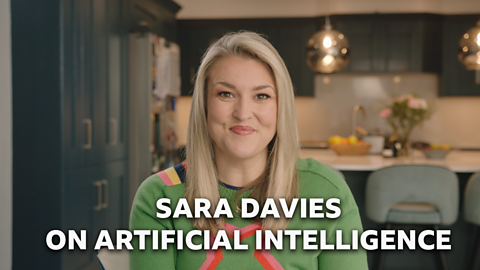
How can AI help my business? With entrepreneur Sara Davies
Former Dragons' Den star Sara Davies talks about how AI will change the shape of businesses.
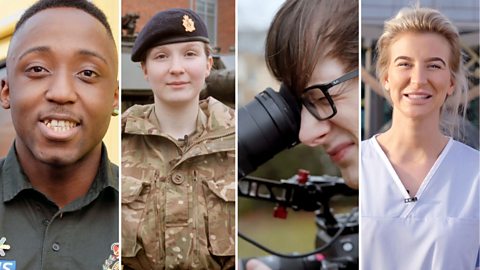
What's on offer for National Careers Week?
2-7 March 2026 is National Careers Week. Find out what Bitesize has in store for the week.
What are the benefits of apprenticeships with entrepreneur Sara Davies
Businesswoman Sara Davies talks about the benefits of starting your career with an apprenticeship.