Have you always liked the idea of quoting poems to your friends but never quite known where to start? Then fear not.
To mark Young Poets Week, created to inspire the next generation of poets, BBC Bitesize has enlisted the help of real life A person who writes poetry Brian Bilston to recommend five popular poets to get you started.

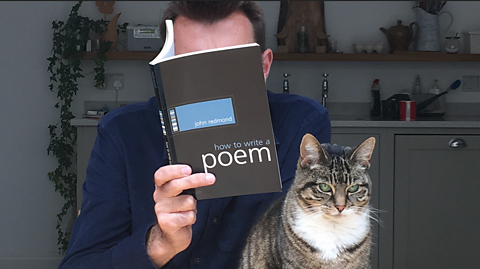
Hello, I’m Brian Bilston – I mess about with words every day in the hope that some of them will become poems. Sometimes, when I have enough of them, these poems appear in book form – such as my collection, A Poem for Every Question, written in answer to the curious questions that children ask.
I read a lot of poetry, too. Poems to make me think or laugh; to inspire me; to connect me with others. While I’m not alone in doing this, there are plenty of people who don’t read any poetry at all. Sometimes poetry can have a reputation for being difficult or boring. Sometimes it’s just hard to know where to start.
I believe, though, that there’s a poet out there for all of us: a poet who can express the things we care about in a way that opens our eyes or our hearts; a poet who can help us through a difficult time in our lives; or simply, a poet who is on the same wavelength as us.
Here are five poets who tick those boxes for me (please note other poets are available):
Benjamin Zephaniah
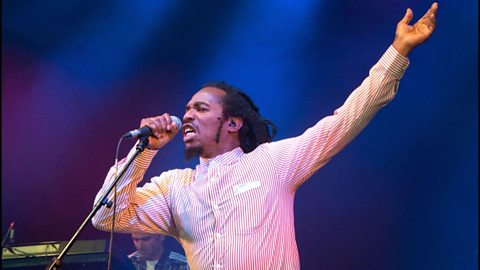
What an inspiration! His poems are not only very funny but clever, too, infused with a fierce sense of justice and compassion, tackling issues of racism and prejudice head on. He had a gift for making his words leap off the page.
It’s hard to read a Benjamin Zephaniah poem quietly in your head – there’s something about his use of language and rhythm that makes you want to speak his words out loud. Or sing them, perhaps.
'Be nice to yu turkeys dis christmas
Don’t eat it, keep it alive
It could be yu mate, an not on your plate
Say, Yo! Turkey I’m on your side.'
Talking Turkeys by Benjamin Zephaniah
Salena Godden
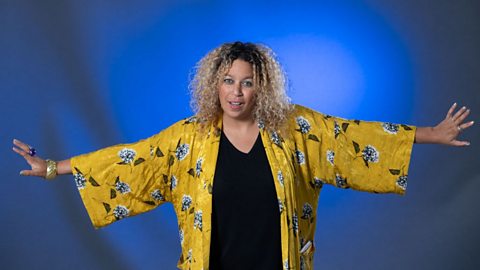
I do enjoy a bit of silliness in my poetry, the odd pun, an outrageous rhyme. But there are times when I’m after a little bit more, and I want a poem of power and passion, full of raw energy, fury and fire. Salena Godden’s poetry gives me that.
Whether she’s tackling racism or inequality or mental health or The hatred or dislike of women, there’s always such a vitality and urgency to what she writes. Her poems work well on the page, but if you ever have the privilege of seeing Salena perform, they become even more alive, confirmation of the power that poetry can have. Her poem ‘Pessimism is for Lightweights’ is a good place to start:
‘This road is never easy and straight
And living is all about living alive and lively
And love will conquer hate’.
Pessimism is for Lightweights, Salena Godden
John Hegley

When I was a teenager I didn’t care much for poetry. It was just something my teachers forced me to read so I might be able to pass an exam. Most of the poetry we studied didn’t say anything at all about my life, and most of it was written in a language I could barely understand.
Then I stumbled across John Hegley. He completely changed my views about what poetry could be. It could be funny. It could be about dogs or glasses or Luton Town. It could include lines such as:
'Eddie quite likes cutlery
but he don’t like furniture
if you give him some for Christmas
he’ll returniture'.
Eddie Don’t like Furniture by John Hegley
I also learnt that poetry could also be accompanied by a mandolin, if you had one (and knew how to play it).
Carol Ann Duffy
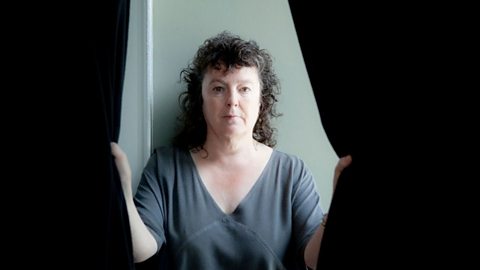
It feels like something of a lazy choice – to pick a former An honorary position appointed by the monarch of the United Kingdom on the advice of the prime minister. for this list – but Carol Ann Duffy landed that job for a reason, and she remains one of our greatest poets. I love the way she writes: the technical craft of her poetry, her mastery of form and language, the accessibility of it all.
Her poems can usually be understood on the first reading – but read them again and you’ll spot buried layers, cunning tricks, hidden meanings. There are few contemporary poets who can match the breadth and depth of her work – and her poetry written for young people is as sophisticated as everything else she writes, without being too difficult. She can be very funny, too.
‘I locked the cat in the cellar. I moved the phone.
The toilet I didn’t mind. I couldn’t believe my ears:
how he’d had a wish. Look, we all have wishes; granted.
But who has wishes granted? Him. Do you know about gold?
It feeds no one; aurum, soft, untarnishable; slakes
no thirst. He tried to light a cigarette; I gazed, entranced,
as the blue flame played on its luteous stem. At least,
I said, you’ll be able to give up smoking for good.’
Mrs Midas, by Carol Ann Duffy
Shel Silverstein
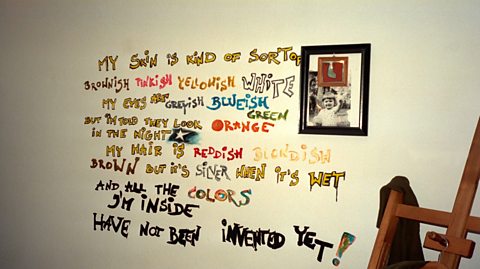
I didn’t discover the poetry of Shel Silverstein until I was in my forties, and that made me feel like I’d missed out when I was growing up, even if I didn’t know it at the time. Lucky, then, that his poems have something about them which speaks across the generations, grounded as they are in compassion, humanity and humour. He’s also brilliant at providing a ‘twist’ in the tail in some of his poems.
Shel Silverstein’s books sold in the US by the truckload in the 1960s and 70s, but never quite reached the same level of popularity in the UK. If you’ve never come across Shel’s work before I’d recommend starting out with either ‘Sick’, ‘Snowball’ or ‘Whatif’.
This article was published in October 2025