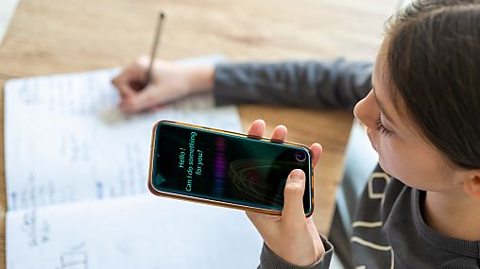
The NHS says that a young person with ADHD may show signs of being inattentive, such as being easily distracted. For some people, this may make it more difficult to concentrate on tasks like homework.
Laurie Faulkner is a content creator who was diagnosed with ADHD as an adult, she struggled with her homework when she was at school. Here, she shares her story and gives some tips and tricks that helped her focus on homework tasks when she was younger. Watch the videos and then scroll down for a recap of the tips.
When I was at school, I really struggled with homework. I was great at making plans, but when it came to actually starting, I didn't know where to begin. Sometimes I'd spend ages doing that and then sometimes I'd just forget the homework even existed. Then I'd get in trouble the next day because I hadn't managed my time properly and end up in detention. I didn't know I had ADHD back then, I just thought I was really bad at concentrating and remembering. I was lucky and my parents really helped me out a lot.
They'd read parts of the textbook with me, we'd go through each question and discuss it together because I just couldn't focus alone. But even if you don't have that, you can still get help. I also use little tricks to help make remembering stuff easier, like turning facts into stories. In biology, I'd imagine swimming through a blood vessel, bumping into red blood cells, white blood cells, and platelets, just to remember that that's what's inside the blood. It sounds really weird, but it helped me remember. And honestly, short bursts, little breaks and rewards made a big difference. Your brain just needs a way that works for you. If homework feels hard, it doesn't mean you're lazy, your brain just works differently. And if you need more help, head over to the BBC Bitesize Study Support website.
Tips for doing homework if you have ADHD
Tip one: Be realistic. Laurie says that you don't need to sit for hours after school trying to power through your homework, especially as your brain is probably tired. She says that: "even just 20 minutes of good work will get you closer to getting all your work done."
Our Homework Helpline Heroes say that you should take a screen break after 20 minutes. "If you are using a screen for your homework, try and take regular breaks from it. Stopping every 20 minutes or so, and looking outside through the window, or around you, can give your eyes a well-deserved break!"
Tip two: set yourself small goals. Laurie says that she would do five questions and then get herself a snack, or she would draw a line a few paragraphs down the page and aim to reach that point before she took a break.
Learning scientist Dr Carolina Kuepper-Tetzel told us that setting goals is important when completing work: "setting a goal for the session will give you the motivation to succeed, so consider what your goal for the study session will be. Just make sure that you set realistic goals."
You can find out more about setting study goals from Dr Carolina here.
Tip three: try to limit distractions. Dr Carolina told us that keeping focused while studying can be difficult – with the urge to constantly check your phone, use social media or watch funny cat videos. These little distractions are called 'micro-distractions' and they can make your study sessions longer, less effective, and feel like more of a chore.
Laurie says you should: "put your phone away and maybe even use it as part of that reward for finishing the task you set yourself."
Scroll down for more tips.
When I was at school, I really struggled with homework. I was great at making plans, but when it came to actually starting, I didn't know where to begin. Sometimes I'd spend ages doing that and then sometimes I'd just forget the homework even existed. Then I'd get in trouble the next day because I hadn't managed my time properly and end up in detention. I didn't know I had ADHD back then, I just thought I was really bad at concentrating and remembering. I was lucky and my parents really helped me out a lot.
They'd read parts of the textbook with me, we'd go through each question and discuss it together because I just couldn't focus alone. But even if you don't have that, you can still get help. I also use little tricks to help make remembering stuff easier, like turning facts into stories. In biology, I'd imagine swimming through a blood vessel, bumping into red blood cells, white blood cells, and platelets, just to remember that that's what's inside the blood. It sounds really weird, but it helped me remember. And honestly, short bursts, little breaks and rewards made a big difference. Your brain just needs a way that works for you. If homework feels hard, it doesn't mean you're lazy, your brain just works differently. And if you need more help, head over to the BBC Bitesize Study Support website.
More homework tips to help people who have ADHD
Tip four: find what works best for you. Our Homework Helpline Heroes say that you should reflect on when you work best, and think about this as you carry out work. Do you find it easier to focus in the morning or the evening? Do you find it better to get down to your homework as soon as you come in from school, or do you need a bit of time to relax first?
Laurie says that you should also think about where you work best: "you might focus better sitting at a kitchen table where someone can keep you on track, or sitting alone in a quiet room where no one interrupts."
Tip five: don't be worried about using the people around you. Asking for help can sometimes be difficult, but luckily for you our Homework Helpline Heroes have a guide on how to ask your teacher for help.
Laurie says that if you are struggling you should ask a teacher to explain the task again before you leave class, or tell a parent or a friend what you're working on so they can check in with you later.
Tip six: space it out. Laurie says: "leaving everything until the night before just makes it feel ten times worse." She suggests doing a little bit of homework each day to keep it from piling up, Laurie says that this actually helps your brain remember it.
Our Homework Helpline Heroes have lots of tips about how to manage deadlines, check them out!
Bonus tip: memory palace. Laurie says that she would use a technique known as the memory palace to help her remember the things she needed to learn. For example, in biology, she'd imagine swimming through a blood vessel, bumping into red blood cells, white blood cells, and platelets. This would help her remember what's inside the blood. "It sounds really weird, but it helped me remember."
You can find more expert revision memory hacks and tips here.

If you need support
You should always tell someone about the things you’re worried about. You can tell a friend, parent, guardian, teacher, or another trusted adult. If you're struggling with your mental health, going to your GP can be a good place to start to find help. Your GP can let you know what support is available to you, suggest different types of treatment and offer regular check-ups to see how you’re doing.
If you’re in need of in-the-moment support you can contact Childline, where you can speak to a counsellor. Their lines are open 24 hours a day, 7 days a week.
There are more links to helpful organisations on the BBC Bitesize Action Line page for young people.
When is the best time to do your homework?
Knowing when you work best can really help you to understand how you work best. So when is the best time to do your homework?

Three tips to help you with your homework
We look at some useful tips that will help you be a homework hero!

How to use AI for homework
Find out the best way to use AI for homework, without loosing marks!