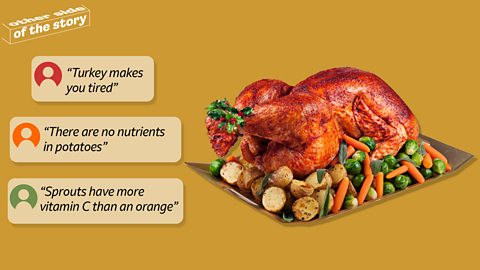
Picture it - It’s the day after Christmas and you’re casually tucking into your second turkey sandwich while wondering whether the 26 December has always been known as Boxing Day.
Even if that’s not true for you it is a question that’s occupying the minds of plenty of people on socials, along with a festive feast of other Christmas questions.
BBC Bitesize Other Side of the Story has taken a look at some of the biggest things people are asking and come up with the definitive answers for you to impress your friends and family with… possibly over turkey sandwich number three?
How did Boxing Day get its name?
Some TikTok posts suggest the day after Christmas really is connected to the sport of boxing and it's not the only social platform where you'll find discussions about its origins.
Over on Reddit, theories include Boxing Day being the 'unboxing' of presents received the day before - although can you imagine waiting a whole day to crack open your new trainers or games console? Other ideas put forward are Christmas boxes, given by wealthy clients more than 100 years ago to workers who they valued. Closer to this idea is for servants in large houses to be treated by their employers for the day after working hard at Christmas in a kind of role-reversal.
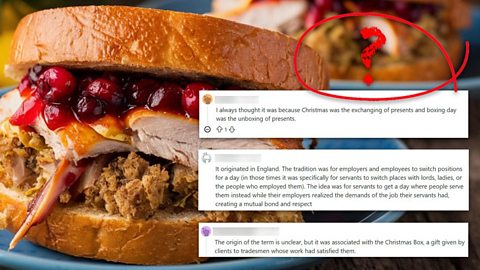
There is no definite answer behind the name, but it dates back to the reign of Queen Victoria in the 19th Century.
As suggested in some of the Reddit theories, rich people would put gifts into boxes that could be given to the poor. Boxing Day was also a traditional day off for servants, when they would receive a special Christmas box from their employers which they would take home to their families on Boxing Day.
There is also a link to church. Money collected throughout the year was placed in a box that was opened on Christmas Day and then shared around people who needed it most on Boxing Day.
If you're ever in Ireland during Christmas, you'll see that it's not called Boxing Day at all. It's St Stephen's Day, which is also a public holiday.
What is the difference between Christmas and Xmas?
’Take a look around the different cards, posters, banners, window displays and anything else! At this time of year, you're likely to see the festive season spelt as either 'Christmas' or 'Xmas'. Do they mean the same thing, or is there a difference?
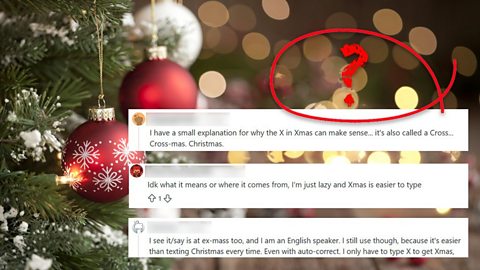
Socials have their own ideas about Xmas. Users on Reddit have suggested that it's simply easier to type while others say the X represents a cross, linking it to Christianity. Since texting became popular in the 1990s, some people have suggested it is simply easier to type a shorter word on their phones. It's also suggested that some churches avoid the use of the word Xmas as it does not include the word 'Christ'.
It's always important to do some research and check the sources of information. In this case, Xmas can be seen as a way of shortening a popular word - but its history goes back much further than the invention of the mobile phone.
More than 1,000 years ago, the parchment used in the writing of religious documents was expensive and anything that helped save space was important. As the word Christ appears regularly in religious writing, it was abbreviated to X, and also XP. As well as resembling a cross, the X is also thought to represent the Greek letter Chi, the first letter of the word Christos - the Greek word for Christ.
The name XPmas appeared as long ago as 1021, and at some point it seems the P wasn't used, leading to the Xmas we still use today. While some people prefer not to use it today, the shorter version was used by members of the church hundreds of years ago.
What do you call the week between Christmas and New Year?
The turkey sandwiches are into their third day. You might have popped into town to spend a voucher you got off your Auntie for Christmas. EastEnders isn't always on at the usual time. Yes, it's that week between Christmas and New Year when you may not remember that it's Thursday, but you know there's going to be a good film on telly in a bit.
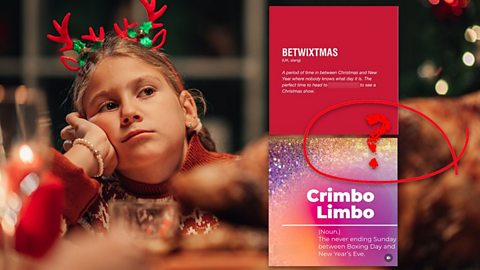
But what do we call that time? Over on Instagram, there a few suggestions. One is Crimbo Limbo, meaning it may feel that real life - such as going to school and your parents being at work during the day - is on hold for a while. There is also Betwixtmas, a play on the old English word for between - 'betwixt' - merged which Christmas.
There is no official word for the period between 26 December and New Year's Eve, but one we can use, as reported by Newsround, is Twixmas. Similar to Betwixtmas, it's not known who invented the word, although one major UK department store has suggested it was someone from a company trying to sell short holidays in the last week of the year.
It's a bit of harmless fun finding a name for this unusual period of time, but it's worth remembering that sharing the names that people invent as though they are official can spread false information.
This article was published in December 2025

Not sure if the news you’re seeing on social media is true or false? Can you always tell if the things you see online are real or fake? Learn how to get the other side of the story with our quizzes, videos and explainers.

Christmas dinner: The facts behind your festive feast
Christmas dinner image red orange and green