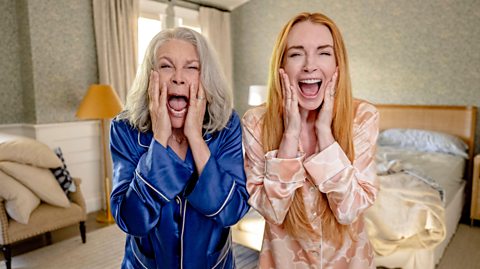
 Image source, BFA / Glen Wilson / Disney Enterprises
Movies are big business and can make millions, and sometimes billions, for the studios that produce them. So, if a film is successful there is quite often a follow-up (or two) not long after.
But sometimes a sequel can take a long time to appear. Freakier Friday, the sequel to 2003’s Freaky Friday, didn't make it to our screens until 22 years after the original was released.
According to Jamie Lee Curtis, who once again played the role of mum Tess Coleman, the reason for the delay was to set the new story up. The plot involved Anna Coleman (played by Lindsay Lohan), who was a teenager in the original, now having her own teenage child. According to JLC this meant: “The truth is that Lindsay had to be old enough to have a 15-year-old daughter.” Makes sense!
But there are lots of reasons that some sequels keep us waiting… and waiting.
Here, BBC Bitesize delves into five follow-ups that took their time to materialize.

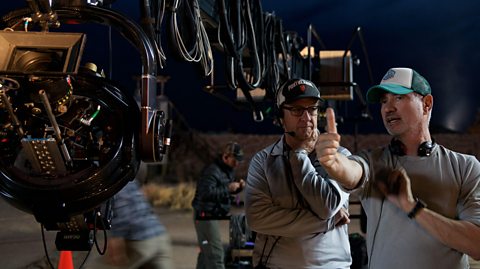 Image source, Twentieth Century Fox/Entertainment Pictures
Independence Day: Resurgence (20 Years)
Anyone who was a cinemagoer way back in the 1990s will remember the excitement surrounding director Roland Emmerich’s Independence Day. It was the definition of a huge summer blockbuster featuring the biggest star of the era in Will Smith, a huge alien spacecraft and, in the trailer at least, the White House exploding. It was, in a word, cool.
Fans were, understandably, primed for a sequel. But they waited, and waited and waited. In fact they would have to wait two decades for the follow-up, Independence Day: Resurgence, which finally arrived in 2016.
Sadly, the absence of Will Smith (he was replaced by Liam Hemsworth) and an underwhelming story failed to recapture the explody nostalgia of the original, and the film was a critical and box-office flop.
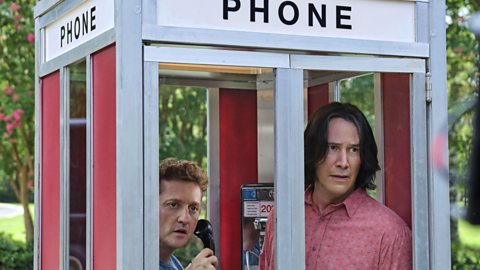 Image source, Orion Pictures
Bill & Ted Face The Music (29 Years)
Okay, this one is technically a sequel to a sequel but the near 30 year wait makes it more than worthy of a mention.
Audiences had first been introduced to lovable valley-teens William ‘Bill’ S. Preston Esquire (played by Alex Winter) and Ted ‘Theodore’ Logan (played by Keanu Reeves) way back in Bill & Ted’s Excellent Adventure in 1989. In 1991, the pair continued their wacky adventures in time and space in the film’s follow up - Bill & Ted’s Bogus Journey.
For many, a modern day sequel seemed a terrible idea. Did people really want to watch a pair of middle-aged dudes playing air guitar and shouting ‘most excellent!’ 29 years after the original? It all sounded a bit cringe. In fact, neither Winter nor Reeves had planned on doing a third movie, but when the screenwriters Chris Matheson and Ed Solomon presented their idea, which had Bill and Ted as fathers of teenage daughters (played in the movie by Samara Weaving and Brigette Lundy-Paine) they were won over. “We never felt the world really needed a third, but when we were pitched this idea, it really made us laugh and it warmed our hearts,” Winters told Variety Magazine.
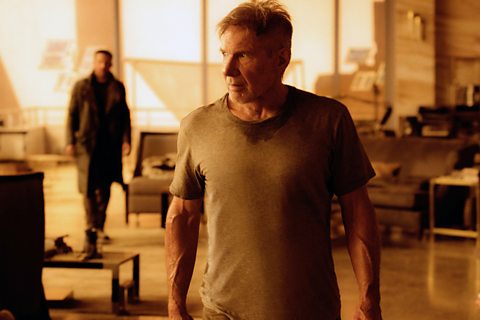 Image source, Ron Harvey/Warner Bros. /Courtesy Everett Collection
Blade Runner 2049 (35 Years)
It might have the word ‘runner’ in the title, but the sequel to Ridley Scott’s Blade Runner, didn’t so much run as crawl into cinemas 35 years after the original had been released in 1982.
For many film fans the original movie is one of the most influential science fiction movies ever made. An early example of cyberpunk (a sub-genre of sci-fi) it envisioned a world populated both by human beings and replicants, artificial life forms, and asked some deep, and increasingly relevant questions about what it means to be human.
Blade Runner was considered a flop when it first came out. But after the film was released on home video, it slowly became a cult movie and then a more widespread critical success.
The idea of a sequel started to be investigated, but legal problems with the ownership of the original Philip K. Dick story, Do Androids Dream Of Electric Sheep?, slowed everything down. Eventually, Director Denis Villeneuve (you might recognise him as the director of the Dune films) was hired to direct the sequel, and he cleverly used the elapsed time as part of the plot, with the new movie revisiting ageing replicant Deckard (played by Harrison Ford - just as in the original) and introducing a new replicant played by Ryan Gosling.
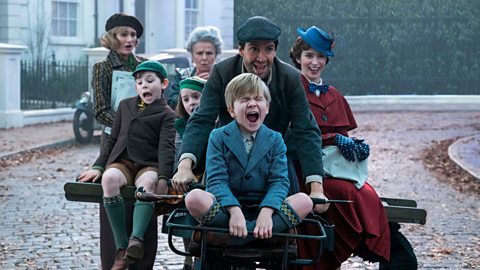 Image source, LUCAMAR PRODUCTIONS/MARC PLATT PRODUCTIONS/WALT DISNEY / Album
Mary Poppins Returns (54 Years)
When Mary Poppins was released in 1964 it was a huge hit. Audiences who watched the enchanted nanny float off into the sky would have been forgiven for thinking they’d be seeing her again pretty soon. After all, author P.L. Travers had written a total of eight Mary Poppins novels.
Well, in reality, people were in for a long wait. The sequel to Mary Poppins was finally released in 2018 - 54 years later. To put it another way, if you had been 10 when you saw the first movie in the cinema, you’d be 64 before you could find out what happened next. Which is a long time to be hanging around, even for a flying nanny.
Why the long wait? Much of it was due to Travers, who had been unhappy with the original movie. She thought they had made the character too sweet and hated the animated sequences. In fact, the author so disliked the Oscar-winning Disney production that she never allowed any more Mary Poppins books to be adapted into films during her life.
Only after her death in 1996 did Travers’ estate become more open to the idea, but it still took nearly 20 years for them to approve a sequel, which they did in 2015.
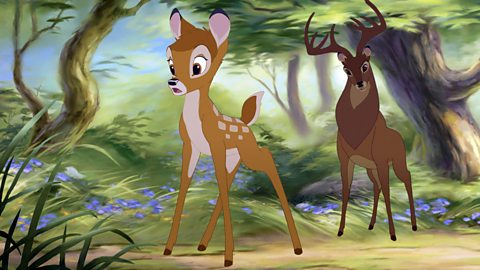 Image source, Cinematic Collection/Disney
Bambi II (64 Years)
As we've seen, there are a lot of sequels that took their time to arrive, but the record is held by Bambi, with the gap between the first movie and its follow-up being a massive 64 years. The original film is widely believed to be a stone-cold classic, so it would be understandable for filmmakers to be cautious and move slowly in attempting to follow it up.
The delay between Bambi’s feature film appearances can partly be explained by the fact that Walt Disney himself was not a huge fan of sequels. When he was asked about a sequel to his 1933 hit The Three Little Pigs, he is supposed to have said, ‘You can’t top pigs with pigs.’
When the studio finally decided to make a sequel, long after its founder's death, it ingeniously chose to fill a gap in the original film, telling the story of Bambi growing from fawn to deer. But maybe old Walt had it right. The new movie went straight to video in many countries and failed to make much of a cultural impact.
Perhaps some sequels just shouldn’t be made, no matter how much time passes.
This article was published in August 2025
Bitesize Recommends: Five summer filled films for families
A list of five summer vibe filled films to watch when the holiday rain sets in
Four planned film sequels that never happened
BBC Bitesize explores the film follow-ups that never saw the light of day.
Can you guess the location from the film scene
Take the BBC Bitesize quiz all about film locations!