The world of gaming has never felt more mainstream.
New game releases are often bigger events than some blockbuster films – unless, of course, that film is based on a game itself.
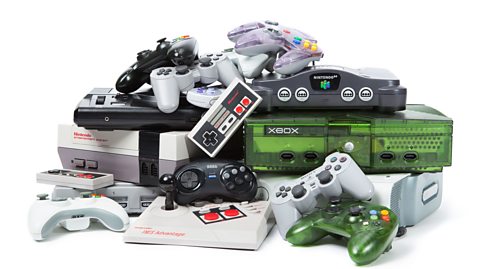
And it’s never been easier to get started with a new game. You’re almost certainly reading this on what is effectively, a powerful gaming device.
But where did home gaming begin? BBC Bitesize takes a look back at the consoles that changed gaming forever.
Atari 2600
While the Atari 2600 was undeniably impactful, selling around 30 million units worldwide in its lifespan, it wasn’t the first home console.
Fresh off the back of the first commercial arcade games, such as Computer Space (1971) and Pong (1972), the Magnavox Odyssey was launched in September 1972 in the United States, reaching the UK the following year.
There were 28 games available for the console, with titles including Table Tennis, Ski and Football. As you might imagine for the time, they weren’t blessed with high spec technology – the Odyssey had no CPU, no memory, no audio capability and its graphics were a limited number of dots and lines.
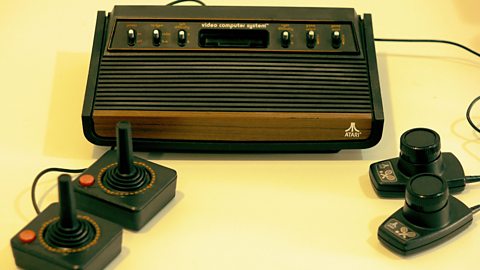
Launching in the US in 1977 and Europe the following year, the Atari 2600 – originally known as the Atari Video Computer System, or VCS – used cartridges for its games, with some capable of holding up to 8KB of data.
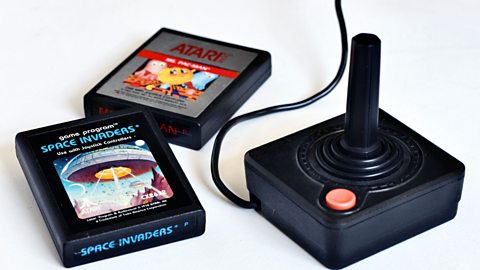
The console launched with a handful of games, including Video Olympics that featured the classic Pong and the very Bitesize-friendly Basic Math. In following years, recognisable arcade titles like Breakout, Space Invaders and Pac-Man followed, the latter of which went on to become the console’s biggest-seller ever.
The Atari 2600 had an incredible lifespan, with production only stopping in 1992. It remains in the top 20 highest-selling consoles of all time and was credited with launching the first-ever home gaming boom in the 1980s – one of the most important consoles ever made.
Game Boy
Hot on the heels of the success of the second-generation Atari 2600 came the start of the console wars between Nintendo and Sega.
While Mario had made his debut in 1981 as Jumpman in the Donkey Kong arcade games, it wasn’t until the North American launch of Nintendo’s first console, the Nintendo Entertainment System (NES) that the adventures of the Italian plumber could be played on a home console in the classic Super Mario Bros.
The NES launched two years earlier in Japan, known there as the Famicom, and brought 8-bit gaming into homes. At the same time, Sega was also entering the console market with its SG-1000 machine, which went through a couple of iterations before the Mark III version, known as the Master System, was released in Japan in 1985.
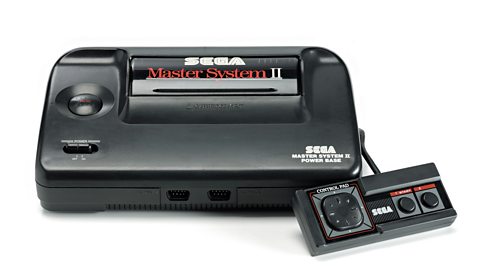
Nintendo had huge success – selling more than 60 million NES units worldwide. The Master System didn’t prove as popular, but still sold over 13 million units, to firmly establish Sega and Nintendo as the top dogs in home gaming.
But it was Nintendo’s move to create a portable 8-bit gaming device that changed consoles forever.
The Game Boy was released in Japan and North America in 1989, with European gamers getting their hands on the device the following year.
Initially upon its launch – there were criticisms. Graphics weren’t high quality and the screen couldn’t display colour but there was a reason for this. It kept production costs down and gave it a 15-hour battery life.
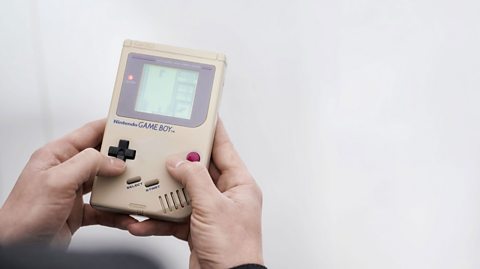
Compare that to Sega’s handheld Game Gear – which did display in colour but needed an extra two batteries and only ran for around five hours.
But the thing that really played into Nintendo’s hands was its extensive game library – and no game proved more popular than Tetris.
The block puzzle game was bundled with the Game Boy and for many, the game was their first experience of consoles. Rather than grappling with the jump mechanics of a Mario or Sonic game, Tetris was the easy to pick up, cross-generational leveller that really started to bring gaming into the mainstream.
The Game Boy – and its 1998 ‘Color’ version – sold almost 120 million units worldwide – comfortably making it the biggest selling console of the 20th Century. The Game Boy transformed the way that we played games – making gaming on the go an option. As long as you had spare batteries.
Playstation 2
While the initial console wars were very much between Nintendo and Sony, a new player muscled in on the act as games went from 2D to 3D in the 1990s.
After the relative success of the fourth-generation Super Nintendo Entertainment System (SNES) and the Sega MegaDrive (or Genesis, depending upon where you lived), the fifth-generation ushered in more powerful machines capable of better graphics.
While Sega hit the market first with the Saturn in 1994, it was quickly followed by Sony’s first console – the Playstation (PS1).
While the Saturn failed to sell 10 million units, the PS1 ultimately sold over 100 million units, based upon its stellar line up of games, including Wipeout, Tekken and Crash Bandicoot.
Nintendo fought back with the Nintendo 64 in 1996, bringing Mario into three dimensions for the first time. While it proved popular compared to the Saturn, it only sold a third of the units of the PS1.
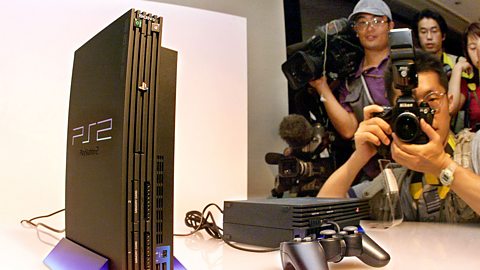
All eyes, therefore, were on Sony to see what their next move would be and it came in 2000 with the release of the Playstation 2 (PS2).
Sony ensured the PS2 was backwards compatible – meaning games from the original Playstation would work on it as well. They also decided to add a combined CD and DVD player into the console, which meant it became more than just a gaming device – it was a home entertainment system and the first console to become an all-in-one machine. As stand-alone DVD players remained expensive at the time, this was an extra incentive to upgrade to the PS2 – and in Japan when it launched, the most popular title bought alongside it wasn’t a game, but a DVD of The Matrix.
The PS2 remains to this day the highest selling console worldwide with 160 million units sold. This was in-part due to the exclusive deal Sony did to bring Grand Theft Auto games to the PS2 before any other console or platform, as well as through its own titles such as Gran Turismo.
Nintendo Wii
Sony’s success with the PS1 and PS2 brought Microsoft to the console wars – with the software giant concerned by the PS2’s ability to lure gamers away from gaming PCs.
They released their first console – the Xbox – in 2001 outselling both Nintendo’s sixth-generation GameCube and the Sega Dreamcast – which ultimately would prove to be Sega’s final console before exiting the hardware market.
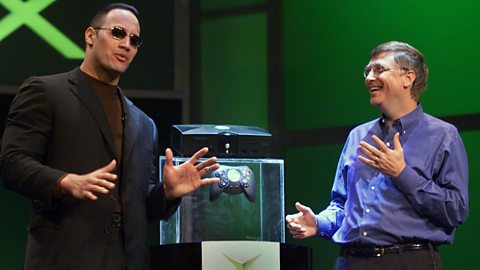
Nintendo now found themselves in the unusual position of being in third place going into a seventh-generation of consoles.
Microsoft’s Xbox 360 was released in 2005 with the Playstation 3 (PS3) following in 2006. While big titles and all-action graphics and gameplay saw both the Xbox 360 and PS3 sell more than 80 million units, Nintendo decided not to try to compete and to create its own unique console which it released in 2006.
The Nintendo Wii aimed for mass appeal rather than specifically targeting gamers and did so through a unique set of controllers.
The Wii Remote and Nunchuk had motion tracking controls, meaning users could now play some games by mimicking gestures, rather than relying on a traditional gamepad controller.
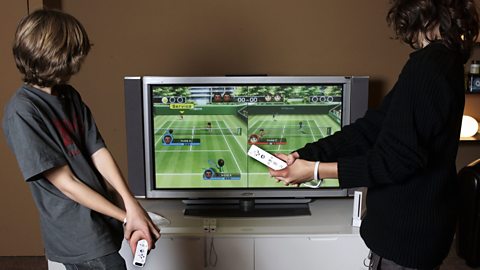
New Wii consoles were sold with Wii Sports which showcased the console’s features – allowing players to swing a controller as if it were a tennis racket or pretend to throw a ball as if they were bowling.
The move to create a mass appeal console alienated some hardcore gamers – but soon became the must-have machine for casual gamers and families alike. While not featuring all-powerful games as the Xbox 360 and PS3 did, the console had a stellar lineup of traditional Nintendo titles and sold more than 100 million units worldwide.
Microsoft, Nintendo and Sony have remained the three key players in the console wars into an eighth and ninth generation of consoles – also competing with smart phones and tablets to be a gaming device of choice.
The Playstation 4 and 5 have sold almost 200 million units worldwide between them while the Xbox One and Series X/S have reached total sales of around 80 million units. Nintendo have remained an alternative to the top tier, state-of-the-art console devices, releasing the commercially unsuccessful Wii U as a follow up to the Wii, before the Nintendo Switch hit shelves in 2017 – combining traditional gameplay with a handheld device in one machine, selling more than 150 million units before the launch of the Switch 2 in 2025.
Power up with the ultimate Super Mario quiz
Test your knowledge on the world's most famous video game plumber.
Stranger Things without the scares: Films to watch to catch the 80s teen vibes
Want to immerse yourself in the 1980s fashions and music but don't want to face the Upside Down? BBC Bitesize has you covered

Famous Easter eggs in games and films
Explore some of the references and secrets hidden inside your favourite films and games