BBC Sport launched in May its #changethegame women's summer of sport season to showcase female athletes. All eyes have been on the players but have you ever wondered what goes into getting sports news from the playing field to your screen?
Meet online sports journalists Kate and Emma to find out more about how the magic happens.
Kate:
I'm Kate Kopczyk, I am a senior journalist for BBC Sport's news online team. I need to be across all the latest sports news, what's going on across all the sports and work out what we need to write up for the BBC Sport website.
Kate's colleague:
They'll be pleased with the amount of coverage they've got over the last few hours.
Kate:
Just saw the line that was, you know, we've not won it yet. It was muted celebrations from the England camp.
Kate's colleague:
That does set up an amazing weekend, doesn't it?
Kate:
So I'll be liaising with some of my journalists who will work out who will write what, what pictures we might need to use and what kind of ideas and stories we can tell. It's really important we all talk to each other, we all communicate, we're all working out what each person's doing but also that we're all sharing information, sharing ideas and coming up with the best way to tell our stories.
So one of the key things that we need to be, as the BBC, is accurate in our reporting. So we need to always make sure that we're getting the right story, the right facts, the right details.
Emma:
My name's Emma Sanders and I'm a broadcast journalist with BBC Sport. I'd say my job is live texting. So the key aspects of my role is basically reporting on live sport mainly. I work on the football desk and on the tennis in particular. So, writing match reports, live text commentaries, match previews, features, reaction pieces. Anything, really, that's newsworthy at the end of a football match or a tennis match. So we follow the sport live and when I'm doing the live texting it would be like the equivalent of doing a radio commentary, but online. You're reacting to what's happening there and then in the sport.
Kate:
You have to be quite fast with it because we've got lots of competitors who are quick and they've got lots of good journalists who are seeking out the stories. So there's a lot of competition out there. So we need to be fast but we need to be fair and accurate in our reporting, that's the most important thing.
Emma:
I knew that I wanted to be a sports journalist so from then on it was a pretty straightforward choice for me.
Kate:
Be persistent if it's really what you want to do. You will get knock-backs probably along the way but also believe in yourself.
Emma:
Here at the BBC obviously they're great at trying to give a platform for female writers as well as female sportswomen.
Kate:
In terms of what we can do and the ideas and the sort of content we're producing and the people that are working on it then yeah, absolutely, we've had quite a lot of young, female journalists joining the team over the past couple of years and that's really important.
Emma:
Most people just appreciate the work that you're doing and I've got a great team around me and they're always really supportive and they're really keen to give me as much opportunity as I can to showcase what I can do.
Kate:
I think that's the key thing – that everyone across the board shows the interest and the enthusiasm.
Emma:
I knew that I wanted to be a sports journalist. That was always something that I was passionate about and I knew that, whatever I did, I needed to be involved in sport 24/7.
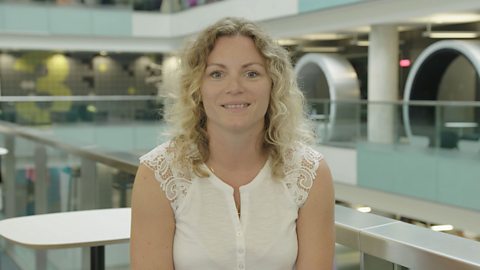
Kate Kopczyk, BBC News editor
Be persistent if this is something you want to do. You will get knock-backs along the way, but believe in yourself.
Kate's journey
Role: News editor for the BBC
Key tasks: Overseeing reporting on sporting events, choosing which stories to focus on, coordinating BBC Sport's news online team's content
Pathway: Kate's dad was a sports journalist which sparked her interest in the career. At school, she did work experience which she enjoyed and helped her focus on what steps to take to become a journalist. Her dad suggested broadcasting rather than newspaper journalism which resulted in Kate taking a Radio Journalist course
Career highlight: Covering the Champions League in Moscow.
Kate feels that, as well as getting women into sport and broadcasting, it is also important to change the way men think about women's sport and putting it on the same level as men's sport in terms of resources and coverage.
Top tips
- Be persistent and don't give up
- There will be knock-backs but just keep going and believe in yourself
- Be interested and enthusiastic about your work.

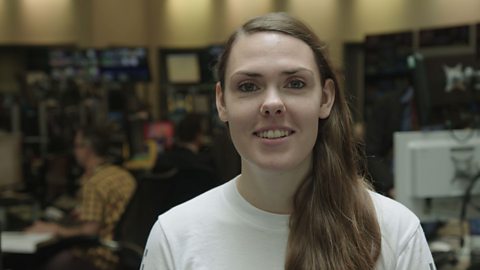
Emma Sanders, BBC digital journalist
I always wanted to be a sports journalist. I knew that, what ever I did, I needed to be involved with sport 24/7.
Emma's journey
Role: Digital journalist
Key tasks: Digital live reporting, which is covering sports live as they go out, by live texting, writing match reports or reaction pieces
Pathway: A Journalism degree at the University of Salford, followed by a period of freelancing in sports journalism, until she landed her dream job at the BBC
Career highlight: Covering the Champions League semi-final where she was reporting live from the stadium. She is a big football fan and being able to cover that match meant a lot to her.
Emma feels that there is no better time for girls to get involved with sport. There are many more opportunities now both in sport itself and sport broadcasting.
Top tips
- Be passionate about what you do and let that show through in your work
- Try and get as broad a knowledge of sport in general
- Be an expert in one or two sports. Emma is an expert in football and tennis.
#changethegame: behind the scenes of the women's summer of sport season. video
Meet the women working behind the scenes to bring the latest sporting news to your screens.
How to become a writer. collection
A collection of writer job profiles and information about what the role entails.