What’s your job?
I’m a senior physiotherapist. Physiotherapy encompasses the physical, psychological and social well-being of a person and we take a holistic approach to improving the quality of someone’s life.

How did you get started in this role?
I went to school in India and I participated in activities both in school and outside of school that gave me experience and shaped my ambition to be a physiotherapist. My church group took us to visit a number of hospitals and orphanages where we saw children with Aids. I used to work with a lot of children who had cerebral palsy and it gave me satisfaction when I saw a smile on their face. I felt I needed to use my life to make their lives better.

Qualifications
Wanting to help people was the main trigger. I chose to do biology, chemistry, physics and mathematics at A-level, before doing my undergraduate degree and then working for a year. Then I decided to do my master's degree so that I could build up more knowledge and use my skills and my clinical reasoning. I applied for lots of jobs and finally got one in Wolverhampton, where I am now.
What motivates you?
When I do something for somebody and feel I improve their quality of life, I feel happy because I’ve made a change.
Best thing about your job
My job has helped me to develop personally as well as professionally. I enjoy every bit of it.


What to expect if you want to be a physiotherapist
- Physiotherapist average salary: £31,000 to £55,000 NHS band 5-7. Read more about NHS bands. Salaries will differ in private healthcare.
- Physiotherapist typical working hours: 35 to 40 hours per week
What qualifications do you need to be a physiotherapist?
You could get into this role via a university course, a degree apprenticeship, or by working as a physiotherapy assistant whilst studying part-time for your degree to qualify. You'll usually need two to three A-levels, or equivalent, for a physiotherapy degree or degree apprenticeship, preferably including Biology. Alternatives to A-levels include taking a T-level (England-only), which is equivalent to three A-levels. Check with your course provider which alternative qualifications they accept.
Sources: National Careers Service, NHS Health Careers, GOV.UK.
This information is a guide and is constantly changing. Please check the National Careers Service website and the NHS Health Careers website for the latest information and all the qualifications needed and the GOV.UK website for more on T-levels.
For careers advice in all parts of the UK visit: National Careers Service (England), nidirect (Northern Ireland), My World of Work (Scotland) and Careers Wales (Wales).
Work experience in your area
Find work experience placements with Workfinder.
Tips and advice
Help with interviews, writing a CV and all things work experience related.
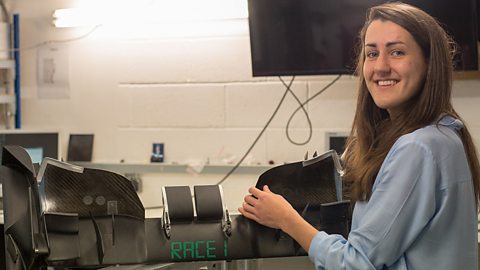
Amy: Formula 1 engineer
Amy helps develop ways to make racing cars go faster.
Inshal: intern on a medical app
Inshal works on medical apps, testing for safety and quality.

Sarah: occupational therapy assistant
Sarah specialises in neurosciences and works with patients who have injuries and brain tumours.