In real life, Button Hall, the setting of the BBC comedy Ghosts, is West Horsley Place in Surrey.
The history of this medieval manor house is surprisingly similar to the show’s storyline. Just like the character Alison, the current owner of the house unexpectedly inherited the house from a distant relative.
It’s not unusual for historic properties in the UK to be associated with ghosts. Often hundreds of years old, the stories surrounding these buildings tell of visits by different spirits. Typically, ghosts remained attached to the property in which they died, normally due to something unresolved, giving us the classic haunted house.
BBC Bitesize looks at a number of National Trust properties across the UK which, just like Button Hall, have their own spooky legends to tell.
 Image source, BBC Pictures
Treasurer’s House, Yorkshire
If you believe the stories, there are some spooky things going on in the basement of Treasurer’s House in York.
The most famous tale concerns a young man called Harry Martindale. Whilst fitting a boiler in 1953, he heard the sound of horse shoes clopping, as well as a musical tune. A British Roman solider then appeared to walk through the wall, followed by the rest of the legion on horseback and foot.
According to Devon Allen, visitor experience officer, “the sighting carried a lot of weight as the eyewitness commented that the legion appeared at waist height, which is approximately the depth between the cellar floor level and the Roman road and they were travelling in the right direction to have been walking into the main fort.” The road was known as the Via Decumana.

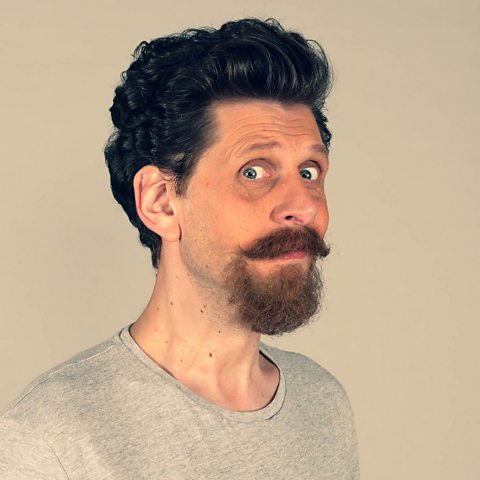 Image source, BBC Pictures
The ‘rules’ of ghost stories
Laurence Rickard is one of the writers on Ghost and also plays both Robin and Humphrey in the show. He told us about two of the storytelling ‘rules’ they kept in mind when creating the series.
Ghosts always seem to be from certain historical periods
When was the last time you heard a ghost story about a caveman? As Laurence highlights, they’re incredibly rare, with most stories being “roughly from the Tudor era up until World War Two.”
Laurence explains the writers wanted to include those ‘classic’ ghosts, as well as some more unexpected characters. “The idea of a caveman just felt funny because I don’t ever remember hearing reports of one, but there’s as much logic to one existing as there is to any ghost,” he says. “And, equally, we wanted to see a couple of spirits from more modern times, as they somehow seem more ridiculous when there’s nothing vintage or gothic about them – they just look like a couple of blokes (give or take the lack of trousers).”
Ghosts don’t always make sense
When it comes to ghost stories, there don’t seem to be any fixed rules about what the spirits can and can’t do.
Laurence says: “We often get questions about the logic of our ghosts – why they can sit on furniture but also walk through walls, or why can they not leave the grounds. All of those ‘rules’ were born out of the existing ghost stories, and the glaring inconsistencies between them. There are tales of ghosts walking through walls (where doors used to be), but equally stories about ones who appear sat on the end of a bed, or in the old armchair. It doesn’t make sense that they can do both, but if that’s what ghosts do, ours will do the same.”
Image source, BBC PicturesSpringhill House, County Londonderry
A 17th-Century plantation house in Northern Ireland, Springhill House was once home to George Lenox-Conyngham, his wife Olivia and their children.
According to the Springhill House team, “The Blue Room as well as other areas on the property have a reputation for being haunted by a female, believed to be Olivia Lenox-Conyngham … The Blue Room is said to be colder than other rooms in the house.
“Olivia has been seen in numerous areas of the house, including the nursery, where in the 20th Century, she was seen by a nursemaid standing over the children watching them closely while they slept.”
Unusually for a ghost, Olivia is said to be benign, and will often appear in daytime and to young children.
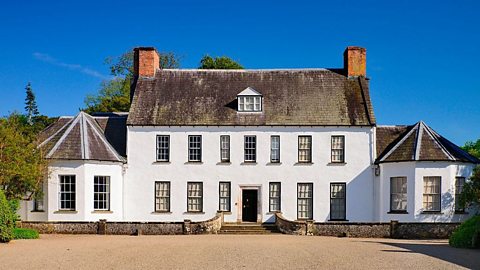 Image source, Eye Ubiquitous
Newton House, Carmarthenshire
Part of the Dinefwr estate, this Welsh mansion is said to be haunted by the ghost of Lady Eleanor Cavendish, who was murdered at the house in the 18th Century.
Kathryn Campbell, programming and partnerships officer, says: “Lady Eleanor was said to be a regular visitor to Dinefwr and either the cousin or the sister of the Lady of the house, although there is no historical evidence to clarify the relationship…. Visitors and staff have reported strange sensations, sightings of shadowy figures, cold spots in the house and lights coming on and off on their own.”
The House of Dun, Angus
A Georgian country house with a stunning outlook over Montrose Basin, the House of Dun was built to replace a previous medieval tower house, also home to the Erskine family.
Shona Murray, visitor services supervisor, highlights a few of the stories associated with the house. The first, explains Shona, tells of a knight returning from the Crusades who fought and killed a romantic rival in the wood. The victim is rumoured to wander the woods.
“A visitor walked through the house one evening and saw World War One soldiers leaving the Library. Staff have smelt tobacco smoke or old perfume following them while opening and closing the house.” And, says Shona, some have reported hearing a baby’s cry echoing in the corridors.
Five UK castles steeped in folklore
The stories behind the legends that fascinate visitors
Challenge: Can you sort these monarchs into the correct order?
Put your memory to the test by re-arranging these familiar historical faces.
Quiz: The spook-tacularly difficult Halloween quiz
How many of these spook-tacular Halloween traditions and superstitions do you know?