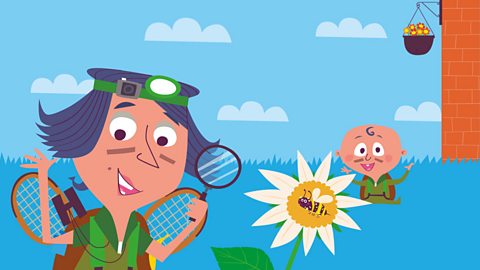
Watch this clip to learn how flowering plants reproduce.
Narrator: A flower isn’t just a pretty thing you give to someone special. It’s actually a complicated part of a plant. It produces seeds through a process called pollination.
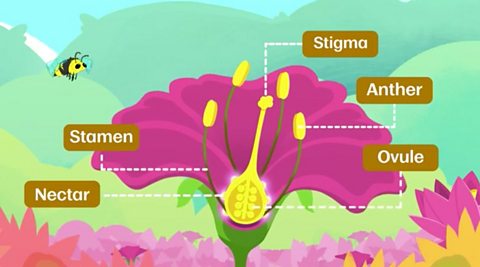
The flower’s stamen produces powdery stuff called pollen in its anther and the stigma has a bit that can turn pollen into seeds, the ovule.
The flower makes nectar, which some insects and birds just love. As the bee heads towards the nectar, it gets covered in pollen from the stamen.
Not put off it heads down past the flower's stigma where the pollen rubs off. This means the ovule can turn the pollen into seeds.
Insects like this will visit as many flowers as possible. This spreads pollen from one separate flower to another. Producing seeds this way is called cross-pollination.
Wind can help cross pollination too. This gives some people achoo… hay fever!
How seeds are made
- Pollen is carried by insects or blown by the wind from one flower to another. This process is called pollination.
- Pollen reaches the new flower and travels to the ovary where it fertilises egg cells (ovules) to make seeds. This is fertilisation.
- The seeds are scattered by animals or the wind. This process is called dispersal. Some of the seeds will grow into new plants.
Times tables 1-12!
Practise the times tables with our songs, videos and quizzes
More on Plants
Find out more by working through a topic
- count14 of 15
- count15 of 15
- count1 of 15
- count2 of 15