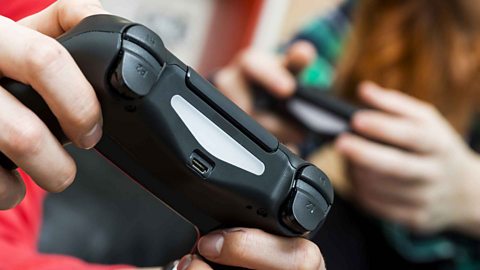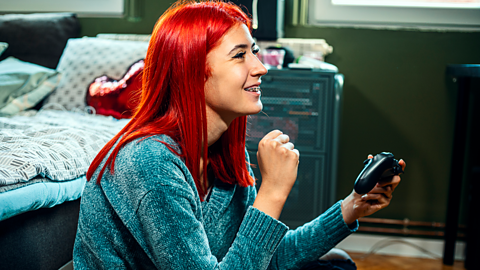
There’s loads to love about gaming – it’s fun, it’s social and it can even help you develop important cognitive, perceptual and problem-solving skills. Now the summer holidays are here and you’ve got more time on your hands, you might find yourself wanting to use those hands to game… A LOT.
But is there such a thing as too much gaming and what are the signs you should take a break?
We asked Dr Sheila Redfern, a clinical psychologist at The Anna Freud Centre, about this from a mental health perspective. She says, 'the science tells us that although there are benefits to gaming, there are some good reasons why it isn’t so great for you to spend endless hours doing it. But you can learn to read the signs that gaming is getting too much and it’s time to do something else.'
'Recognising these signs,' says Dr Redfern, 'and taking steps to manage your feelings is called self-regulation and it’s a great skill to learn because it helps make sure you’re in control of your gaming rather than the other way round.'
Here are the signs Dr Redfern suggests to look out for and some ideas of things you can do instead.
You're getting angry
If you feel yourself getting angry, stressed, irritable or anxious this could be a sign that you need to take a break. You could think of it like learning to read your own ‘emotional thermometer,’ and noticing when your ‘temperature’ (or mood) starts to get a bit too ‘hot’. When this happens, it can be hard to think straight and your emotions can get too overwhelming to manage. At these times, take a break, do something relaxing like listening to music, and when your emotional temperature is lower, choose to do a different activity for the next hour. Lowering your emotional temperature will allow you to enjoy other things too.
You feel low
If you find your mood is getting too low and you feel anxious, upset or depressed, take a break from your games console or phone and spend some time doing some breathing exercises lying on your bed. Put one hand on your chest and one on your stomach. Try to make the hand on your stomach move with your breathing, and the one on your chest stay still. When you’ve done this, you’ll be able to relax and feel less anxious, because your breathing will be more controlled.
You're enjoying other things less
If, over time, you find yourself enjoying other activities less, this could be a sign you’re gaming too much. If you spend a lot of time gaming your brain can become flooded with the hormone dopamine, often called the ‘happy hormone’. This is because there are lots of opportunities for ‘winning’ and it feels good at the start, but when it happens a lot over a period of time, your brain adapts and you start to enjoy not just the winning less, but other activities away from gaming as well. Things like music or playing sport, that used to give you joy, feel less enjoyable. After the dopamine rush – when you feel excited whilst playing – you can get irritable or angry. You can feel flat and easily annoyed with friends and family. Too much time spent gaming increases the risk of anxiety and depression. If you have nothing to replace gaming this could be a risk to your mental health. This is why it’s important to enjoy a wide range of activities: meeting up and hanging out with friends, playing sport, listening to music, dancing. There are loads of physical activities that give you the same rush of excitement you feel when you’re gaming, but don’t leave you feeling irritable afterwards, so make sure you balance out your gaming time with some of these.

'Playing games over the summer is fine,' says Dr Redfern, 'and we’re sure you’ll have lots of fun doing it – but make sure it’s in moderation. It can help to plan out certain times of the day, or set hours, where you know you're going to game so you know you've got that window to enjoy it. It also helps to plan something else fun to do afterwards.' If you want some more ideas for fun activities over the school holidays, check out of A-Z summer bucket list for some inspo.
'If you find yourself experiencing extreme versions of any of these warning signs, feel like you’re addicted to gaming, or are overspending on in-game purchases – and feeling like you can’t stop yourself,' says Dr Redfern, 'then you should tell a trusted adult who can help you reach out to a recognised charity or organisation.'
If you need support
You should always tell someone about the things you’re worried about. You can tell a friend, parent, guardian, teacher, or another trusted adult. If you're struggling with your mental health, going to your GP can be a good place to start to find help. Your GP can let you know what support is available to you, suggest different types of treatment and offer regular check-ups to see how you’re doing.
If you’re in need of in-the-moment support you can contact Childline, where you can speak to a counsellor. Their lines are open 24 hours a day, 7 days a week.
There are more links to helpful organisations on the BBC Bitesize Action Line page for young people.
The A-Z summer 2026 bucket list
Stuck for what to do this summer? We've got you covered with our A-Z bucket list of activities and ideas!

How to be kinder to people and why it's good for your wellbeing
How can kindness help our wellbeing?

Taming gaming: What the experts say
How to get the best from video games whilst staying safe.