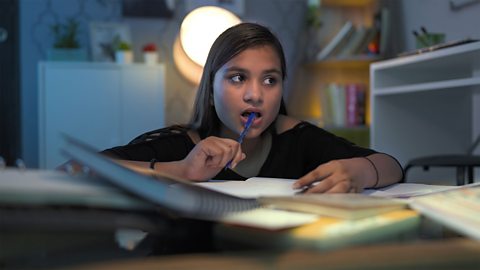
Revising for your National and GCSE exams are a big deal. You want to be prepared - but you also don't want to panic.
That's when you may start looking online for a few handy tips. There’s plenty of hacks, claims and ideas on revision on socials – everything from last minute cramming apparently being a game changer, to eating chocolate to boost your revision ability, but what’s the truth being the claims? BBC Bitesize Other Side of the Story took a closer look.
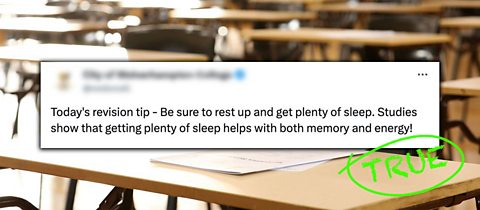
It might seem strange, as you'll literally be doing NO WORK whilst you're catching some Z's, but it's true that a good night's sleep can really help when studying. As well as helping you regain strength and energy, sleep can help to improve learning. During sleep, the things you've recently studied can get incorporated into your long-term memory, which makes it easier for you to recall the information later on.
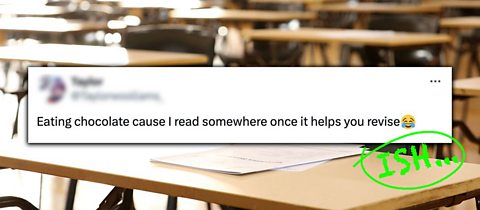
Some research shows that eating dark chocolate, which contains high levels of flavonoids (a natural substance found in plants, fruits and seeds) and at least 70% cocoa, can increase brain function, improving attention and memory. However, this is very different to the type of chocolate bar you might usually eat as a sweet treat, so claims that chocolate can improve your brain function could be misleading and used to spread misinformation. It’s also tempting to click on a post about chocolate, but make sure you don't fall for click-bait.
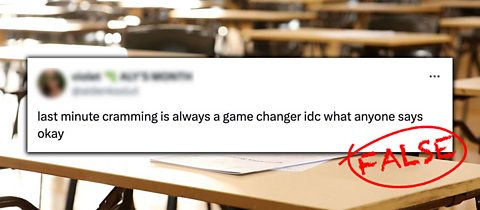
Cramming all your studying into one last-minute session might not be the best option, in fact, it may have the opposite effect and make it more difficult to retain information. Some people may suggest cramming as a good revision technique, but this is just their opinion. It’s important to differentiate between fact and opinion.
If you're looking for revision tips in places like TikTok, it's important that you're able to tell whether what you're reading has been written by an expert.
Some claims about revising made on socials may have been shared in good faith, but that doesn't always make them true - they may even be an example of misinformation.
Check where the information is coming from. Is it a trusted source like an exam board or educational organisation which specialises in revision advice? See if their socials have blue ticks on them, a sign of a recognised and verified source.
If some revision tips have gone viral, it may be that they're offering something that seems too good to be true. If they are posted with emotive headlines that promise big things, this could make them clickbait - where you're encouraged to visit a website just so it can collect hits. It's always best to check.
If you are worried about revision, a good place to ask for tips in the first place is your school, where teachers can help you with specific queries. Socials are a fun distraction when you need a break from the books, but remember to be careful when using them for tips.
This article was updated in May 2026

Not sure if the news you’re seeing on social media is true or false? Can you always tell if the things you see online are real or fake? Learn how to get the other side of the story with our quizzes, videos and explainers.
Do we feel happier when the sun's out?
What is SAD and does daylight really affect our mood?