If your teenage daughter is losing interest in sport, you’re not alone. According to the charity Women in Sport, nearly half of the girls who enjoyed being active in primary school start to drift away in their teens - that's twice as many as boys.
We all know being active is good for us. It keeps us fit, boosts mental health, and builds confidence. So what’s putting girls off? And what can you do, as a parent, to help your daughter stay active?
Here at Bitesize Parenting, we decided to speak to an expert. Baz Moffat is CEO and co-founder of The Well HQ, and a leading voice in women and girls’ health in sport.
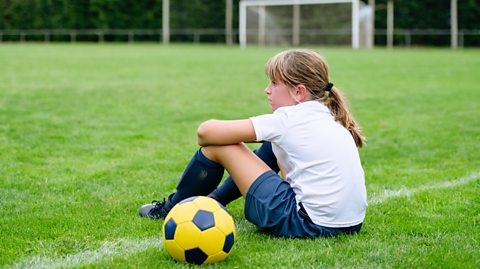
Why do so many girls drop out of sport?
Research shows that girls are less active than boys, with fewer than half meeting recommended activity levels - and that gap gets wider during the teenage years. Girls enjoy sport less than boys, they feel less confident taking part, and they’re far less likely to dream of being a top sportsperson. Baz says the consequences are huge: "It’s really significant. When girls stop being active in their teens, they lose the confidence and movement skills that set them up for life".
There’s no single reason for girls dropping out. "It's societal, it’s cultural, it’s schools and it’s parents." says Baz - a mix of things all happening at once. But some themes come up again and again.
One issue is the messaging that girls can pick up from what they see or hear around them. If they grow up with the idea that sport is for boys, it’s hard for them to imagine where they fit in. Peer groups have a big influence too. Despite seeing a growing number of role models in elite women’s sport, if their friends aren’t taking part, they’re less likely to want to.
When girls stop being active in their teens, they lose the confidence and movement skills that set them up for life." - Baz Moffat
Girls also have fewer everyday chances to be active. Research shows that boys often dominate the space in playgrounds and parks, and girls have fewer opportunities to join in, especially when it comes to team sports. It means girls can miss out on building basic movement skills, which makes it harder to be active later on.
Puberty and physical changes
Then there’s puberty, which brings its own set of challenges. Changing bodies, worries about being judged, and feeling self-conscious can all knock confidence. Girls will often avoid sport when they’re on their period, whether that’s because of pain or because they’re worried about leaking. Baz says it doesn’t have to be this way. "Periods in the teenage years can be heavy and unpredictable, but we need to help girls understand their cycle so they can manage their symptoms and stay active".
At school, girls often say they feel anxious about getting changed in front of others, or uncomfortable in their PE kit. Baz says small changes there can make a big difference. "Give girls a standard top, then let them choose the bottoms they feel comfortable in. And let them come to school in their kit - that alone can remove a huge barrier to taking part."
Baz says there’s a lot that needs to change - from better education for teachers and coaches, to better facilities and investment. But she says just supporting girls to feel confident and stay active can make a big difference. And that’s where you as a parent come in.
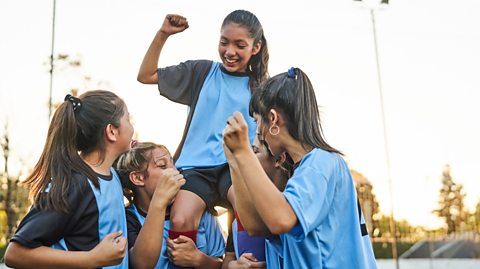
Five ways you can help your daughter stay active
1. Be curious and help her find the fun
Baz suggests gently exploring what’s putting her off sport. Find her starting point and then try to help her to find activities she might enjoy doing. It doesn’t need to be a school sport or anything competitive. It could be swimming, dancing, roller-skating, or just kicking a ball around. If she finds something she likes, she’s more likely to stick to it.
2. Be determined (but flexible)
Making movement non-negotiable can help build regular habits. "The rule isn’t what she does", says Baz, "it’s just that she moves her body a couple of times a week in a way that works for her."
3. Be a role model
Kids notice what we do far more than what we say. If you make time for your own movement - a gym class, a walk, football with friends - she’ll see that it’s a normal, positive part of adult life. "You don’t have to be sporty", says Baz, "but if we’re going to tell our kids to do it, then we have to do it too." Trying something new together also counts.
4. Normalise the conversation
Be open and honest at home about puberty, periods and body changes. It’s not about oversharing, just casual mentions that make it less embarrassing or taboo. Baz says dads staying in the room can make a big difference too. "You’re normalising the conversation, letting them know you’re there to support them, and helping them to feel able to speak up if something’s wrong".
5. Play the long game
She may not thank you, she might even roll her eyes and complain - that’s totally normal. But remember, you’re playing the long game. Keeping girls active isn’t about quick wins - it’s about confidence and habits building slowly over time. As Baz says, "For the joy of it, the health benefits and the life skills it gives you, it’s really worth the effort".

Bitesize Parenting
Fun activities, real-life stories, wellbeing support and loads of helpful advice - we're here for you and your child.

Six ways to get your kids active at home
How to keep active in a small space at home using Super Movers films.

How exercise can help your mental health
Jockey Khadijah Mellah talks about how exercise can help your mental health.

How exercise can help with revision
Team GB Olympic gymnasts Jessica and Jennifer Gadirova tell us how exercise can help with your revision.

How to get your child ready for sports day
Sports day is a summer school ritual - it can be fun but also anxiety inducing - for child and parent alike. Here are some fun tips on helping your child enjoy it.
Seven ways to get your kids outdoors
Getting your teens out of the house and into nature can boost their health and wellbeing. Tips on how to do it from parents who are outdoors enthusiasts.