“In this world nothing can be said to be certain, except death and taxes.”
United States’ founding father Benjamin Franklin wrote about the ever-presence of tax in a 1789 letter about the US Constitution – and his words still ring true to this day.
Taxes have been around for over 5,000 years – but it’s not always the most obvious things that have been taxed. Earnings and savings are commonplace however, taxes on extravagant home decorations or facial hair are a little more unusual.
BBC Bitesize explores some of the strangest things that have been taxed in history.
Window Tax
Whenever you look out of your bedroom window, do you consider it to be an incredible luxury?
Probably not – but back in the 17th Century, multiple windows on a house was seen to be quite decadent in the UK.
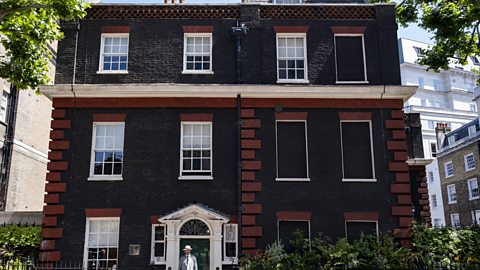
The Window Tax was introduced in 1696. Houses with 10 or fewer windows were charged a two-shilling house tax, but bigger properties with more windows were liable for much greater costs.
It was brought in as a way of taxing the rich – with the idea that the richer you were, the more windows you were likely to have, but it didn’t take into account how many poorer people actually lived in urban areas.
In towns and cities, it was rare for working class people to live in individual homes – they were more likely to live in large buildings that were divided into flats. But for the purposes of the tax, they were considered to live in the whole building and were charged significant taxes as a result.
This led to many people bricking up their windows to avoid the taxes – which had a natural impact upon public health due to a lack of daylight within homes. The tax remained in place for over 150 years, eventually being repealed in 1851.
Beard Tax
Peter the Great was the Tsar of all Russia and their first Emperor, who modernised the country in the 17th and 18th Centuries.
But while he brought in sweeping reforms to make the country a major European power – there was one thing he couldn’t get on board with.
Beards.

Yes, Peter the Great hated beards, seeing them as a symbol of the past he was trying to get Russia away from.
He introduced a beard tax – an annual 100 rouble fee to keep the facial hair. Those who paid it were issued a medal as proof of payment stating ‘this beard is a useless burden’.
Those who refused to pay the tax were publicly and forcibly shaved.
Hat Tax
If the wealthy had it or wanted it, it was taxed in the 18th Century.
In 1784, then-Great Britain Prime Minister, William Pitt the Younger introduced a tax on hats to raise funds. Shops were required to buy special licences to sell them and duty was imposed on the hats on a sliding scale depending upon how expensive they were.
The theory was, that rich people would buy and own many hats compared to poorer people and that this was a solid means of taxing those who were well off.
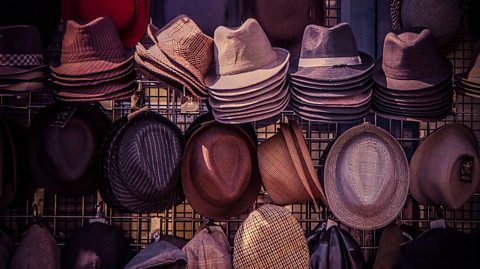
Anyone who didn’t pay the hat tax was subject to hefty fines – but there was also a much greater punishment available.
All hat licence owners were obliged to add a tax stamp to the hats they sold, to prove they had permission to sell them. Anyone who forged the stamp could have faced the death penalty.
The tax was eventually abolished in 1811.
Wallpaper Tax
In the 18th Century, another tax was introduced in England designed to raise money from the wealthy based on their home decorating.
Under the reign of Queen Anne in 1712, a wallpaper tax was brought in. The theory behind it was that richer people were buying more extravagant and expensive patterned wallpaper and the tax was designed to take advantage of that.
Initially, the charge was a penny per square yard, before rising to a shilling by 1809. But there was a very easy workaround.
People decided to put up plain paper instead and then added hand-drawn designs later, effectively rendering the tax fairly useless. As a result, it was abolished in 1836.
Cow Flatulence Tax
When it comes to governments taxing things, some decisions really stink.
In Denmark, from 2030, the world’s first fart tax will be introduced.
Don’t worry though – you won’t face a charge if you have a windy moment in Copenhagen. The tax is being introduced to combat methane output produced by livestock.
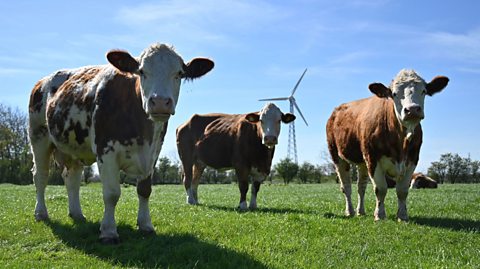
Farmers will have to pay 300 kroner (£34) per tonne of methane produced by their cows, pigs and sheep.
The tax is being introduced as a climate measure, attempting to reduce the amount of greenhouse gases produced by the country’s agricultural industry.
So every time a cow farts in Denmark, it truly is bringing in the wind of change.
This article was published in November 2025

7 amazing toilets from around the world you have to see
Explore the 7 best toilets worldwide from NASA to robot restaurants.
Five mystical UK lakes that are not Loch Ness
We dip our toes in the waters of ponds, lakes and lochs with tales linked to mythical creatures and happenings of the past.

The top 10 rainiest cities in the world - have you visited one?
Which cities around the world have the most rainfall? How do they compare to the UK - and just how much rain do they get?

