Ever wondered what would happen if the Yellowstone supervolcano erupted?
In this article, BBC science and weather presenter, Sophia Herod brings you everything you need to know about one of the world's biggest lava vents.
Volcanoes are an ancient and amazing natural phenomenon that can cause chaos and destruction when they blow.
So what about a supervolcano? Read on to find out more about the likelihood, aftereffects and science behind a super eruption!

Imagine this Yellowstone, the supervolcano in the northwest corner of the state of Wyoming erupts. But it's not just a minor eruption, it's one on a colossal scale, a super eruption. Earthquakes shape the ground, ash clouds rise and spread ominously across the skies, blocking out sunlight and lava bursts violently from the earth's crust, reshaping the landscape as we know it. The question is how would an eruption of this scale affect the globe as a whole? What's the science behind it and how likely is it to happen?
To understand the potential impacts, let's look back at past eruptions. In 2010, Iceland's Eyjafjallajökull eruption halted air travel across Europe. And in 1815, Mount Tambora erupted and triggered what became known as the year without summer. Plunging global temperatures and devastating agriculture, these events hint at the widespread and catastrophic outcomes of a supervolcano eruption. A Yellowstone super eruption would be far more explosive than anything in recorded history. The eruption of a supervolcano can blast magma into billions of scorching hot particles, including ash, which then goes up into the atmosphere and can travel thousands of kilometres away. And it's very likely that surrounding areas would be affected by pyroclastic flows, which are fast -moving currents of hot gas and volcanic matter and destroy almost everything in their path.
But on a global scale, the most significant consequence would be a volcanic winter. Scientists estimate that Yellowstone could release around 2,000 million tons of sulphur high into the stratosphere, forming sulfuric acid aerosols that reflect sunlight back into space. Temperatures worldwide fall by around 10 degree Celsius for around 6 to ten years.
Despite these dramatic possibilities - Yellowstone is not overdue for an eruption. Yellowstone's magma chamber is mostly solid and if it erupts again, it's most likely to be a small eruption. A super eruption is possible, but the chances of it happening anytime soon is extremely low, with the United States Geological Society estimating that the annual possibility is around one in 730,000.
Yellowstone is one of the most famous and closely studied volcanic regions on Earth. Located primarily in north-western Wyoming, in the USA, and covering around 3,500 square miles. The supervolcano sits in a national park and attracts nearly three million visitors each year. Tourists come to see iconic features such as the Old Faithful Geyser, colourful hot springs and dramatic landscapes.
Beneath this scenic landscape however, lies a massive geological system, a hidden sleeping giant inside Yellowstone National Park.
While ordinary volcanoes can kill thousands of people and destroy entire cities, it's thought a supervolcano could devastate continents and claim up to a billion lives around the globe. With a super-eruption being equal to the force of 1,000 Hiroshima atomic bombs exploding every second. Don't worry though, the chance of this actually happening is very unlikely.
What is a supervolcano?
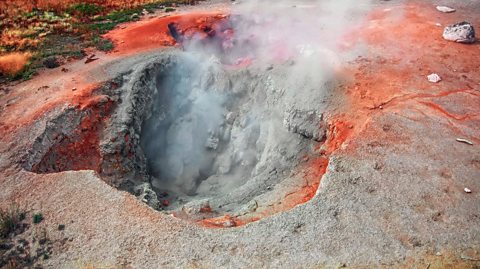
The term 'supervolcano' was first used in the 1940s and is now widely accepted by the scientific community. It's categorised by the Volcanic Explosivity Index (VEI) and a volcano qualifies if it can produce a magnitude-eight eruption, discharging more than 1,000 cubic kilometres of material. These eruptions are the biggest and most explosive of all.
Unlike traditional cone-shaped volcanoes with steep sides, supervolcanoes are difficult to identify. They usually appear as broad depressions in the ground rather than towering mountains.
In Yellowstone's case, an eruption 640,000 years ago caused magma stored miles beneath the surface to be expelled so forcefully that the ground above collapsed, forming the massive A cauldron / depression shaped tectonic feature usually formed from the collapse of a magma chamber. seen today.
What can volcanic history tell us about a supervolcano eruption?
A Yellowstone super-eruption would be far more explosive than anything in recorded human history. Past volcanic events offer unsettling clues as to what a super-eruption could be like.
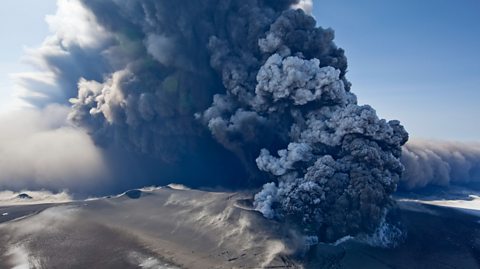
In 2010, despite not being a supervolcano, the eruption of Iceland's Eyjafjallajökull had far reaching consequences, as huge plumes of ash grounded European air travel for weeks. The eruption spewed ash high into the atmosphere - between 20,000 and 50,000 feet - a space where commercial airlines operate.
Volcanic ash moves around the globe primarily via high-altitude wind currents, particularly if the eruption plume reaches the A layer in the upper atmosphere of a planet where the temperature increases with height.. As a result, these events can be far reaching and more destructive than the initial blast.
If Yellowstone had a super-eruption, global effects would be cataclysmic. Computer models predict there could be as much as around 1000 cubic km of ash and gas from the eruption. This is many thousands of times larger in volume than the ash and gas plumes which erupted from Eyjafjallajökull in 2010. According to a UK Met Office computer forecast commissioned by the BBC, a fine dusting of ash could reach as far as Europe around three to four days after the event.
The 1815 eruption of Mount Tambora in Indonesia, which injected sulphur into the atmosphere and caused what is known as the "Year Without a Summer." Global temperatures dropped, harvests failed, and famine spread across Europe and North America.
What would happen if Yellowstone had a super-eruption?
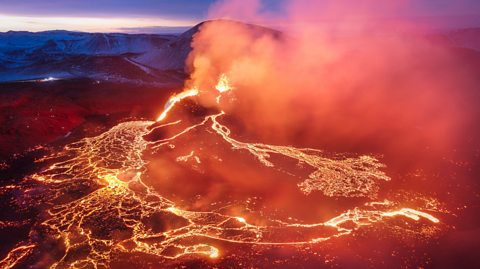
Supervolcano eruptions blast magma into billions of scorching hot particles, including ash, that can travel thousands of kilometres away, permanently changing the region's landscape, swallowing forests, rivers and mountains.
Ash is the biggest killer and scientists estimate that Yellowstone could release around 2,000 million tonnes of sulphur high into the stratosphere. The ash then forms sulphuric acid aerosols that reflect sunlight back into space.
Climate models suggest that as a result of this global temperatures could fall by as much as 10°C, with the Northern Hemisphere cooling by up to 12°C for six to ten years.
If much of the globe was plunged into a volcanic winter, the effects would extend far beyond the collapsed roofs and destruction seen in Pompeii 79 AD after the eruption of Mount Vesuvius. Along with this, there could be widespread crop failures, famine, contaminated water supplies, darker skies, potential ecosystem collapse and altered weather patterns, to name a few.
Then there's the likelihood of fast-moving A current of hot gas and rock that flows downhill at high speed., which could reach up to 100 kilometres in the surrounding area of Yellowstone. This is a dense searing cloud of ash, gas and rock travelling at over 300 kilometres per hour. It would obliterate almost everything in its path.
How likely is a super-eruption?
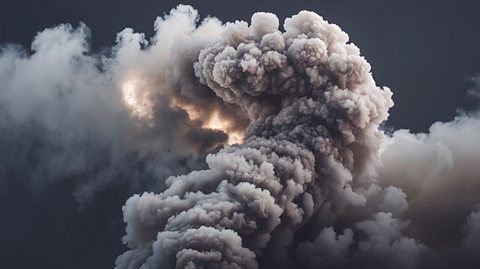
Despite these dramatic possibilities, scientists emphasise that Yellowstone is not overdue for a super-eruption. Yellowstone's magma chamber is mostly solid. If it erupts again, it will most likely be a small event. A super-eruption remains possible someday however, but the chance of it happening anytime soon is extremely low, with the United States Geological Survey estimating the annual probability at about one in 730,000 (0.00014%).
Scientists are working hard to monitor the supervolcano, in fact, the clearest picture yet of Yellowstone's underground magma system has been mapped by scientists at USGS. Understanding where magma is located is essential for predicting volcanic activity and keeping the public informed about potential risks.
Research suggests that Yellowstone is only five to 15% molten, so it is unclear if there is even enough magma beneath the caldera to feed an eruption.
Yellowstone is active however and experiences between one and three thousand small earthquakes each year, most too weak to be felt. These quakes help scientists track the movement of magma and fluids underground, offering vital clues about what is happening beneath the surface.
Even with the uncertainty, measures are taking place to prevent such an eruption. If there are signs that Yellowstone will erupt, NASA plans to drill into the supervolcano and fill it with cold water to cool it down, preventing the heat from the magma below from ever reaching the top of the chamber, much like how a radiator in a car works.
A remote but dramatic possibility
A Yellowstone super-eruption would be one of the most consequential natural disasters in Earth's history, capable of reshaping the climate, crippling global agriculture, and testing the resilience of human civilisation itself.
Yet it remains a remote possibility on any human timescale. Yellowstone is active, carefully monitored and currently showing no signs of an impending catastrophic eruption.
For now, it stands as a reminder of the immense power beneath our feet, something to be respected and studied with sober understanding.
This article was published in January 2026
Five incredible and icy 'frozen' waterfalls
Take a look at these wintery waterfalls from around the world, exploring how some appear to 'freeze'
7 amazing toilets from around the world you have to see
Explore the 7 best toilets worldwide from NASA to robot restaurants.
Five mystical UK lakes that are not Loch Ness
We dip our toes in the waters of ponds, lakes and lochs with tales linked to mythical creatures and happenings of the past.