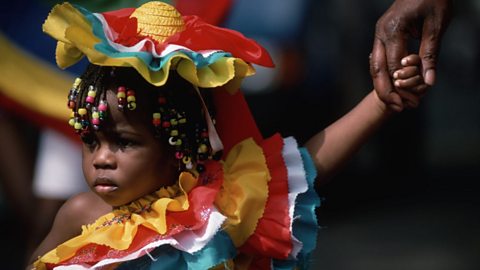
This August bank holiday weekend Notting Hill Carnival is back for another year. It is an ever-popular community-led event, which first took to the streets in 1966. The carnival is rooted in Caribbean heritage, and celebrates how Caribbean culture has influenced many neighbourhoods in London, England.
The story of Notting Hill Carnival starts in 1959 when Claudia Jones, a Trinidadian human rights activist based in London, put on an indoor ‘Caribbean Carnival’ at St Pancras Town Hall.
The celebration was then introduced to the streets of West London by local resident and community activist Rhaune Laslett. She invited musician Russell Henderson to play with his band for the event. While playing, Russell took festivities outside and down Portobello road where locals joined in and danced.
Rhaune wanted to make the event multi-cultural and she included people from all different backgrounds in the carnival as it began to grow. She is now honoured, along with Claudia, with a commemorative plaque on the corner of Tavistock Square and Portobello road declaring them the ‘first ladies’ of Notting Hill Carnival.
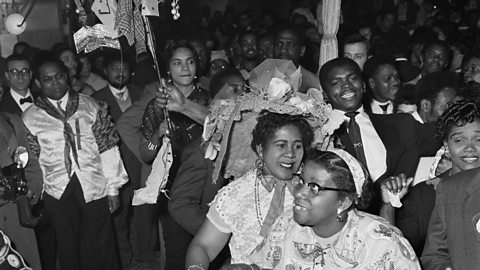
Notting Hill has now become one of the longest running street parties in the world. Over two million people attend each year.
Carnivals of all sizes are held at different times all over the world. Some are even older than Notting Hill. In this article BBC Bitesize takes a closer look at the street celebrations you might not have heard of before.
Galaxidi Carnival
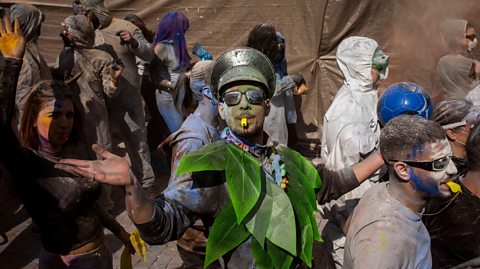
In a small coastal town in Greece called Galaxidi, there is a three-day carnival to celebrate the beginning of Lent for the Orthodox Christian church. The final day of celebration is called ‘Clean Monday’, in Galaxidi they mark this day by taking part in a ‘flour war’.
It’s an intense battle where people throw flour (some tinted in different colours) at one another. It’s a joyous event where locals and tourists come together to play, dance and chant. Although it’s not clear when this tradition started, what we do know is that it marks the end of carnival and the start of Lent.
The Carnival of Santa Cruz de Tenerife
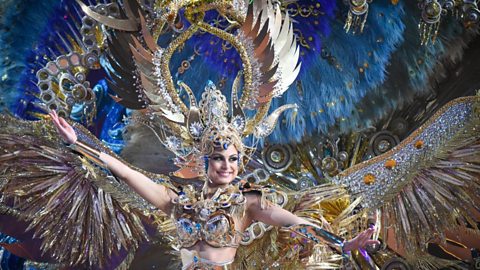
In Spain, there is a month long festival run by the people of Santa Cruz de Tenerife. It’s a huge cultural event and in 1980 was declared a ‘Festival of International Tourist Interest’. The festivities happen between February and March, and kicks off with the ‘Carnival Queen Election Gala’ where the Queen and her court are chosen. As the carnival nears its end, they have the ‘Burial of the Sardine’, where carnival-goers bid farewell to the "chicharro" fish, and head to the streets to jokingly mourn.
Carnivals take place across the different Canary Islands. The Gran Canaria Carnival at Las Palmas de Gran Canaria is known to host vibrant LGBTQ+ events, such as the ‘Drag Queen Gala’.
Carnival of Oruro
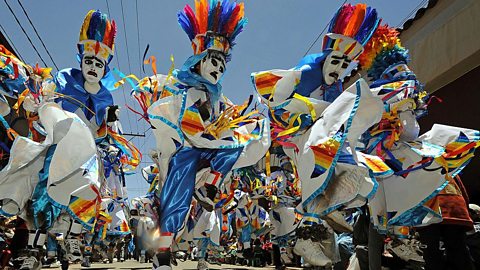
On the Saturday before Ash Wednesday, the city of Oruro in Bolivia hosts a world renowned carnival that lasts ten days. Today, the celebrations are seen as a mix of indigenous religious festivities with Catholic beliefs. The carnival tells many stories through music, dance and costume. Stories range from how the Spaniards colonised the people of Bolivia, to miraculous tales about the Virgin Mary. In 2001, UNESCO declared the carnival to be a “Masterpiece of the Oral and Intangible Heritage of Humanity”.
Trinidad and Tobago Carnival
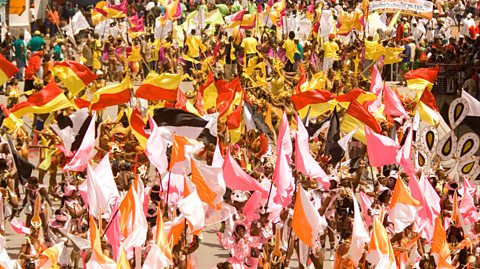
This vibrant event happens in the Republic of Trinidad and Tobago in the city Port of Spain. The festivities only last for a few days, with two pinnacle days of celebration, which are always on the Monday and Tuesday before Ash Wednesday. There are many events that take place in the lead up to the carnival, including groups of people competing in the ancient art of stick fighting, a tradition rooted in the legacy of African ancestors during slavery. Live steelpan competitions are also held in many communities meaning the national instrument can be heard everywhere you go.
The event that starts the festivities is called ‘J’ouvert’, this happens on the Monday at 4am. People come together to dance on the streets covered in paint, mud and oil. Celebrations then continue throughout Monday and Tuesday. The festivities include masquerades, dancing, music and competitions between bands. There is also the King and Queen of Carnival competition which showcases the great creativity of individuals through their costumes and floats.
Carnival of Binche
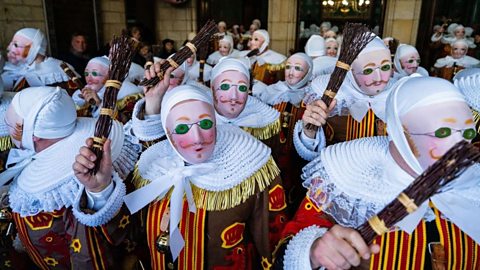
In Belgium, a town called Binche hosts a three-day carnival. Like many other carnivals it takes place on the days before Lent, but in Binche they start partying on the Sunday. The celebration has roots dating back to the Middle Ages and the townspeople take great pride in preserving this tradition.
A key element to the proceedings is the dressing up as the Gille. Only men from Binche or citizens of Binche (who have lived there for over 5 years) are allowed to participate in this tradition. The Gilles enter proceedings on the Tuesday before Lent, the final day of the festival. They all wear a white cotton hat, and tunic and trousers decorated with stars, lions and crowns. In the morning, they also wear masks made out of wax and decorated with green glasses, a moustache, a tiny goatee and mutton chops. The day ends with the Gilles dancing under a giant display of fireworks.
Published in August 2025
How to stay safe in a party town
On holiday with your pals for the first time? Here are some tips to keep you safe.

Discover your wild side with animal sounds
Take inspiration from BBC Proms and the Carnival of the Animals for a musical activity with your child.

Five amazing mazes across the world
Join BBC Bitesize as we try not to get lost in some of the most interesting puzzling paths found across the globe