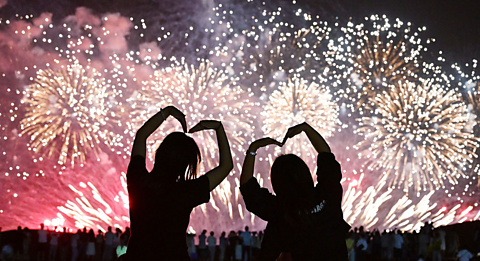
Watching thrilling fireworks displays is a Bonfire Night classic.
Over 400 years since the Gunpowder plot failed, we’re still marking the occasion every year with fireworks - and toffee apples!
But did you know that fireworks have a long history, dating back to at least 200BCE.
Here's five fascinating facts about fireworks, brought to you by BBC Bitesize.
But before we get going, it's worth knowing that fireworks can reach speeds of 150 miles per hour. They can cause injuries and accidents no matter the shape or size. It's important to always let an expert adult handle them. Or even better, follow the advice of the fire brigade and head along to an organised display.

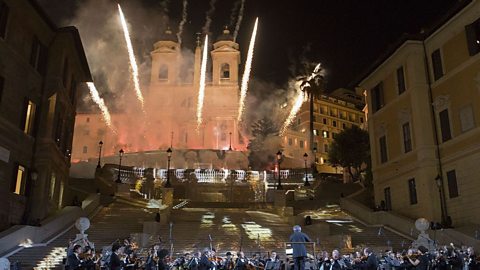
1. How long have fireworks been lighting up history?
Early firecrackers was developed around 200BC in China. Bamboo shoots were thrown onto fires, which caused the air inside of them to expand, making them explode with a crack. It was believed the loud noise would scare evil spirits away.
Things got even louder with the almost accidental creation of gunpowder by Chinese alchemists. This mixture was packed into bamboo and later paper tubes and… BANG! The first fireworks lit up the sky.
Because they were expensive and showy, they were especially popular among European royalty. In Britain, the first documented fireworks display was at the wedding of Henry VII and Elizabeth of York in 1486. Queen Elizabeth I even appointed the first "Fire Master of England" - a title given to the best and most respected fireworks expert in England.
In 1749, King George II of Great Britain commissioned a piece of music from composer George Frideric Handel which would accompany the fireworks display at a celebration for the end of the War of the Austrian Succession. And so Handel's Music For The Royal Fireworks was born.
Come the 19th Century, Italian pyrotechnicians were widely credited with developing the aerial shells that were the basis of many of the modern day firework. These shells contain gunpowder which launches the firework into the sky. They also contain the elements needed to produce specific colours upon explosion.
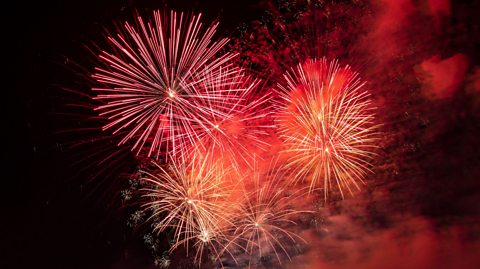
2. Why are there less blue fireworks than other colours?
Early fireworks were mainly associated with one colour, orange. But come the 19th Century things were about to get vibrant!
Around 1830, European scientists figured out that adding and combining different metal-based compounds to the fireworks resulted in vibrant colours.
Red, for instance, comes from strontium, green from barium, and mixing titanium, zirconium and magnesium gives a bright white.
A ‘perfect’ blue is very difficult for firework designers to make. Blue comes from copper, but if the temperature gets too hot the colour vanishes, and if it's too low you don't get any colour at all.
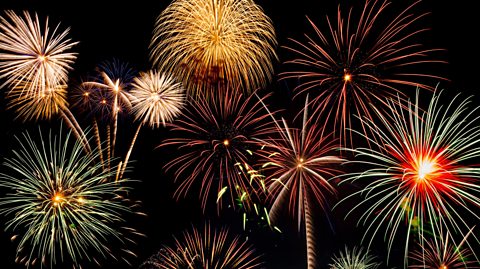
3. Did you know, many fireworks are named after flowers?
Fireworks make many different shapes in the sky, and they all have different names. Many of them get their names after flowers.
A peony, the most common type, is a simple spherical arrangement of stars which explode outwards and then fall down, while a chrysanthemum is the same but the stars leave a visible trail of sparks.
Then there are dahlias, whose stars travel a longer distance than the chrysanthemum or peony. Palm trees have a rising ‘trunk’ of sparks which splits into six trailing star fronds, and might be accompanied by smaller exploding micro-shells, called ‘coconuts’.
There are also brocades, which have stars that fall in an umbrella patterns. Falling leaves, which have stars that twinkle as they flutter down. Crackling rain which, as the name suggests, makes a noise as the stars descend through the sky.
4. Who is behind the biggest firework shows?
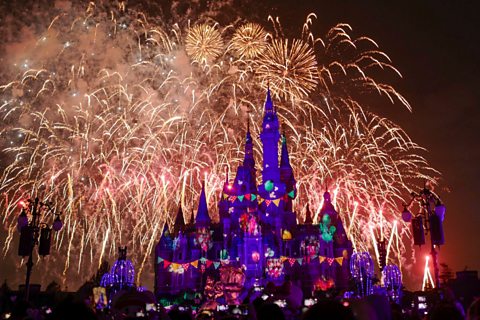
The world's biggest buyer of fireworks is said to be the Walt Disney Company. It is estimated they spend around $50 million a year on the displays they stage ever night over their various parks around the world.
According to Guinness World Records, the largest individual fireworks display took place at the Church of Christ in the Philippines during the countdown to the 2016 New Year celebrations.
An astonishing 810,904 fireworks were set off in a display that lasted just over an hour. Unfortunately, it rained throughout.
5. What other events are celebrated with fireworks?
Dazzling displays are used the world over in times of mass celebration.
In the USA, Independence Day on 4 July is celebrated with fireworks all over the country. Canada has displays on Canada Day on 1 July, while Lunar New Year is celebrated by communities across the world with millions of firecrackers and dragon dances. In France, Bastille Day on 14 July is marked with displays after a day of picnics, and in Mexico Christmas is also celebrated with fireworks.
In India and in Hindu communities all around the world, Diwali celebrations feature fireworks to mark the triumph of light over dark.
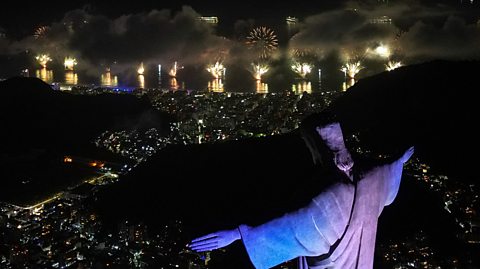
And across the world the New Year is often marked with displays, many of the most spectacular being in the world’s capitals.
This article was published in October 2024 and updated in October 2025.
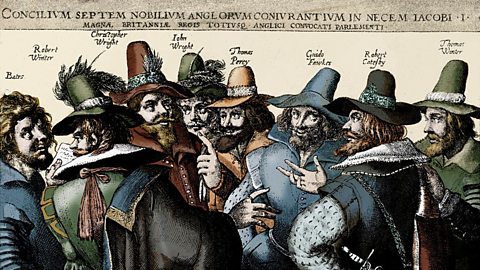
Who were the other Gunpowder Plotters?
You know Guy Fawkes but what about Robert Catesby, Francis Tresham and the others?
How well do you remember the 5th November? The cracking bonfire night quiz
Bonfire Night has been celebrated for over 400 years. How well do you know about the annual tradition?
The secret history of popcorn
From Aztec ceremonies to cinemas, this light and tasty snack has a rich and colourful history.