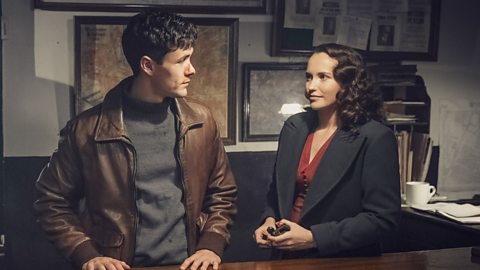
From ordinary citizens to astronauts, there are a few people who have done some significant things, but you might not know their name.
We take a look at some notable people from the past (and present) and some of the great things they have done.
Ronald Wayne - Apple founder
Steve Jobs and Steve Wozniak are known worldwide as the founders of the tech-giant, Apple. However, they weren’t the only ones who started the company, a man called Ronald Wayne was key to Apple’s establishment in 1976. Jobs and Wayne worked together at the iconic Atari arcade game company, and it is there, where Jobs would regularly turn to Wayne for advice.
Jobs had the initial idea for creating Apple but needed the computer programming skills of the talented Steve Wozniak. Jobs offered Wozniak a partnership but he turned it down, Wayne persuaded Wozniak to start the company and took a background role of an advisor. Apple was born with Wozniak and Jobs having a 45% share each and Wayne with 10%.
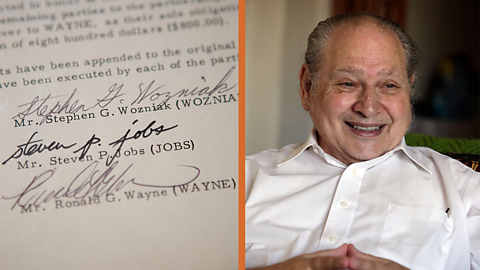
Nowadays, owning 10% of Apple sounds like a dream, but Wayne sold his share back to Wozniak and Jobs for $800, just 12 days after the company was founded. This share would be worth over $100bn today. Wayne apparently grew concerned that any debts from the business could fall on him. He said in an interview “Jobs and Wozniak didn't have two nickels to rub together. I had a house, and a bank account, and a car… I was reachable!”
Wayne said he has no remorse about giving up his role in Apple but he does have one regret, selling his original signed contract for $500 in the early 1990’s. In 2011, that same document fetched $1.6m at auction, perhaps one more ‘what if’ to add to the list.
Elizabeth Jennings Graham- Civil rights activists
A lot of people know the story of Rosa Parks, a civil rights activist who refused to give up her seat for a white passenger on a bus in Montgomery, Alabama, USA in 1955, but she wasn’t the first. Nine months before Parks took a stand, a 15-year-old by the name of Claudette Colvin did the same thing in the same town, but this story only made a few local newspapers.
But action against segregation started even earlier. In 1854 a young teacher called Elizabeth Jennings Graham was heading to church in Manhattan, with a friend when she was running late. She hailed the first streetcar approaching and boarded. As soon as the two got on, the conductor tried to drag them back off with Jennings resisting heavily. Eventually a police officer joined in and Jennings was thrown to the pavement.
Her fight for justice didn’t stop there. Jennings’ family got in touch with a young lawyer called Chester Arthur, the same man who would go on to be the 21st US president in 1881. With Arthur’s help, Jennings successfully sued the railway company in 1855, 100 years before Rosa Parks’ famous act of defiance.
Edith Wilson - ‘Acting’ President of the United States
The US arguably came the closest yet to getting their first female president with Hillary Clinton in the 2016 presidential elections, but some would argue that they’ve already had one. Edith Wilson was the First Lady to the President of the United States, Woodrow Wilson from 1915 to 1921. After president Wilson had a stroke in 1919, First Lady Edith took on a lot of his responsibilities and it’s argued that she ‘practically’ ran the White House.
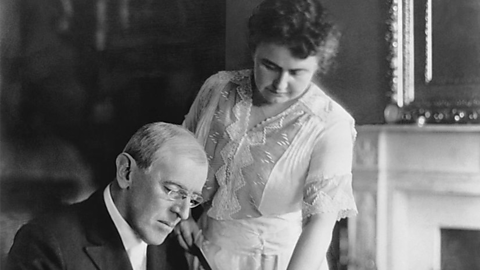
Although the President was severely ill and bedridden, he didn’t resign. Edith carefully looked at all matters that demanded the presidents attention and decided which were important enough to show him. She wrote about her role later saying: “I studied every paper sent from the different secretaries or senators and tried to digest and present in tabloid form the things that, despite my vigilance, had to go to the president.”
Her version of events has been disputed by some historians.
Hedy Lamarr - Inventor during WW2
In the 1940’s and 50’s, Hedy Lamarr was best-known worldwide as a Hollywood actress. But behind closed doors Lamarr worked with an American composer-turned-inventor called George Antheil, to come up with a ‘frequency-hopping’ system. The idea was to stop enemies jamming radio signals between a plane and a guided torpedo, the communications would keep jumping simultaneously to new frequencies.
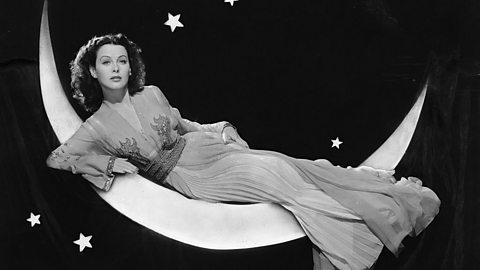
Lamarr and Antheil patented their idea and took it to the navy but were turned down. In the 1950s, Lamarr’s technology was being used and in 1962, all of the US ships involved in the Cuban Missile Crisis were equipped with torpedos guided by the ‘frequency-hopping system’. By this time, their patent had ran out leaving them uncredited and uncompensated. Lamarr and Antheil’s system is thought to have formed the basis for WiFi, Bluetooth and GPS. All include signals jumping to different frequencies to get the strongest signal.
Hedy Lamarr continued to endure harsh Hollywood schedules, performing in blockbuster films like Samson and Delilah and Algiers. She was loved by fans all around the world, the same fans who had zero knowledge of her work in science. She was eventually recognised in 1997 with an Electronic Frontier Foundation award, who claim to recognise “leaders on the electronic frontier who are extending freedom and innovation in the realm of information technology.”
Helen Sharman - First British astronaut
When Tim Peake lifted off in 2015, many thought of him as Britain’s first astronaut but this was far from true.
Although Peak was Britain’s first ‘official’ astronaut, meaning he was the first publicly funded Briton in space sent by the European Space Agency, it was actually Helen Sharman who was the first Brit in space. She was part of Project Juno, a 1991 collaboration between the Soviet Union and private British companies.
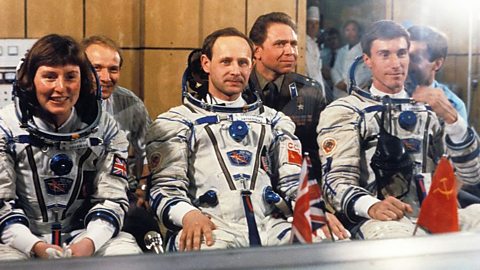
In 1987, she heard an advert on the radio saying “astronaut wanted: no experience necessary” and immediately applied - passing physical exams, psychological and medical tests to be selected over 13,000 other applicants.
She was the only Brit to fly under the UK flag until Tim Peake as other astronauts like Michael Foale and Piers Sellers flew for Nasa under dual-citizenship. She spent eight days at the Mir Space Station, which eventually became disused and was destroyed by Russia in 2001.
Tim Peake, however, was the first Brit to visit the International Space Station.
Stanlislav Petrov - Military Officer who avoided nuclear disaster
During the Cold War in September 1983, the world was saved from a potential nuclear disaster. The Soviet Union’s early-warning system detected five incoming missile strikes from the United States. Instead of reporting the signals to his seniors, he dismissed them as a false alarm, a decision, which may have saved the world.
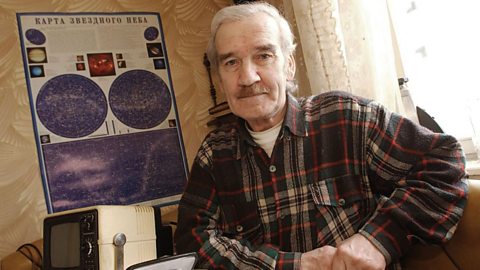
The protocol for the Soviet military would have been to retaliate with a nuclear attack of its own. The system was telling him that the level of reliability was at its “highest”. Stanislav Petrov told the BBC’s Russian Service in a 2013 interview: “The siren howled, but I just sat there for a few seconds, staring at the big, back-lit, red screen with the word 'launch' on it.”
Instead he called the duty officer at the army headquarters and reported a system malfunction. He became suspicious because of how clear the warning was, he says there was “28 or 29” security levels” and he wasn’t sure that it would pass through all of the checkpoints. If he was wrong, the first nuclear explosions would have happened minutes later.
Twenty-three minutes later nothing had happened. “It was such a relief,” Petrov said.
A few days later he was reprimanded, not because of what he did but for mistakes he made in the logbook. He believed that if somebody else would have been on shift, the alarm would have been raised. "My colleagues were all professional soldiers, they were taught to give and obey orders” he said. A later investigation found that Soviet satellites had mistakenly identified sunlight reflection on clouds as the engines of ballistic missiles.
These are just some of the people who have done something notable and many have had a lasting impact on the world today. For those using Wifi on their iPhone, you now know a few people who had an important hand in creating them.
Seven books that made history
If you've ever wanted to read a book as tall as a bus, you've come to the right place.

Veggie before it was cool
Four famous people in history you didn’t know were vegetarian.

World On Fire: What was life like for young people in World War Two?
Writer Peter Bowker shares his research with Bitesize.