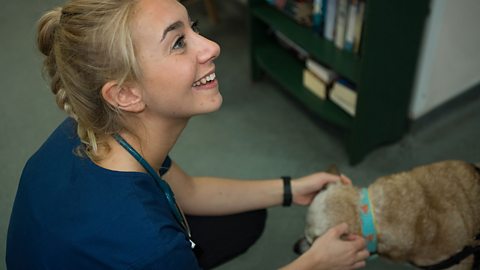
Meet Bethany, 21, from Buckinghamshire, to find out more about life as a carer. Part of our Bitesize world of work series.
Bethany:
Hi, I'm Bethany. I'm 21 years old and I'm a carer. From a young age I knew I wanted to be a carer. I've always been passionate about looking after people - making people happy is what makes me happy. At school, I found that I wasn't much of an academic learner. I've always been more of a practical learner.
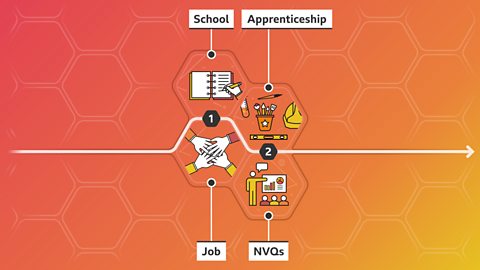
That's why health and social care was best for me as it's more hands-on. I feel like this job is also very much hands-on and that's why it's perfect for me. So when I was 15-years-old I got a job in the nursing home and I started off as a cleaner. I loved the environment that I worked in. My supervisor offered me an apprenticeship as she realised how dedicated and hard-working I was towards my job. When I was 16, I started my apprenticeship and I started studying my Level 1, 2 and 3 NVQs, qualifying in care. The reason why I feel that I achieved so well in my NVQ was because I was learning on the job.
I was working in the nursing home for four years. It was a big part of my life. I absolutely loved every day working there. I looked forward to going to work and then, sadly, it came to an end and I had to move on. I felt like I was ready for a change, so I moved over to home care. This involves supporting people in their own homes within the community and making sure those that I look after are safe in their own homes every day - that they're comfortable and happy and they've had their medication properly, making sure they're fed taking them shopping and making sure their personal care and their hygiene is up to a good standard. One of my favourite calls are companionship calls because we have people out in the community that haven't seen people for days that are lonely and us going round having a cup of tea or taking them out for a walk, it means the world to them.
Client:
I enjoy Bethany coming to me because she is so natural. No, it's just nice to see Bethany because she's such a nice person. We chat away so her time goes so quickly.
Bethany:
Whilst working in care, I feel that I've really found myself. Every day I leave work with a smile on my face. The satisfaction you get from this job is unexplainable and making a difference to those that I look after is what really matters to me.
From a young age I knew I wanted to be a carer – making people happy makes me happy.
- At school, Bethany found she was more of a practical learner than an academic learner
- She chose to study Health and Social Care because it was a hands-on course and she wanted to learn about care work
- She achieved three distinctions - the highest grade you can get for this course
- When Bethany was 15, she got a job as a cleaner in a nursing home. Her supervisor saw potential in her and took her on as an apprentice
- Today, Bethany works to support adults in their own homes and loves the variety of her job.

What to expect if you want to be a care worker
- Care worker average salary: £20,000 to £25,000 per year
- Care worker typical working hours: 35 to 40 hours per week
What qualifications do you need to be a care worker?
You could get into this role via a college course such as a Level 1 Certificate in Health and Social Care, a Level 2 Diploma in Care or a T-level in Health (England-only). Other routes include an advanced apprenticeship, volunteering or applying directly if you have relevant experience.
Sources: National Careers Service, GOV.UK
This information is a guide and is constantly changing. Please check the National Careers Service website for the latest information and all the qualifications needed and the GOV.UK website for more on T-levels
For careers advice in all parts of the UK visit: National Careers Service (England), nidirect (Northern Ireland), My World of Work (Scotland) and Careers Wales (Wales).
Find out more
The Bitesize Careers Podcast
Katie Thistleton, inspiring young guests and career experts chat all things careers.
Tips and advice
Help with interviews, writing a CV and other skills for work.
Khadija: first aider
Khadija uses her medical knowledge to teach young people first aid.
Know your strengths and weaknesses. video
How knowing your weaknesses could be your biggest strength.
Lucy: vet
Lucy uses her knowledge of Biology in her job as a vet.