What are the key facts about the Victorians?
- Queen Victoria ruled Britain from 1837 to 1901 and was the first monarch to be photographed.
- The Industrial Revolution was a time of big changes with new inventions like the telephone and the start of modern computing.
- Many people, including children, worked long hours in dangerous and dirty factories.
- Britain controlled many countries around the world, but this often meant taking resources from those places.
Speaker 1 - Quintin Question: Hi everyone, and welcome to QQFFM. I'm Quintin Question and over here we have Frank the Facts Machine. Let's get into it! Today’s subject is history, and we're waiting for your questions, and here they come. Ok, KKDoughnuts wants to find out about the history of doughnuts.
Speaker 2 - Frank the Facts Machine: A cookbook published in Germany in 1485 offers a recipe for Gefüllte Krapfen. Sugar free, stuff, fried dough cakes.
Speaker 1 - Quintin: Yeah, well, that's enough of that. OK, JamPizza wants to know if it's true that the pyramids were built by aliens. Frank could… Nah, let's not go there. Ah here we go, this is a good one. PBJelly is asking, ‘Who were the Victorians, and why should we care?’ Nice one PBJ! Frank, we hear about them a lot. Give us the QQFFM lowdown on the Victorians.
Speaker 2 - Frank: Ok, Victorians is a term used to refer to people in the British Isles who lived during the reign of Queen Victoria from 1837 to 1901.
Speaker 1 - Quintin: Wow. Didn't she ever smile?
Speaker 2 - Frank: She was brought up not having much fun, and when her husband Albert died young, she had even less.
Speaker 1 - Quintin: Oh, ok. Well, keep going. What's the big deal about her? And her Victorians then?
Speaker 2 - Frank: Well the Victorian era was a time of great change on these islands. Many inventions and ideas that altered history happened during this time. For example, Charles Darwin brought forward the concept of evolution with his book Origin of the Species. Charles Babbage invented an analytical engine that was the basis of modern computing. Alexander Graham Bell invented the telephone and the Postal Service was created. There were new laws to promote vaccination and public health, plus compulsory education for children. All in all, the Victorian era was exciting time.
Speaker 1 - Quintin: Wow, that's a lot of new stuff happening. It sounds amazing. What a time to be alive.
Speaker 2 - Frank: Yes, well, they were exciting and prosperous times for some Victorians, but for others it wasn't so good. Their attitude to mental health was to lock people up in horrible buildings called asylums. Legal food additives included chalk, clay, sawdust and mercury. Beauty products often contained poisons such as lead, ammonia and arsenic.
Speaker 1 - Quintin: Wow, that's madness. But what else can you tell us about Victorian times? Like what kind of jobs did they do?
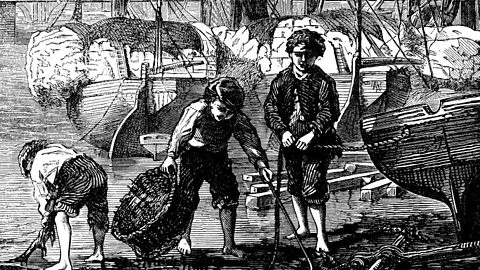
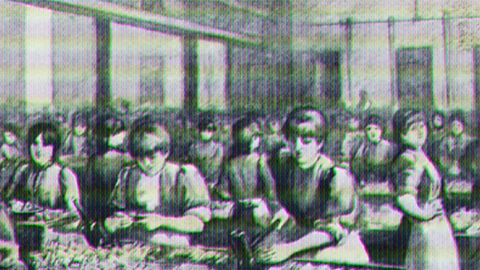
Speaker 2 - Frank: Ok, our top five crazy Victorian jobs are; one, mudlarks. That's people, including children, who waited around in smelly mud banks, looking for stuff to sell, such as coins, wood and rags. Two, toshers. Who are similar to mudlarks but did it in the sewer. Three, rat-catchers, who would clear houses of rodents using dogs and ferrets. Four, matchstick makers. Teenage girls working up to 16 hours a day making matches in terrible conditions. Five, chimney sweeps, children who were employed to climb up chimneys and clean them. In fact, it was considered OK to clean chimneys using children as young as six.
Speaker 1 - Quintin: Wow, that's messed up, isn't it?
Speaker 2 - Frank: Hmm, well, I can't comment on the sanity of the Victorians, I'm afraid, as I deal exclusively in facts.
Speaker 1 - Quintin: Sure. So you say, Frank. Well, it seems like they had some good inventions, but made some bad career choices. Anyway, it's goodbye from me and it's goodbye from Frank. See you next time on QQFFM. Sometimes I think you should lighten up a bit Frank!
Speaker 2 - Frank: Well, you programmed me!
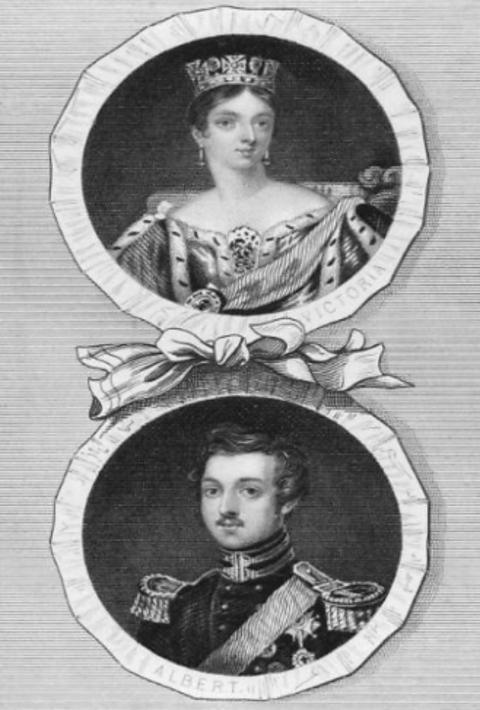
Who was Queen Victoria?
Queen Victoria ruled Britain from 1837 to 1901. This period is called the Victorian era.
It was a time in history when there was lots of change.
Queen Victoria was born in London on May 24, 1819.
At the age of 18, she became Queen of the United Kingdom.
Victoria married Prince Albert in 1840, and together they had nine children.
When Albert died in 1861, Victoria withdrew from public life for several years but continued to rule as Queen until she died at age 81 in 1901.
Queen Victoria was the first monarch to be photographed.
What was the Industrial Revolution?
The Industrial Revolution was a time of speedy industrialisation and advances in technology.
It began in Britain in the 18th century and spread across the world.
It led to significant changes in the way people lived and worked.
Many inventions and ideas that altered history happened during the Victorian age. For example, Charles Darwin brought forward the concept of evolution, with his book “Origin of the Species”.
Charles Babbage invented an analytical engine, that was the basis of modern computing.
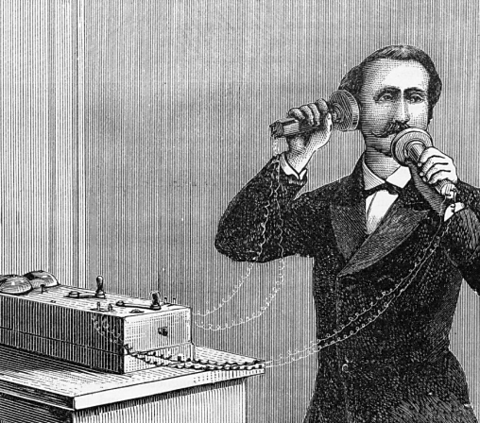
Alexander Graham Bell invented the telephone, and the postal service was created.
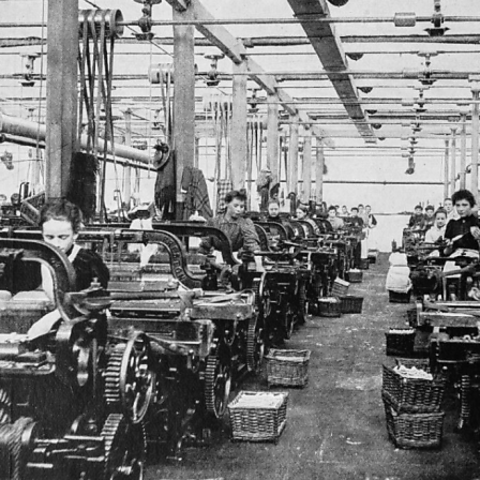
What were the working conditions like?
During the Industrial Revolution, mills, factories, and mines were built nationwide.
Poor people working in factories or mills had to endure horrible working conditions.
The hours were long – usually a 12-hour day - the pay was terrible, and the conditions were usually dangerous and dirty.
Poor children often had to go to work to earn money for their families.
As a result, many could not go to school. It was customary for children from low-income families to be sent off to work as young as the age of four or five.
What was family life like?
If you were born into the Middle or Upper classes in the Victorian era, you would usually have been brought up by nurses and governesses.
Parents didn't always have much contact with their children. Men were expected to earn the money, while women took charge of running a household.
Manners and respect were of great importance during this time, and children would mainly address their father or other males as 'Sir.'
Children were expected to be well-behaved and respectful, with strict discipline and education a crucial part of their upbringing. A typical quote during this time was, ' Children should be seen and not heard.'
Religion was also important during the Victorian era, with Christianity playing a central role in society. Church attendance was high, and religious values were often reflected in politics.
What were some common jobs in the Victorian age?
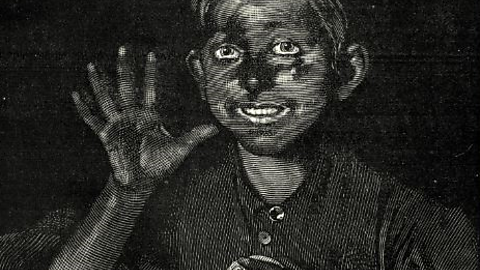
Image caption, A number of children worked as chimney sweeps
1 of 3
What do I need to know about the British Empire?
When Queen Victoria took the throne in 1837, Britain already governed other countries, including Canada, India, New Zealand, and several African areas. This was known as the British Empire.
In the 1870s, Britain set out to gain control and influence over new overseas territories, particularly in Africa.
The British Empire brought new ideas and technology to some countries and helped spread the English language around the world.
However, two negatives of the British Empire were that it often treated the people in the places it took over unfairly and sometimes even violently, and it took resources and wealth away from the areas it ruled over without giving enough back in return.
By the time Queen Victoria passed away in 1901, the British Empire was the biggest empire the world had ever seen - Queen Victoria was in charge of nearly 1/4 of the world's population.
