BBC Three's MOTDx (Match of the Day Extra) brings you football, music and culture from around the Premier League – but what's it like to be on the other side of the production?
The Young Reporter team went behind the scenes of some popular BBC brands to find out which jobs go into making hit content.
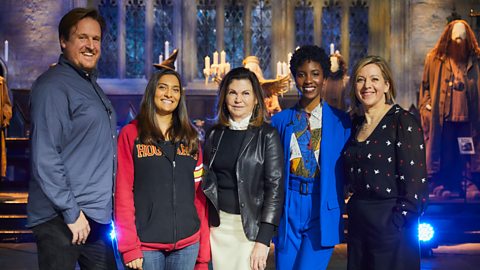
Join presenter Reece Parkinson, director Clair Goodwin, assistant producer Liv Portas and sports filmmaker Tom Mallion for a sneak peek behind the scenes of their roles in BBC Sport.
Reece Parkinson, presenter MOTDx
For me, I think the best part about being able to work on MOTDx is just meeting incredible people… I mean, who doesn't want to meet great footballers?
Reece's top tip
Join as many sports teams as you can. You make friends, you grow an interest in sports you might not have thought you would and you learn really solid teamwork.
Reece
Hello everyone! I hope you're good. My name is Reece Parkinson and I work for MOTDx! That was a dab! And BBC Radio 1Xtra aswell doing the drive time show. It is super fun and I'm honoured to get to speak to you lot as well and I hope, fingers crossed, you find this interesting.
So for me I think the best part about being able to work on Match of the Day x is just meeting incredible people. I mean, who doesn't want to meet great footballers? So from Declan Rice to Jesse Lingard, or Dominic Calvert-Lewin, like, I've managed to meet some awesome people that you know you cherish them moments for life really so that's probably my favourite part.
As well as working with some incredible people – they're in a way putting in the most work when we're working and then afterwards they're still there. So there's so many things that go on behind the scenes and then kind of suddenly they go "3, 2, 1, speak" so you're like "Hey, welcome to MOTDx" but that's all that most people see but you've got this whole team in front of you that go "Aaaand cut! Cool, on to the next one."
So, advice: I think, well, you're super young so everyone says this but you have so much time. But one thing I wish I could do if I went back to being your age would be I would pay attention in the classes that I thought were, we used to call them 'doss lessons'which is bad, but French class, R.E., P.S.H.E. I wish I studied in those subjects a bit more and paid more attention because beingable to speak French now would be a dream! Can you imagine?
I was that kid was in every single sport at school. Cross country. We had a hockey team – I didn't know anything about hockey. Rugby – didn't know anything about rugby – joined it! Cricket – didn't know anything about cricket. Join as many sporting teams as you can. Obviously look after your body. But join as many as you can because you make friends for life. You grow an interest in sports that you may not thought you would have. And that essence of being in a team and being in a team environment. And that was probably by favourite part of school, being part of the sports teams.

Clair Goodwin, sports TV director
I knew I wanted to work in TV but I wasn't quite sure which path I wanted to go down… I did lots of different courses that kind of all tied together in my job at the end of it.
Clair's top tip
Get involved in activities which help boost your confidence, like sports or drama. Confidence will help you massively in your career!
Clair Goodwin
My name's Clair Goodwin and I am a TV director in sports events.
In school I actually studied Media Studies in one of the first years to get the course. And we did a lot of analysing films and dramas and looking at a lot of genres and did the same in college as well. In college I went more into Performing Arts and Photography, Media Studies, Film Studies. I knew I wanted to work in TV but I wasn't exactly quite sure which path I wanted to go down, so I did lots of different courses. It kind of all tied together in my job at the end of it.
So, I started in TV actually as a pot washer. I worked on a show called Too Many Cooks – I saw an advert at university and theywere just little people to wash the pots in between the takes and eventually I started as a "tech op". Working as a tech op wasbrilliant because you have to learn every role of the crew side. So, one shift I would be working on cameras. Another, I'd be on sound. Sometimes I'd floor manage or run graphics and it's a really good way of learning every role when you're not quite sure what you want to do. And then, from there I kind of really enjoyed doing the vision mixing side of things and directing. So, I spent a couple of years on that doing more director vision mixing.
So last summer, we started Match of the Day x and it was an alternative to the live football was being played on BBC. So, we'd be on the red button. It was like a Zoom call. So, a normal day on that is very different because obviously we were in COVID times. So, it wasn't like a normal set up but we would come into the office, I'd speak quite a lot to our editor, Holly. She would have booked the guests and have a structure for the show. We chat with Reece and go through how we wanted the chat to go. I would go in and talk with the crew so there'd be a vision mixer there. And then talk to the graphics op and we'd also just to check spelling and just check that we're happy with all the information. We use a lot of tweets as well coming in live. So, we want to check that everything was ready to go and all the templates were ready, so that when we were live it just went very quickly.
There's lots of skills that help when you're a TV director – certainly being on time and being very organised. Lots of people would be coming at you with questions. So you need to know everything. I'm always carrying a folder around with loads of bits of notes of information. I have everything down on Post-it notes everywhere and so organisation is huge when it comes to being a director. And also when I was in high school I was in an after school club and that was performing arts and we used to perform at a local theatre, and I think that gave me loads of confidence in the younger age, cos it's quite hard being at school and there's so much pressure and there's so many different things that I had that's probably different to kids in school today, but a huge thing for me was to gain confidence. So, acting, being on the stage, I absolutely loved that. And I definitely think that helped me in my career because you have to be very outgoing to chat to people and get along with people and definitely confidence is really helpful so however you can find that whether it's in sport or in performing arts, drama, it all helps.
Liv Portas, assistant producer
You don't have to go to university to get into the world of journalism or get into a media industry – there are other routes in.
Liv's top tip
If you start out as an apprentice like I did, it's important to make your name known and your voice heard in whatever department you're in. I found that younger people's voices are really valued to help make sure the content appeals to younger audiences.
Liv Portas
Hi, I'm Liv and I'm an assistant producer at BBC Sport.
The reason I went for an apprenticeship was because at school I always hated the exams. I found it really stressful and knowing that I wanted to be a sports journalist I started looking at apprenticeships in journalism. The apprenticeship was a really longprocess, lots of tests, lots of different group scenarios, but I finally got on to it and I ended up with BBC Sport with one otherapprentice. It was some of the best years so far. Once I've finished my apprenticeship, got all my relevant diplomas and things like that, I became a researcher with BBC Sport. And then I got a job last July as an assistant producer with BBC Sport.
As an apprentice, I think it's really important to make your name known and your voice heard in whatever department you're in. I was really lucky because in BBC Sport, when I joined, they were really keen to get young people involved and myself and the other apprentice were the youngest people in the office. So we were in so many meetings and got so many opportunities because they were trying to seek out a younger audience.
The average day as an assistant producer is different every day, really. Depending on what project you're working on. For example, say you were on a shoot day, it would be collecting kit, making sure all your contributors or are there, available and safe, making sure your camera ops are working and then you might be going into an editing process, choosing the music, choosing the graphics. It's really fun and really creative.
My advice for anyone who would like to become an assistant producer, or work in BBC Sport or work in a sporting organisationat all would be just be passionate about whatever you're interested in and try and find a creative way of showing that passion. So when I first applied for the apprenticeship, I started a blog that literally only my mum read. Also if you're at the end of your school years, you don't have to go to university to get into the world of journalism or get into the media industry, there are other routes in.But if university is for you then go for it.
So when I applied for my apprenticeship I was pretty certain that whatever job I ended up getting I would have to move to London. So to find out or to realise or get the opportunity to work in the north for BBC Sport, it makes it more achievable cos a lot of peopledon't want to move to London and make that massive journey, especially if you're from the north in particular. To know that there's a whole hub, like, my favourite sports and my favourite TV programmes all in the north is just really great.
Tom Mallion, sports filmmaker
At school I was one of the kids who asked a lot of questions and I think I've taken that through to my working life today.
Tom's top tip
Follow your passions. Make films about things you enjoy watching and doing – you'll learn so much from the process.
Tom Mallion
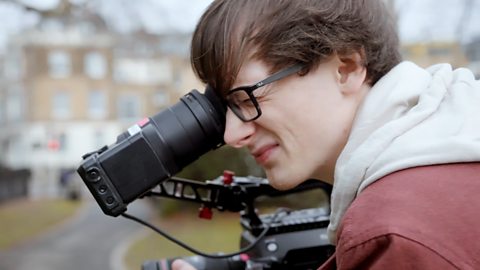
So, what I do for BBC Sport is make the features that go into the live programmes and the pre-recorded shows that BBC Sport makes. We make the kind of three-minute features that might include an interview with a football manager or interview with a rugby coach. I suppose for Match of the Day x we kind of get out there and film people that are involved in fashion and the culture that surrounds football much more.
I really enjoyed school. When I was there, I did Photography and photography appealed to me because it involved using a manual camera. So right from that first day I wanted to know what was the nuts and bolts of how a production worked. I did Media Production at university and then, off the back of that, I moved to London and worked as a runner for two or three years before I went into filming sports documentaries and I've been doing that for about seven years now.
So, in terms of creating the package, we recently made a film on Hashtag United which involves some research and you'll find out what that story is that you are going to tell because we only get three or four minutes to tell a story. So, you plan out the story andwork out which interviewees you need to get to tell that story and sorting out the locations, sorting out the travel and then the actual shoot part might only take a couple of hours, but it does take a few days to get everything in place and get it all. So, on screen it comes down to three minutes but behind the scenes there's has been about a week's worth of planning to get to that three minutes of footage. You need to be able to research. You need to be able to script write and I actually shoot as well. So, I pick up the camera when we actually get to location. Then when it comes to the editing you actually turn into an edit producer, where you sit with an editor and they take your footage and then you sit there and you make sure that they deliver the story that you've spent hours planning.
At school I was one of the kids that asked a lot of questions and I think I've kind of taken that through to my working life today.
If I was to give anybody a tip to get into filmmaking, I'd say follow your passions. Make films about things that you enjoy watching and doing. If you enjoy whale watching, if you enjoy cycling, if you enjoy going for a walk around the park then make a film about it, edit it together. You'll learn so much from making the films and trying to put them together. Just get out there, film on your phone, try and stick it all together and see how you get on.
Making the Magic: Inside jobs in film. collection
Are you spellbound by the Wizarding World films? Meet the people who work in the film industry and make the magic happen.