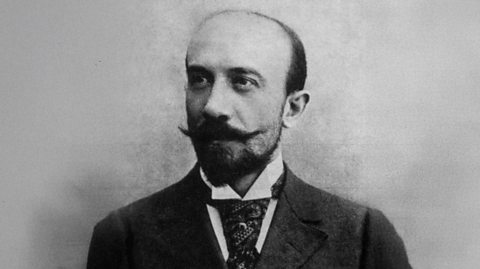
More than a century ago, a Paris-born magician transformed the very purpose of cinema. In an age when moving pictures were little more than brief recordings of ordinary life, George Méliès unveiled a world of fantasy, illusion, and impossibility.
Without his leap, we might live in a world without the modern movie spectacles we now enjoy, from science-fiction epics like Avatar: Fire and Ash (2025) to ambitious TV series like Stranger Things.

The Arrival of a Train at La Ciotat Station (1896), directed by the Lumière brothers.
How did Méliès' stage background prepare him for his first steps into cinema?
Méliès started his journey as a stage magician, inventing more than 30 illusions that added humour and dramatic flair to shows. Later, he used these storytelling methods in his short films.
His first experience of cinema was in December 1885 when he attended a private film projection demonstration of the 1895 film, L’Arrivée d’un train en gare de La Ciotat (The Arrival of a Train at La Ciotat Station). As a magician, he understood the new technology’s power to amuse people and asked to buy one of their moving-image camera machines, but they refused.
Méliès decided to create his own version of the machine in 1896 and modified the Theatrograph 35mm projector designed by British inventor Robert W. Paul. To him, this new technology held more potential than just recording daily life. He saw that this could create a vast world of imagination and storytelling, combined with his magical tricks to keep people on their toes.
The One-Man Band (1900), a Georges Méliès short film in which a magician multiplies himself into an orchestra before vanishing.
How many films did Méliès create?
Georges Méliès was the literal one-man band. He wrote, produced, acted, directed, edited and even processed his own films. On top of that, he designed the costumes and sets himself, all while keeping the Théâtre Robert-Houdin running. Naturally none of this could have been achieved without the devotion and encouragement of Méliès' wife, Jehanne d’Alcy, whom he married in 1925. Jehanne was also an actress in his movies.
Throughout his career (1896-1913), Méliès made over 500 short films. He experimented with every genre imaginable: pioneering documentary-style shorts influenced by the Lumière brothers, comedies, horror, illusions, historical, fantastical tales, dramas, and even some of the earliest science-fiction films with his crafty signature. Unfortunately, only about 200 of these films have survived to this day.
Here are three of his best:
1. A Trip to the Moon (1902)
A short extract from A Trip to the Moon (1902). Imagine seeing this as a child in 1902, and watching it become reality 67 years later.
A Trip to the Moon (1902) follows a group of daring astronomers who journey to the Moon aboard a capsule fired from a massive cannon. They encounter lunar beings but must escape to return safely to Earth, where they are celebrated as heroes.
In one famous scene, the rocket touches down exactly in the Moon’s eye, a shot that is one of the most recognised visuals in the history of early film. It is also notable due to the filmmaker's use of painted backdrops and innovative primitive special effects to give the journey a magical and fantastical quality.
2. The Kingdom of the Fairies (1903)
A Montage of a Kingdom of Fairies (1903), hand-coloured frame by frame.
This film narrates the tale of a prince whose voyage across the sea becomes a rescue mission. An evil sorceress abducts his fiancée, forcing him on a quest to rescue her.
What distinguishes the film is its visual impact for its era. It features multi-layered sets that create a sense of depth to the underwater environment and numerous performers dressed in vibrant attire. It ranks among Méliès’ most visually daring works.
3. The Impossible Voyage (1904)
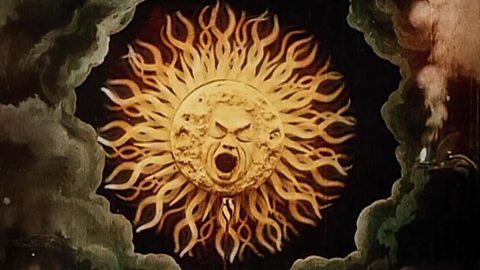
The Impossible Voyage (1904) follows a team of adventurers on the most incredible expedition imaginable. Their mode of travel includes a train, an airship and even a submarine as they attempt to arrive at the Sun!
Méliès packed it with enormous sets, ingenious visual effects and sequences that resemble a live theatrical performance captured on film.
How does Méliès’ heritage still influence filmmakers today?
The films of Méliès have a very theatrical look: vivid painted backdrops, fantastical beings, exaggerated characters and enchanting magical environments. His studio, with glass walls and roof sections to allow natural light, added to a luminous storybook appearance.
Méliès’ approach influenced artistic trends, including German Expressionism, and inspired renowned filmmakers, such as Charlie Chaplin, Guillermo del Toro and Martin Scorsese.
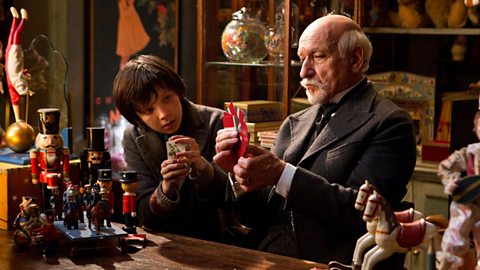
Even though many of his films were lost and his career fell apart during the First World War, Méliès was rediscovered in the 1920s. In the 1930s, he was awarded the Legion of Honour, one of France’s highest distinctions. His influence continues today, inspiring filmmakers from Terry Gilliam to Martin Scorsese, whose film Hugo (2011) brings Méliès’ magical world back to life. As he said, “He invented everything, basically. He invented it all.”
This article was written in December 2025.
Four sibling success stories in history
We take a look at famous brothers and sisters who left their mark on history.

John Cena retires: How the greats go out
BBC Bitesize explores how sporting stars took their final bow on the biggest stages

Kim Kardashian x Fortnite: When big entertainment brands call in the biggest celebs
Reality star and business mogul Kim Kardashian has teamed up with Fortnite, but which other celebrity brand endorsements have hit the headlines?