Lights, camera, action!
This fun activity, in partnership with Into Film, will help your child on their way to creating their own film!

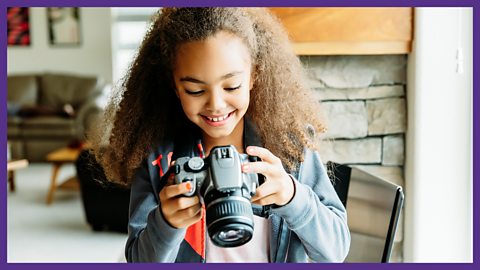
Tips for you and your child to film at home
Coming up with a story
- Work with what you have. Write a story with characters that match who you have access to as actors, such as your friends and family.
- Pick a starting point. Use a family story, update a fairy tale, or choose a theme like, ‘overcoming a difficulty’ or ‘righting a wrong’.
- Keep it short. 1-3 mins is perfect for your first film.
- Make sure any speaking parts (dialogue) can be heard by filming in a quiet location. Close-up shots work really well when a character is speaking on camera.
What you might need
- A camera, like the one on a phone or tablet
- Something to keep your camera stable. A tripod works best but you could keep steady by leaning against doorways, walls - whatever you have available. You could also use objects around the home, like a pile of books, to help keep your camera still. Just make sure that you're being safe and that you never leave a balanced device unattended.
- A lamp or torch for extra lighting and maybe tinfoil if you want to get professional and reflect extra light for filming!
Don't have anything to record it on? Why don't you just act out the story instead? You could even make an event out of it by dimming the lights, creating a special performance area and making popcorn.
Lights
You don't need a professional lighting set-up at home. Just open those curtains and blinds and get as much daylight into your room as possible.
You can even make your own reflectors out of tinfoil to bounce more light onto your actors. Even a large sheet of white paper will help – just get someone to hold it at different angles to really bring a glow to your actors’ faces!
For different scenes, you might want to create different dramatic lighting effects at home. Remember, lights can get hot so be careful, and use LED lights if you have the option.

Camera!
No tripod at home? You can keep steady by leaning against doorways, walls - whatever you have available.
You can also create smooth moving shots by using something with wheels like a skateboard or pushchair - whatever you have that can be carefully moved around. Always remember to be extra careful when you’re doing this – keep well away from staircases when filming tracking shots (smooth moving shots) – and make sure the floor is clear of objects: tidy away wires and cables before starting!
Action!
Make your films a little extra special by finding great costumes and props around the house.
You can find more resources about filmmaking on the Into Film website and remember to follow these three rules when filmmaking at home…
1. Safety to people
2. Safety to equipment
3. Make a great film!
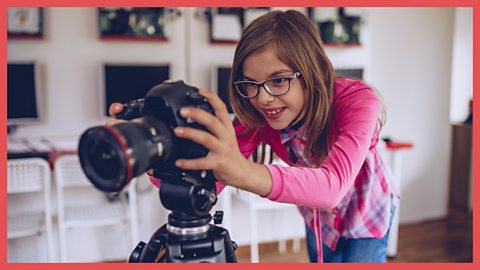
There are lots of apps that can help your child make a film at home. Here are just some examples…
if you're planning to share your film, it's important to only use music or sound effects that you have the rights to use.
If you can't make your own music or record their own sound effects, there are free libraries available to help you and your child find music and effects you can use in your film. But make sure you check all of the terms and conditions of use on the libraries before you do. These free libraries include:
It’s good practise (and often a requirement) to include a credit for any music/sound effects which have been used for free. You should include the source, title of the track, composer of the song, or the sound recordist of the audio in the credits.

Into Film is a BFI & National Lottery funded educational charity, putting film at the heart of children and young people’s learning.
More from BBC Bitesize Parents' Toolkit
Bitesize Parenting
Fun activities, real-life stories, wellbeing support and loads of helpful advice - we're here for you and your child.

Seven skills a teenager can learn in one month
If your teen wants to shake up their free time, here are seven skills they can try.
Rob Biddulph's five tips to help you confidently draw with your kids
Rob Biddulph, author and official illustrator for World Book Day, has some great tips and tricks to share to help you draw with your kids.
How to make a secret spy code wheel
Help your child make their own cipher wheel so they can create and learn their very own secret code!