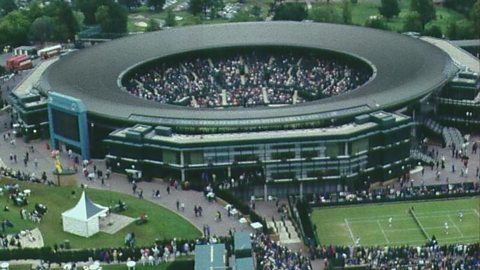
What comes to mind when you think of Wimbledon?
A wild guess would probably include strawberries, Murray Mound, and players wearing white so bright you have to wear sunglasses to watch them play.
These things are practically synonymous with the tournament itself, nowadays. But how did some of these well-known traditions start?
Why do players wear white at Wimbledon?
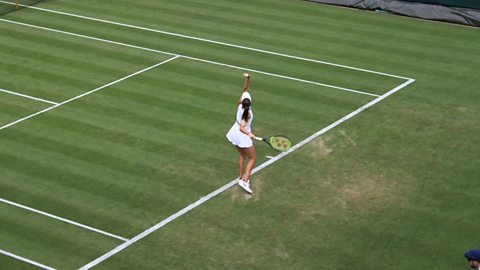
You’d think that people would get that if you play sport, you sweat. But back in the Victorian times, sweating was considered incredibly improper, so white outfits were introduced to tennis in order to hide people’s perspiration as much as possible.
The rule stuck, and it’s upheld very strictly at All England Lawn Tennis Club even today. Some players have had run-ins for seemingly the tiniest of infractions; in 2013, Roger Federer was told off for wearing shoes that had orange soles.
Why do people eat strawberries and cream at Wimbledon?
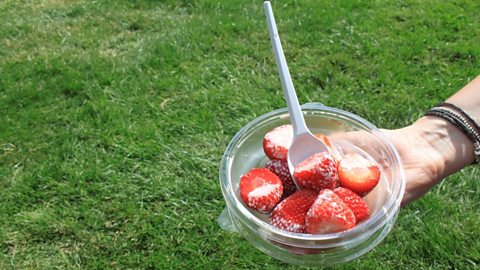
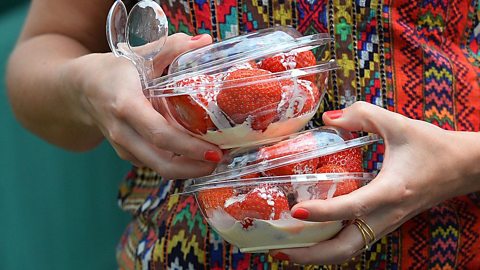
The sweet snack has actually been served since the very first tournament in 1877, and has remained a firm favourite ever since.
Some think the connection with the sport dates back to the days of King Henry VIII. One of the king’s advisers, Thomas Wolsey, is said to have served it at a banquet in the early 1500s. It seemed to go down a treat and was regularly served to spectators at Hampton Court Palace tennis court when games were taking place. Around 140,000 portions of the fruity treat are served up at the tournament each year - which is around 28,000kg of strawberries and 7,000 litres of cream.
Murray Mound… or is it Henman Hill?
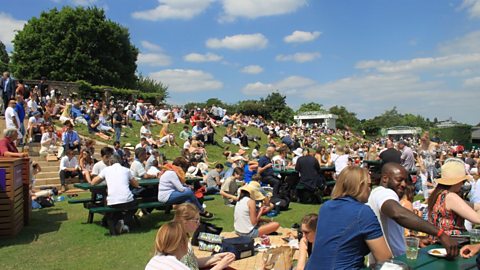
While the argument still rumbles on as to whether the small lump of earth by Court 1 is called Henman Hill or Murray Mound, it may surprise you to learn that its formal name is Aorangi Terrace. This is because the land was leased from the All England Club to the New Zealand Sport and Social Club from 1967 to 1981. They named the bump Aorangi because it means ‘cloud in the sky’ which is the Maori name for New Zealand’s Mount Cook.
When Tim Henman was at his prime in the 90s, people would would gather to watch his matches live in a giant TV screen, so it got the name Henman Hill. Now, given Andy Murray’s triumphs at the 2012 Olympics and Wimbledon in 2013 and 2016, it is (some think controversially) now called Murray Mound.
Why do people queue at Wimbledon?
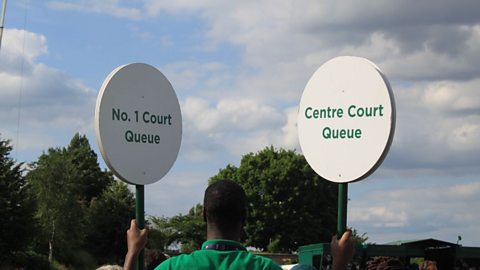
The Wimbledon queue is one of the most established traditions of the entire tournament. It’s been going strong for years, as far back as 1927 when over 2000 people were turned away because the grounds were full, and it even has its own code of conduct. Queuing in general is regarded as quite a British thing, but the word itself comes from the Latin ‘cauda’, which means tail.
It’s hard to pinpoint how and why queuing became such a national phenomenon, but it’s thought that it probably started in the 19th century. Around then, areas became more built up and industrial, and larger groups of people would be gathered in one place at one time, and so more orderly queues began to naturally form. World War Two is apparently where the tradition was solidified, as it became a symbol of doing your duty for your country by being decent and civilised during turbulent times.
This article was published in July 2019 and updated in June 2025
Wimbledon in numbers: How many do you know?
Tennis balls, strawberries and rain. Test your Wimbledon knowledge with our quiz.
How to become a professional tennis player. video
Legends of the game with advice for the champions of tomorrow.
The ultimate guide to Wimbledon jargon
How a let got its name and why it can take years to collect a dinner set