On BBC One’s The Traitors, contestants need to bluff everyone around them to win.
But will you be able to spot who’s pretending on the show?
To learn more about the art of bluffing, BBC Bitesize spoke to Dr Jacqui McKechnie, senior lecturer in the Department of Psychology at Glasgow Caledonian University. Will she be telling the truth?!
Body language
Let’s get the bad news out of the way: “We aren’t great at detecting deception,” Jacqui says. “At best, we’re about 52% accurate, 60% if you're very good.”
But not all is lost. Over the years, psychologists have come up with what might be considered signs of a person trying to bluff.
To spot these, observing someone’s body language can be a good start. “Someone lying can put their hand up to their mouth - it’s almost like they try to hide the lie coming out,” explains Jacqui.
“Sometimes people touch their nose and, again, that’s because they may be getting a bit nervous. Blood comes to their face like a blush and the nose, being so sensitive, tingles a little bit.”
Bluffers may avoid eye contact: “Feeling a bit nervous, they are likely to move their hands about more – looking down, turning away from the questioner, fiddling with their hair, looking at their clothes or pulling at their jewellery.”
But the tricky thing with this kind of behavioural expressions, says Jacqui, is that they could be part of that person's normal demeanour. So someone might just have an itchy nose, or maybe they’re worried about having something in their teeth and instinctively cover their mouth.
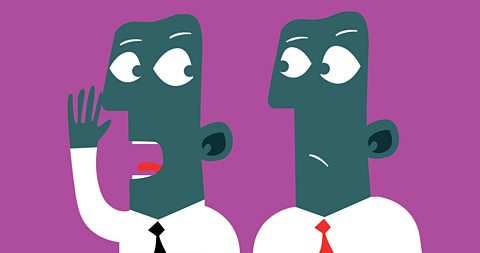
Listen carefully
Active listening is another good tool. Jacqui explains that bluffers may take longer to start answering a question, and may talk more slowly as they try to think about their answer.
“They tend to have more grammatical errors and to “umm” and “err” - that’s all to try and slow down, so they’ve more time to think.”
Moreover, when people are trying to deceive, they may not use words like ‘except’ or ‘but’, as they may try to keep it simple and not get caught out with embellishment or a further layer of complexity. According to Jacqui, using more negative words may also betray an underlying sense of unease.
Sometimes the person’s emotional expression might not match up with what they’re saying. For example, says Jacqui, they may be smiling while saying something sad because of the embarrassment at making it up - it’s almost like the body is lying as well.
But remember, this is not a science, and there are many reasons why someone may take a bit longer to formulate a thought or make grammar mistakes. Not everyone’s bluffing!

Discovering someone’s ‘baseline’
Does this mean we’re doomed to being deceived? Maybe not. Jacqui explains that being aware of someone’s regular behaviour can be the key to figuring out when they’re bluffing. The idea is that if you’ve heard people telling stories that you know are true, it’s much easier to catch them out when they’re telling a lie.
“When you think they might be bluffing,” she says, “see if they can tell you more. It’s quite difficult for them to come up with more detail in case something catches them out.
“Also, ask unexpected questions - or get them to tell the story in reverse! If they’ve really experienced the events they're talking about, it will be no problem to start at the end. When you’re telling a lie, it’s much harder.”
It goes without saying that this works both ways – those who know you really well will probably be very well placed for calling your bluff!
This article was published in November 2022
The curious evolution of smiling
From Greek statues, to Renaissance portraits to the selfie. How have our smiles changed with time?

Four questions on anxiety answered
Advice on dealing with high pressure situations

How to cycle your way to fun and fitness
Fancy taking up cycling? We've got all the encoragement you'll need.