It’s not that long ago our hearts would sink if we discovered the clumpy remains of a five pound note in the pocket of freshly laundered jeans.
Not only was it a lesson in checking your pockets before chucking things in the laundry basket, but also a reminder of how portable today’s currency can be, especially when compared to other examples from history. BBC Bitesize takes a look at some of the more unusual items that have been used to buy goods and services over the years - some of which may struggle to fit in today’s wallets, pockets and purses.
Shelling out your money
There was no branch of the The facility based in Llantrisant, South Wales, which produces all coins used in the UK, as well as currency for more than 60 other countries. mass-producing coins in 1200BC, but nature proved a reliable source of currency instead.
The cowrie, a type of marine snail, has very colourful shells which were used as money. It seems that it wasn’t just the colours that made the shell appealing - its small size and durability made them popular too.
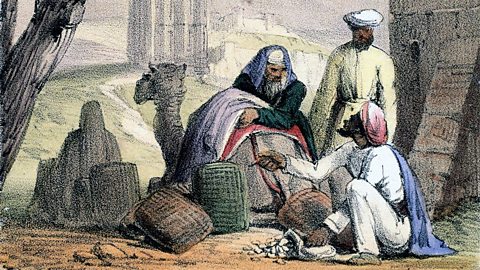
Although the cowrie is mainly found in the Indian and Pacific Oceans, it was spent around the world as traders travelled overseas, with parts of Europe accepting it as valid currency.
It is not the only item from nature to have been used as money. Wampum, a type of shell bead, were used as currency by Native Americans while whale teeth were exchanged for goods by people in Fiji. The cowrie, however, proved especially popular and endured for centuries, making it the most widespread and longest-used currency in history.
The spare change that also had a practical use
Imagine having some cash to hand which you could also use to dig the flowerbeds.
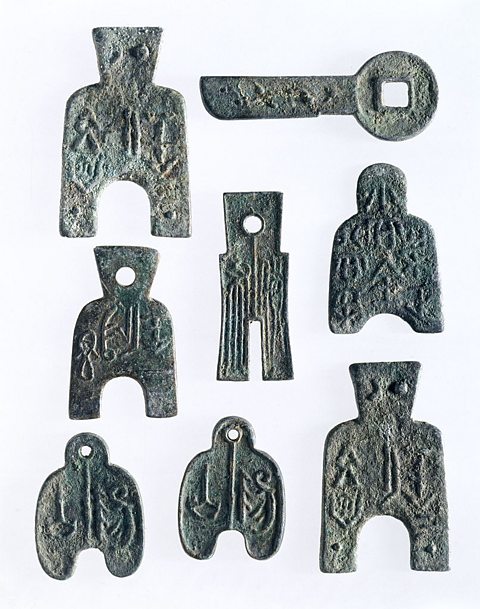
A coin shaped like a spade was used in China in the 6th Century BC. Although it may seem an unusual choice, it was a deliberate one. The thinking behind it was that an everyday tool of agriculture would be recognised and understood by merchants, rather than a coin - an unusual concept for some people at the time.
For similar reasons, China circulated coins shaped like knives two centuries later when the weight of the currency was more significant than its shape. The Romans started using coins around the 3rd Century BC, around 400 years after the first examples appeared - but it was approximately at this time that they became known as an everyday item - for those who could afford to have them.
Leather and paper - the buck starts here
Leather was used to make currency at one point. There are reports of it appearing in Ancient Rome, as well as the area which is now France, and also 17th and 18th Century Russia.
Even earlier, in the 2nd Century BC, the Chinese emperor Hu of Wan, also known as Wudi or Han Wudi, had currency made from the skins of his white stags. The thought of leather money may seem unusual today but one theory is that it was responsible for the US dollar being known as a buck - buckskin is a type of leather - a nickname that has been around for decades.
Paper money is a more relatable idea today, but in its earliest days, it went big and extravagant too.
One example that can be found in the British Museum’s currency collection is a one A string of 1,000 coins, as depicted in an image on the banknote itself. These coins were usually made from copper. note, dating back to 14th Century China. Measuring 34cm by 22cm (larger than an sheet of A4 paper), it was also known as the Grand Ming and was worth 1,000 coins.
Made from mulberry bark, these large sheets of paper money became known as flying cash, due to the possibility of it blowing away if people didn’t keep a firm enough grip on their notes. One problem with paper money was counterfeiters - it was one of the reasons China stopped using printed money in the early 15th Century. The practice only resumed in the 19th Century.
Coins close to home
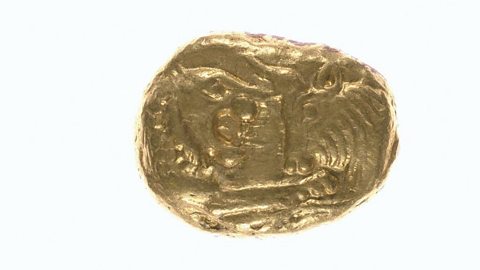
The earliest coins can be traced to Lydia, in what is Turkey today, in 7th Century BC. They were made from electrum, an alloy found in riverbeds, and were worth so much, it’s unlikely anyone other than the richest in society ever used them.
Coin usage became more widespread as the centuries rolled on but it could also be disrupted by major events - for example, the civil war in Britain in the 17th Century.
The conflict caused problems in coin production, so different traders began producing their own. The British Museum holds one from a trader called John Ewing who was based in Southwark, London. This token could be used as cash in his tobacconist store but would also have been accepted by other merchants too. These ‘independent’ coins were short-lived, though. When the monarchy was restored in 1660, a proclamation was made which stopped them being produced.
Even in the 21st Century, currency can go through changes. That paper fiver which got destroyed in the wash? It’s a denomination of note that has been printed on polymer since 2016 in a bid to make it more durable. One of the reasons behind the move was to see if notes made from a different material could finally survive a spin cycle.
Quiz: How well do you know the UK’s coins and notes?
As the 50p celebrates its 50th birthday and the new £20 note is unveiled, we ask: how well do you know the UK's notes and coins?
The unusual laws quiz
Quiz yourself on the UK’s most unusual laws to find out if you need to hand yourself in.