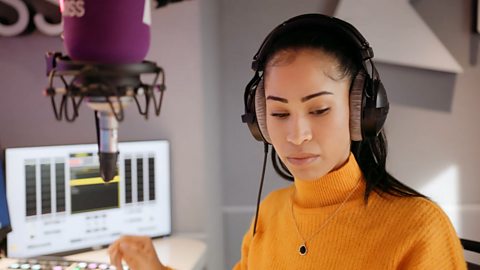
Meet Dominic and learn more about his life as a global pop music playlist editor at Deezer. Part of our Bitesize world of work series.
Dominic:
Deezer is a music streaming service and I work on the pop music playlist on a global level, so making pop music playlists that are listened to all around the world in countries like France, Brazil, the UK, Germany, even places like Guatemala. My job's to identify gaps in pop music, so it's identifying modern trends, looking where pop culture's going and then creating new playlists that will best serve our users. The whole reason why I do what I do is because, you know, you want to help artists and fans find each other.
When I was at school, I was like a lot of kids. I didn't really know what I wanted to do. I used to make mix tapes for my mum when I was a kid and stuff like that, so to see that like it could be a job to make mix tapes in the new form of playlists, like that was just exciting massively and I knew that was what I was meant to do and that led to a career in something that wasn't invented when I was at school. I started working in radio. I did a local radio show in Nottingham when I was 16, Trinity Radio show, and then moved down to London when I was 18 and got a job working at the BBC and, from there, really just realised my passion lied in music programming, working on lots of music shows like BBC Introducing and then got the opportunity to work here at Deezer.
There's a perception that young people need years and years experience to be able to do jobs like this but, the truth is, it's actually an advantage to be young. Deezer is 10 years old but, in reality, that's a very new industry compared to places like radio and TV. There are not many experts working in streaming to be honest like it's still being moulded all the time and young people are sort of at the heart of where the industry is going.
I don't know anyone who hasn't had setbacks really, in this industry or any industry, like setbacks define who you are. It's about sort of how you come back from them setbacks. I think if you're struggling with family or parents and trying to persuade them about the career that you want to go down, you've just got to trust your instincts and be stubborn. Your potential is always greater than what you think it is, so if you have the confidence that, you know, you can become something great, if you want to work hard and you're passionate about it, we all can do that. So, when you come from an area that perhaps isn't a London or a Manchester, where there's a lot of success on your doorstep, if you come from areas of the country where I'm from, you know, you can often not have the confidence to see yourself succeed in those industries. There are opportunities out there and, you know, you can take the risks and it will pay off.
Your potential is always greater than you think.
- Dominic works for the music streaming service Deezer, as the editor of the global pop music playlist. He makes playlists that are listened to all around the world, from the UK to France, Germany, Brazil and Guatemala. He identifies gaps and trends in the music and creates new lists to help artists and fans find each other
- Growing up, he enjoyed making mix tapes, then worked in local radio in Nottingham before moving to London at 18 to work at the BBC on shows such as BBC Introducing. These experiences led him to Deezer, where he's returning to his roots by compiling playlists – the new form of mix tapes
- Dominic thinks the music streaming industry is a great place for young people as it is a relatively new field that is still being shaped so there is opportunity to be at the heart of making it great.

Dominic is an editor of a global pop music playlist. A similar role to this is a DJ. DJs play music for audiences in live venues, at events or on the radio.
What to expect if you want to be DJ
- DJ average salary: Variable. You may be self-employed/freelance
- DJ typical working hours: Variable.
What qualifications do you need to be a DJ?
You could get into this role via a college course (such as a Level 2 certificate, a Level 3 Diploma or a T-level in Media, Broadcast and Production - England-only, from Sept 2023). You can also volunteer at community or hospital radio stations, or DJ at events like parties, weddings and charity shows. Alternative routes also include taking training courses or attending DJ workshops. You can also apply directly if you have relevant experience.
Sources: National Careers Service, GOV.UK
This information is a guide and is constantly changing. Please check the National Careers Service website for the latest information and all the qualifications needed and the GOV.UK website for more on T-levels.
For careers advice in all parts of the UK visit: National Careers Service (England), nidirect (Northern Ireland), My World of Work (Scotland) and Careers Wales (Wales).
The Bitesize Careers Podcast
Katie Thistleton, inspiring young guests and career experts chat all things careers.
Tips and advice
Help with interviews, writing a CV and other skills for work.
Emily: Production Manager for Festivals. video
Emily organises music festivals.
Tommy: audio engineer. video
Tommy combines a career in a band with a career as an audio engineer.
Swarzy: radio presenter. video
Swarzy's a radio presenter for Kiss FM.