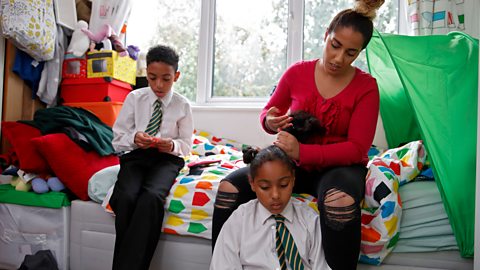
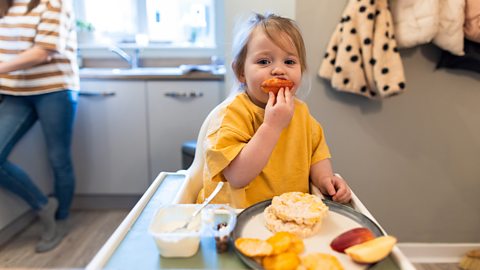
Making sure your child is ready for school is a top item on the agenda of many parents. With so much to do, from packing bags to completing homework, getting your child ready for the school day ahead can feel like a mammoth task.
That’s why, at Bitesize Parenting, we talked to a UK-wide panel of parents, to get their top tips on being ready for the school day/week ahead. How do parents stay organised? Do they have a morning routine? How can you keep your child motivated? We covered all this and more with our panel…
How to get organised for back to school
As parents, we’re all aware that time can be short, so many of our panellists spoke about the importance of preparing for school days the night before…
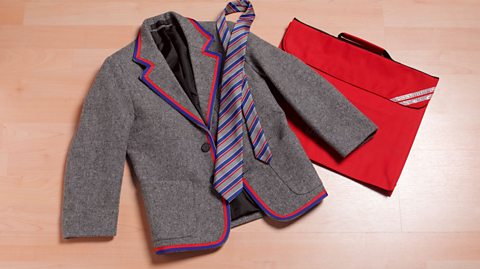
"Fully prepared the night before. Showers, uniform set out, bags packed, etc." - Seun O. Parent of primary school children
Whether this was making lunches or breakfast well in advance, or having uniform clean and laid out, having all your prep work done the night before can help save time (and stress!) in the morning.
Some parents went even further than this, doing most their prep work for the coming week on Sunday…
"We try to plan the school week ahead on a Sunday evening, i.e. what days are school dinners, what days packed lunch, PE days (so uniform change), any afterschool clubs to arrange childcare, etc. My son is in P6.” - Alan P. Parent of primary and secondary school children
Another strategy underlined by many people on the panel was putting together a to-do list. Natasha, whose child is currently in primary school, told Bitesize Parenting: - “I always make a to-do list and put it on my fridge so I can physically see what I need and don’t need.” Not only can to-do lists help you keep track of what you have and haven’t done, they can also provide a quick burst of motivation whenever you manage to tick something off!
Parents on our panel also spoke about the importance of making sure your child gets a good night’s sleep, which they felt was key in getting them ready for the following morning…
How to structure your morning
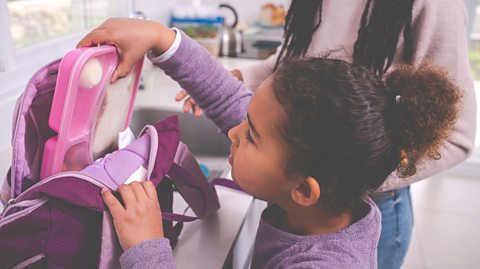
Starting the day off on the right foot can be a great help in making sure your child is ready for the school day ahead.
Parents on our panel had all sorts of tips and tactics for making the most of their mornings, but the one which cropped up most often, no matter the age of their child, was the importance of having a routine.
For most of the parents on our panel this began with them waking up, followed by waking up their children – and then showering, brushing teeth, getting ready and then eating breakfast.
Iqbal, whose daughter currently attends school in Scotland, said he prefers making ‘grab and go’ breakfast items, like ‘croissants and brioche rolls’ as eating on the move can help save time in the morning.
Holly, who has both a son and daughter, doesn’t let her son use the ‘tv or phone’ in the morning, to avoid distraction. She finds that this helps make mornings less chaotic.
Another frequent morning ‘hack’ employed by our panel was waking children up slightly earlier than needed, which allows them time to ‘come around’ according to Laura from Wales.
This was echoed by another one of our panel, Andrew who said his primary school-aged son was like a ‘sloth in the mornings’ and needed to be given a little extra time to wake up.
Difficulties with getting kids up for the day was a common theme amongst the parents of primary school children, whereas secondary school parents rarely reported problems with this, commenting that most of their children just got up and organised by themselves.
This speaks to the most frequent difference in responses between the parents of primary and secondary school, which was the amount of responsibility children had for getting themselves ready…
Giving your child more responsibility

As your child gets older, and moves from primary into secondary school, the time may come where they want to take more responsibility for getting ready in the morning.
According to our panel, primary school children were often given smaller responsibilities, such as brushing their teeth and getting dressed, whereas secondary school children tended to have almost complete independence in getting themselves ready.
Megan, who has two daughters in secondary school and a son in primary school, said her daughters often wake up earlier so they can ‘start getting ready doing wash, teeth, skincare’, before she wakes up her son who needs more help with things like getting dressed.
Deborah, whose daughter is in secondary school, felt similar, saying ‘My daughter is actually very organised so I don't need to do much.’
How to build a homework routine
An area where there was more overlap between the answers of primary and secondary school parents was how to deal with homework and the challenges surrounding this.
Once again, many parents felt the key to this issue was setting up a good routine. Tony and Alan both spoke about the importance of routine, whether it was having a specific ‘homework night’ or completing homework ‘straight after school’.
Having a set routine helps make sure all homework gets done, and can be scheduled around other commitments, such as after school clubs and sports teams, with Alan saying his son had football ‘4 nights a week’, making preparation for school days a little tougher.
Some parents preferred to help with homework themselves, despite many mentioning having struggles doing so – especially with maths, while other parents, such as Andrew, said their child had ‘a tutor once a week’.
Iqbal said he would often speak to the school or other parents to find helpful homework resources.
Another panel of parents has offered these further thoughts and advice on homework.
How to motivate your child for school
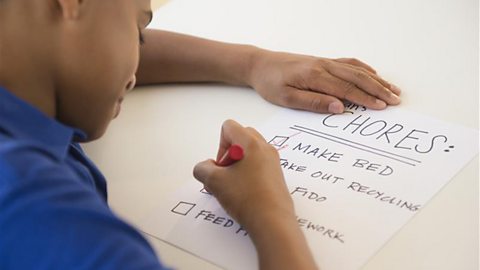
A common issue raised by our panel, across a number of topics, was the struggle to motivate your child.
Jerome and Mark, both parents of primary school-age children, mentioned the use of tablets or games consoles as a source of motivation for completing chores or homework.
An hour or two of tablet time was a fairly common reward given out to children by parents for taking an active role in school preparation.
Another common strategy was trying to make things like getting ready or homework fun.
Laura, whose son is 14, often turns getting ready into a game, saying things like, ‘I bet you can’t get your PE kit ready in under a minute’, which he responds well to.
Leander, Natasha and Stacey, who all have children in primary school, all said that making their children’s homework into a ‘fun activity’ had proved effective as a motivational tool.
Equally, some parents said their children were good self-motivators, with Alan saying that his son ‘enjoyed school and looked forward to it.’
For more ways to help your child’s school learning, or home education, check out BBC Bitesize Parenting.
This article offers advice if your child is starting primary school.

More from BBC Bitesize Parenting…
Bitesize Parenting
Fun activities, real-life stories, wellbeing support and loads of helpful advice - we're here for you and your child.

Parents share their tips for the school run
Back to school hacks, tips and tricks from real UK parents for the school run and beyond.

Should I help my child with their homework?
Real parents around the UK share their thoughts on homework. Is it better online? How much is enough? And how can parents help?
Four back-to-school worries and how to ease them
Many children will have anxieties about returning to school - here are some expert methods you, as a parent, can use to ease them.
Five ways to help your child settle back into the school routine
Expert advice for parents to help their children feel more comfortable about returning to a school routine.