As humans, we pride ourselves on our impressive brain power, but when it comes to memory, we’ve got rivals.
Squirrels, elephants and dolphins are just three animals with amazing memory capabilities.
If you’ve ever wondered how a squirrels finds its buried nuts again, or are intrigued to know why dolphins might just be better friends than us, you’re in the right place.
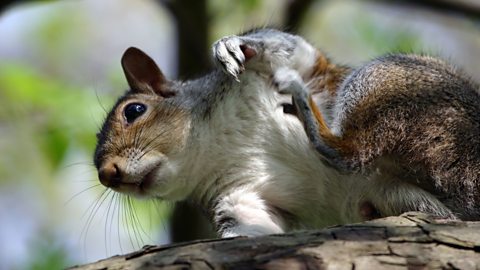
Squirrels
At this time of year, squirrels are digging up the nuts they carefully buried during the autumn. But finding them takes more than just luck.
Professor Lucia Jacobs of the University of California, Berkeley, has observed how squirrels are able to accurately remember specific food burial locations.
Her studies have shown that even when other squirrels have stores nearby, squirrels would uncover significantly more nuts from their own burials than from those of others. This was even after periods of two, four and 12 days.
Whether or not a squirrel uses memory or smell to find a cache of nuts, depends on how hungry it is. Prof Jacobs says “if they are very hungry, they'll go straight to caches that they remember. If they've eaten a few nuts already, then they might explore more, look around, see if someone else has caches that they can find and eat those.”
If a squirrel suspects that caches nearby are being raided, they will move their own cache to a new location. This might be a fairly open and exposed area, with a higher risk of predators. Remembering where their store is, a squirrel can quickly travel directly there, whereas would-be pilferers may be more reluctant to spend extended periods of time searching.
Squirrels also appear to prefer to segregate their stores of nuts according to type, a process known as chunking.
As humans, we like to remember lists of items in chunks and squirrels are the same. Prof Jacobs explains: “If I give you a list of 10 items to memorize, if you can categorize them (three fruits, five cars, etc.), your recall is more accurate. Similarly, if squirrels just have to remember — almonds are here, hazelnuts are there – then they remember the location of the group but also the individual locations are remembered more accurately.”
This enables the squirrel to be smarter when it comes to foraging for nuts, prioritising certain nuts over others if they suspect someone is stealing their caches.
The ability to acquire, comprehend and remember knowledge, as these animals do, is known as cognition.
 Image source, BBC
Elephants
An elephant never forgets, right? Well, they certainly have a knack for remembering who’s a friend and who poses a danger.
Professor Karen McComb (University of Sussex) has spent years studying how herds of wild African elephants can recognise others, and how they will act in a defensive manner to protect their young if they determine that there’s a threat. One elephant’s memory in particular is incredibly important.
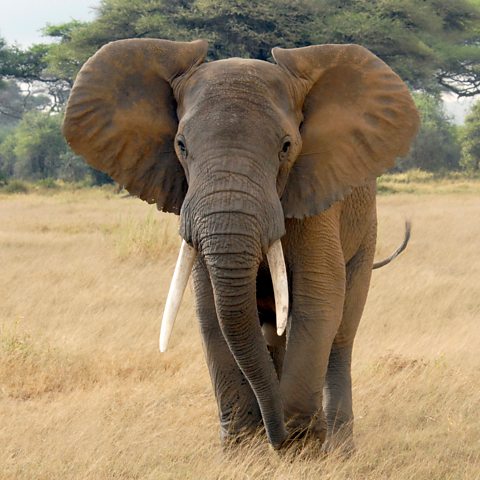 Image source, BBC
She says: “Our analyses showed that it was the age of the oldest female in the group (the matriarch) that determined how good knowledge the family’s knowledge of friend versus foe was – the older the matriarch, the better they were at distinguishing.”
This knowledge is accumulated over a lifetime, with an elephant’s memory extending back many years. Prof McComb states: “I was able to test this on a much shorter time scale where one family responded excitedly to playback of a recorded call from a family member who had died two years previously.”
Recognition comes through a combination of sight, sound and smell, although elephants are capable of distinguishing by sound alone. And it’s not just other elephants that they assess.
Prof McComb explains: “Elephants seem to be able to discriminate between humans on the basis of voice too – at least to the extent of classifying them into dangerous or non-dangerous groups. This is a very useful skill, as humans can potentially be a real threat to elephants but not all humans are equally dangerous.”
Image source, BBCDolphins
Dolphins have one of the longest social memories on the planet. Like humans, they remember which dolphins they’ve met before, even if they haven’t heard or seen them in decades.
Each dolphin has its own unique whistle, effectively a name, developed during the first year of a dolphin’s life.
Professor Jason Bruck (Stephen F. Austin University) has studied how dolphins react when they hear the signature whistle of dolphins they haven’t seen in some time. Using captive dolphins from six sites across the US and Bermuda, who had previously lived together, he played recordings of both dolphins they’d encountered before and unfamiliar dolphins of a similar age and gender.
Prof Bruck observed that the dolphins were more likely to spend longer with the speaker if it was a familiar whistle, and would typically ignore those they didn’t recognise. In one test, a 50 year old female dolphin responded to a signature whistle from a dolphin she hadn’t seen in 43 years.
 Image source, BBC
But why do dolphins need such extraordinary memories? Prof Bruck explains: “Because dolphins have complex societies and no social media, they must rely on their memory to keep track of their social worlds.
“The pressure to remember individuals successfully may have been a push not only for dolphin cognitive evolution, but for the complex abilities found in crows, parrots, ravens, chimps, elephants and even us humans.” This is known as the Social Intelligence Hypothesis.
A dolphin’s long memory might offer other benefits. Prof Bruck states: “While it is difficult to know exactly what a dolphin thinks when it hears the whistle of a former rival, one could imagine that dolphins that remember old foes and learn to avoid them have a distinct survival advantage over those that cannot.
“The same is true of dolphins that can remember allies, as many dolphins rely on cooperation to survive, and remembering successful partners could mean the difference between life and death.”
Five well-known animals that went extinct in Britain
Elk, lynx and brown bears all used to roam across Britain.

Quiz: Can you guess the animal from its misleading name?
Take this quiz to see if you know which animals are their namesake and which are misleading.

Five animals that holiday in colder climates
Which animal has the longest migratory journey on Earth? Here are five animals that prefer to 'chill' in colder climates.