We live in a world of rapidly-changing trends, and being ‘in fashion’ has always been fashionable.
But some past fads might seem bizarre when viewed through modern eyes, and centuries from now people will probably look back and question our own choices! From necklaces made from hair to 20-inch heels, we look back at some of the weirdest trends in history.
Beetle jewels
Yes, real ones! The wings of jewel beetles were used to decorate fabric. Emerald green wings became a symbol of high status in India during the Mughal period (1526-1756), and western traders introduced them to Europe in the late 18th and early 19th Centuries. The wings were harvested once the beetles had laid their eggs and died. They were then cut and arranged into floral patterns, often accented with metal thread. One dress could have over 5000-25,000 beetle wings, depending on the complexity of the pattern. The wings would have glittered in candlelight, achieving an iridescent jewel-like effect.
A bit of hair-itage
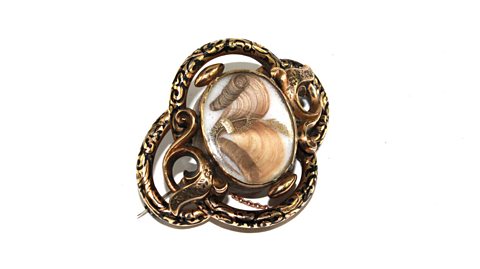
Queen Victoria and Prince Albert were responsible for many a trend and tradition, from wearing white on your wedding day to decorating Christmas trees. But in 1861, following Prince Albert’s death, the queen popularised one morbid trend: she preserved a single curl of her husband’s hair inside a locket which she wore until her own death.
Hair lockets became a symbol of family members lost, and hair jewellery broadened to brooches, bracelets, earrings and even decorative wreathes. The meaning soon included love for the living, as women would swap hair bracelets as a symbol of love and friendship. They were fantastically hard-wearing, as hair resisted decay and tightly bound braids were durable, but the fad died around the turn of the century.
Vintage platforms
We might associate flashy platform boots with 70s discos, but in the early 16th Century a thick-soled platform shoe was favoured by women in Venice. These were known as ‘chopines’ and started off as a practical way to protect women’s shoes and dresses from flooded streets and mud. But the height of the shoe became a fashion symbol - the higher the platform, the more wealthy you were considered to be. Some platforms could be as many as 20 inches (just over 50cm) high!
This of course meant that walking irregularly paved streets was a challenge fit for a modern stilt-walker, and ladies who wore them often had to employ an attendant to keep them upright as they went to town. The shoes would have also been incredibly dangerous, taking the phrase ‘killer heel’ to an ankle-twisting extreme.
Shackling skirts
After the billowing crinolines and bustles of the late 19th Century, skirts made a radical switch in style: enter the hobble skirt. The idea allegedly originated with French designer Paul Poiret, who claimed in 1908 that he had “freed the bust but shackled the legs”, referring to the declining use of corsets.
This certainly wasn’t a skirt to be worn at work or when going out and about - the constrictive silhouette meant that only wealthy people who could afford to lounge all day could wear them. As they were tight at the ankle, they caused women to ‘hobble’, giving the skirt its name.
The clean lines and fabric made it easy to produce, but nevertheless the trend quickly went out of fashion at the beginning of World War One in 1914.
Terrific or tear-able?
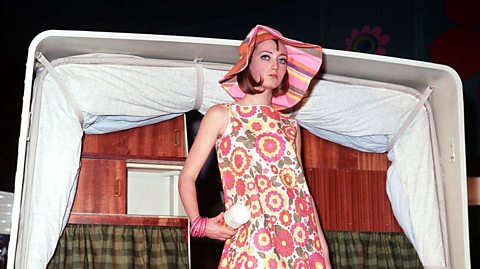
The 1960s were famous for many iconic looks, but one throw-away trend was pretty peculiar and impractical to boot. What started as a marketing promotion for American paper company Scott Paper became a fun fad: the paper dress. The simple block dresses could be decorated with bold geometric patterns or hand-painted with flowers and were a rapid success.
The paper dress was soon capitalised on as wearable promotion - for example in 1967 the 'Souper Dress' paid tribute to Andy Warhol's soup tin paintings while literally advertising Campbell's soup. Paper dresses were even used in presidential candidate Richard Nixon's political campaign for female supporters to wear at rallies.
But as the dresses were literally made with paper (and nothing else), they weren’t very sustainable in any sense of the word. You could probably get away with wearing the dress at most before it ripped, and naturally they weren’t machine-washable. If they were stained, torn or rained on, they would have to be chucked in the bin. Now that’s what we call fast fashion!
The stories behind five global fashion trends
Histories of the mini skirt, the white wedding dress, and why the tale you've probably heard about nylon isn't true.
Can we ever really know if our clothes are sustainable?
Bitesize speaks to sustainability experts about the fashion industry, fast fashion and our shopping habits.
Five of history's most surprising bans
No popcorn in cinemas? Or football in England and Scotland?