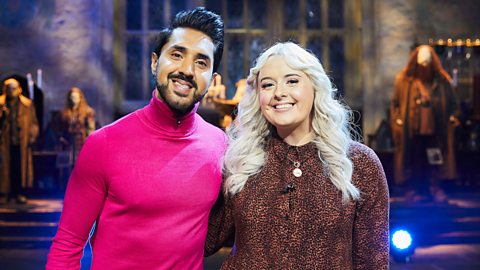
Meet Brooke McGowan, who worked in post-production as a compositor for the first two Fantastic Beasts films. Part of our Making the Magic collection.
I'm Brooke McGowan and I'm a compositor.
The first film I worked on was Maleficent and it was about seven years ago. Watching Maleficent on the night that it came out, I was… I wasn't really watching the film, I was watching for my work in the film. I watched it again after that to, you know, actually watch the film, but the first time I watched it I was just looking at my shots and thinking, wow, I've done that and then obviously waiting for my name in the credits at the end. I think I cried. Not I think I cried, I cried!
My family, we all went to watch it together afterwards as well and everyone, you know, we all waited until the end of the credits and like we all clapped and I've got a big family, you know, there was about 20 of us there.
Films that I've worked on from Maleficent, Edge of Tomorrow, Guardians of the Galaxy – the first one and the second one – Pan, The Martian. The latest ones I've worked on – Bond I'm working on at the moment, obviously Fantastic Beasts, both of those, and hopefully I'll get to work on the third one as well once we get to compositing stage of it.
I started at Framestore as a junior so obviously I didn't know very much. The interview was a very relaxed chat really, we just talked about me as a person rather than – we talked about my skill set as well but there were things that I couldn't do and when they asked me about it, you know, I was very honest and I think they really appreciate that, they want to know where you are so they know how to help you once you get the job. And when they asked me about certain softwares I said that I didn't know and they were like: "That's fine. We can teach you that". It was really relaxed and it was just about who I was – am I going to fit in with their team?
The thing I love most about film is the world that you can create that you can't experience in the real world. You can have creatures that don't exist, you know, these worlds from Asgard in Thor that you'd never be able to experience. Gravity where, you know, you're in space and you can't film in space but you can do that with visual effects. Sometimes as a viewer you don't even know that you're watching visual effects. It'll be a green screen and it'll just be a regular world behind them but you won't even know that it's, you know, visual effects. Downton Abbey is a film where you wouldn't really notice any visual effects, you know, there's no magic in there, there's no wizarding world, but there are a lot of visual effects that go into that because it might be easier for them to have someone on a green screen and put a set in afterwards, for example.
Having family and friends who don't work in the film industry at all and knowing that that's so far away and them always telling you "just get a normal job", you know, my mum didn't want me to do Film Studies at university, she wanted me to do… I don't know what she wanted me to do – everyone's a scientist, maybe she wanted me to do something along those lines, but that kind of puts you down, you think will I ever get there? But I never stopped trying. From a young age I wanted to work in film and I finally got there but it's because I didn't give up. But, yeah, I doubted myself a lot of the time but I'm so glad I got here and I've been in it for seven years now and hopefully for the rest of my life.
Our job is to make the final film image look so believable that the audience are able to suspend their disbelief and enter these worlds.
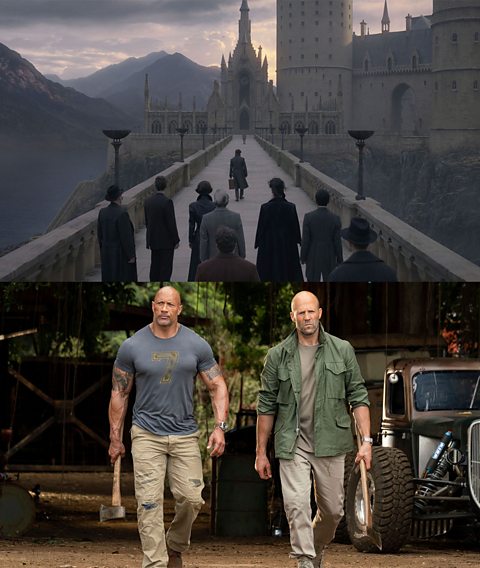
What does your role involve?
As a compositor, it's my job to seamlessly integrate real-life footage with CGI (Computer Generated Imagery) to make the final film look as realistic as possible. We are at the very end of the post-production process, bringing material from various sources together, such as special effects, graphics, 2D animation and live action, to make the final image.
When footage first comes into us, it doesn't look realistic – we have to add all the details like the right lighting to cast the right shadows, so you have to have a really good eye for detail and be very observant in your day-to-day life so you can get it right in your work. Firstly, we just place everything, then match the colours and the depth. Then we have to be able to pinpoint anything else that doesn't look right in the shot and adjust it.
What have you worked on?
I've worked on a lot of different films, from the first two Fantastic Beasts films and Avengers: Infinity War, to James Bond: No Time to Die and Thor: Ragnarok.
How did you get your job?
Studying Media at GCSE helped me realise I wanted to go into film and, at A-level, I realised I preferred the post-production aspects. My big break came when I did an internship at Prime Focus as a stereo-conversion artist (which involves transforming 2D film into 3D form). That led to a full-time, one-year position.
What's been your biggest challenge and how did you overcome it?
I was working at Prime Focus London and it got shut down. I only had a year and a bit experience in stereo-conversion and knew I eventually wanted to progress to the role of compositor but I found it hard to get my next break. I actually considered changing route completely and becoming a primary school teacher! I started doing work experience in a school and I was really good at it but then I just found myself breaking down in tears and knowing that my heart was really still in the film industry.
I applied to another company as a runner making the tea and things and, after a month there, got offered another role in my field at Framestore.
What's your career highlight?
Leading the paint roto team at Framestore creative studio for the Thor: Ragnarok film. The paint roto team is a junior team who get the footage when it first comes in. Roto is a process of cutting things out, like a cookie cutter, so the paint roto team remove things from the footage like any tracking markers or rigs that are holding people up. It was a highlight for me to lead the team because I loved being more involved in the production.
Brooke's top tips
- Don't give up if you don't get a job straight away! Keep training and improving your skills whilst applying and making contacts
- Welcome and encourage feedback from seniors around you
- Making contacts is important, so socialise! A lot of jobs get heard about through people in the industry
- Put in the hours when you get in the door. The work isn't easy and to keep up with others you might need to do more time
- Ask a lot of questions, especially in the beginning and keep training/learning.
Brooke's recent projects
| Year | Project |
|---|---|
| Present | James Bond: No Time to Die |
| 2020 | Dolittle |
| 2019 | Fast and Furious Presents: Hobbs and Shaw |
| 2018 | Fantastic Beast The Crimes of Grindelwald |
| 2018 | Christopher Robin |

Want to know more?
- Find out more on the ScreenSkills website about the role of a compositor
- Check out Warner Bros. Creative Talent for scholarships, apprenticeships, work and training placements, mentoring and masterclass opportunities.
Making the Magic: Inside jobs in film. collection
Are you spellbound by the Wizarding World films? Meet the people who work in the film industry and make the magic happen.
Four jobs you didn't know existed in filmmaking
Now you think about it, someone had to have invented Klingon for Star Trek, right?
Making The Magic: From Story To Screen. video
BBC Teach is partnering with the Wizarding World to offer students in the UK an introduction to the myriad of roles and careers available on a film production in an exciting interactive lesson on Wednesday, March 4th, 2020.