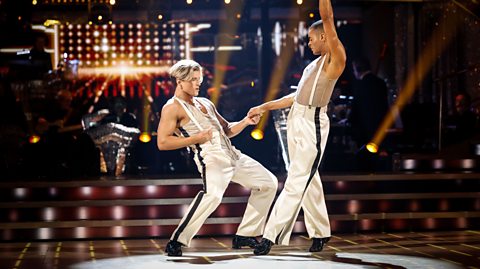
Learning something for the first time can be a tricky task.
It could be as complicated as your first driving lesson, or tackling your first bit of algebra homework. But if you need help getting your head around the situation, it could be worth taking a tip from the world of dance. Cracking that new bit of choreography doesn’t always come easy, so BBC Bitesize asked some of the the stars and contestants from The Greatest Dancer how they break down a move. Check out the video below to find out more.
Professional dancer Curtis Pritchard is the receptionist on the Saturday night BBC One show. He has shown off his professional dancing skills on two series of Ireland’s Dancing With the Stars (the equivalent of Strictly Come Dancing) and has also represented the UK in international dance competitions. He’s a man with plenty of experience in learning new moves.
Give it all you’ve got
“I start off slowly,” Curtis explained.
“Let’s say a turn, for example. I’ll be like, ‘OK, so it’s a step across, step, stop.' And then I’ll just do it a little bit faster.”
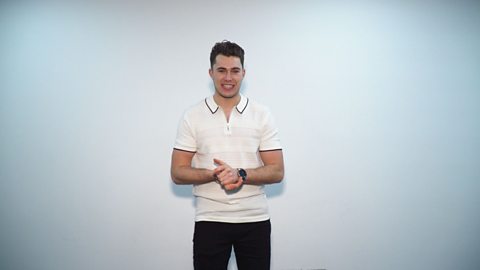
Curtis says that doing any move in full, over and over again is key to making it all come together as a longer piece of choreography when the big performance arrives.
“If you do something 50%,” he said, “and then when you come to performing or doing something and then you throw 100% in, normally your body’s not used to it and therefore you’ll go wrong, so I always give 100%.”
It’s all in the practice
Best friends Lily and Joseph have been dancing together for more than a year and are mentored by team captain Cheryl.
Working as a pair means teamwork comes in to learning their moves too.
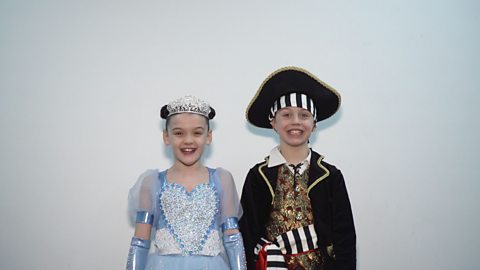
Eight-year-old Joseph said: “When we’re learning a new dance move, what we normally do is just talk through it.
“We know what we’re doing and where we’re putting our arms and then we would have a go, but it wouldn’t really go that well.”
Even if something goes a bit wrong on the first go, it doesn’t mean it will for every go after that. As Joseph pointed out: “We would just keep practising to make it perfect.”
Drill! Drill! Drill!
When you’re in a group like Dancepoint, there are times when all 16 members will need to master the same move. This is where it’s good to have a buddy system, where fellow team members can talk you through a move, section by section.
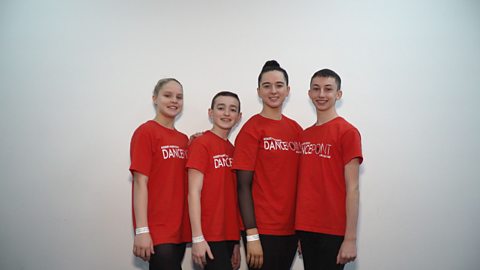
Jordan, one of the members of Dancepoint, said: “You have to explain to the person first what actually goes on throughout the move. Where the body is, what angle you’re placing and then you drill, drill, drill until you actually get that move.”
As you can see in the video, Jordan demonstrated with fellow member Kyle how she broke down the ‘click out’ move so that he could learn it. It involved finger clicking while both arms are stretched skyward and out to the sides of the body. With plenty of ’5, 6, 7, 8!’ calls to keep the rhythm going, the plan is to repeat the move over and over until it becomes second nature.
There’s no promises that clicking your fingers will get that list of history dates into your memory, but keep drill, drill, drilling them - and you never know. They may just stick.
Rachel's story: How to become a dance choreographer
Rachel uses her knowledge of the body to teach people how to dance.
Dancing with dyslexia: How dance helps me express myself
Choreographers Charlotte and Elizabeth talk to BBC Bitesize about how dance transformed their lives.
The history behind five of Strictly's biggest dances
When the Waltz was controversial and the GIs brought the Jive