Have you ever wished you had super powers?
You might think super powers only exist in the Marvel or DC universe, but humans can be super too.
BBC Bitesize looks at the real life super powers that actually exist in our universe.

Superhuman energy efficiency
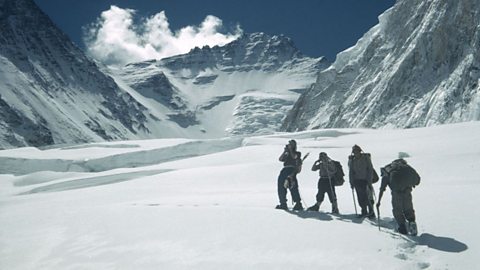
DNA studies suggest that Sherpas, an ethnic group from the mountain regions of Nepal, and Tibetan populations have a genetic code that means they are very efficient at generating energy.
Usually when there is a lack of oxygen in the body, it produces more red blood cells to compensate and these cells carry oxygen around the body to our organs. When this happens it make the blood thicker and flow slowly, which can clog up blood vessels. If you’re climbing mountains, especially those at high altitude, you’ll be exposed to low levels of oxygen. People who don’t live in this type of environment will need to take time to climb higher, giving their body time to adapt itself. Whereas Sherpas are able to live at high altitude with no consequence to their health.
Research has found that Sherpas have higher levels of nitric oxide which is a chemical that opens up blood vessels and keeps it flowing. It may be likely that this group of people have evolved to adapt to this extreme environment, which means their bodies are more efficient at producing energy than those who don't live in these surroundings.
Echolocation
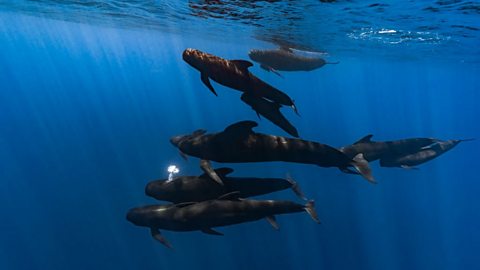
You may know that certain animals use echolocation, like bats and whales. But did you know that some humans can also use it?
Humans who are blind or visually impaired are known to produce clicks that bounce off objects which 'sonify' them into an image of their surroundings. Dr Andrew Kolarik from the University of Cambridge has studied echolocation, his studies have shown how people adapt their clicking to get information from the environment around them. Andrew says "each echolocation click is like a single snapshot of the world."
In these studies, they found that, like bats, expert echolocators naturally increase the loudness or intensity of the clicks, as well clicking more often when an object is off to the side or behind them. This ability can provide detail about objects in an environment, from shape, size, distance, and even material they are made from.
Super swimmers
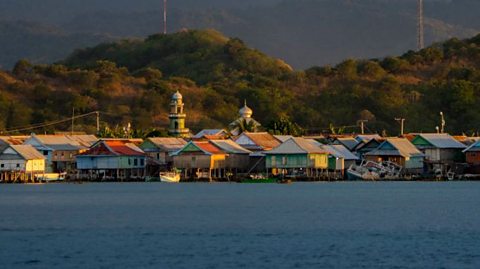
The Bajau people from the Philippines, Malaysia and Indonesia are well known known for being able to stay underwater for as long as 13 minutes in depths up to 70 metres. Scientists believe that this is because their bodies have adapted to use oxygen more efficiently.
Melissa Llardo from the Centre for Geogenetics at the University of Copenhagen conducted an experiment where she examined the size of the spleens of people from this community compared to a group of people called Saluan who lived on the Indonesian mainland. The size of the spleen was seen as significant factor for this experiment as marine mammals, that spend much of their life underwater, have very large spleens. When she compared them, her team found that the average size of the spleen from a Bajau person was 50% larger than that from a Saluan individual.
Richard Moon from the Duke University School of Medicine, in the United States, studies how the human body responds to both high altitudes and extreme depths. He believes that on top of potential genetic adaptations, the Bajau people may also have this ability due to regular training to withstand the underwater pressure. The Bajau Laut tribe, who are also known as 'sea nomads' have lived at sea for more than 1000 years.
Synaesthesia
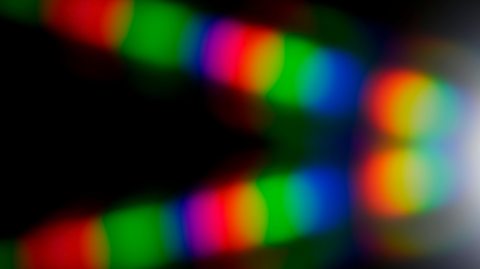
Synaesthesia is a neurological condition where stimulation of one sense causes experiences in another sense. For example, a person may see colours when they hear music, or taste flavours when speaking certain words.
Some research suggests that this phenomenon is caused by extra connectivity between sensory regions of the brain. So if one sense is triggered it cross-activates others. Although this condition wasn't formally recognised until the 1980s, it is estimated that between two to four percent of the general population may have it.
Synaesthesia is often linked to creative individuals who are actively involved in making art, music or design, and people who like to engage in visual arts as hobbies. The condition may also mean they are connected to these five key characteristics - open to experiences, extraversion, emotional stability, agreeableness and conscientiousness.
Memory athlete
Have you ever heard of photographic memory? Although you might have seen it in movies or TV shows, scientist say this ability does not exist.
Craig Stark, Professor of Neurobiology and Behaviour at the University of California Irvine, explains that due to the biology of the eye it cannot exist. Although there are cases when people claim to have this ability, one must consider if this person has a knowledge or expertise in the area they've memorised.
For example Craig says "if I were to start giving you letters and just ask you to remember them - P F Z Q J L P E, you're not going to get very many of them." However if "I give you another set of letters, L-O-N-D-O-N-E-N-G-L-A-N-D. Could you get them all?" He argues that if you're already familiar with something or interested in it, then you're more likely going to remember it than other subjects or something that is random.
This doesn't mean people don't have fantastic memory. As a matter of fact, anyone can train and enhance their memory to be super. Mental athletes claim that the memory palace technique is a great way to improve your memory. This technique has roots in ancient Greece, where you combine pictures into scenes and place them in a familiar mental landscape. You can add sensory details like smell and sound to make them more memorable as well.
The article was published in January 2026
Seven feel-good moments from 2025
BBC Bitesize would like to remind you of seven stories that may have made you smile in ’25
Things to look forward to in 2026
BBC Bitesize explores some of the sporting events, films, concerts and more heading our way in 2026

Five incredible and icy 'frozen' waterfalls
Take a look at these wintery waterfalls from around the world, exploring how some appear to 'freeze'