United, City, Town. These are some of the more regularly occurring words featured in football club names across the UK. It's often fairly obvious why they are used, they simply represent the location of the team. But what about some of the other, slightly more unique club names? Not just in football, but in other sports too.
BBC Bitesize takes a closer look at how one of England's oldest football clubs, Sheffield Wednesday, came to be named after a day of the week, and delves into the origins of three other sports team titles.

Where did Sheffield Wednesday get their name from?
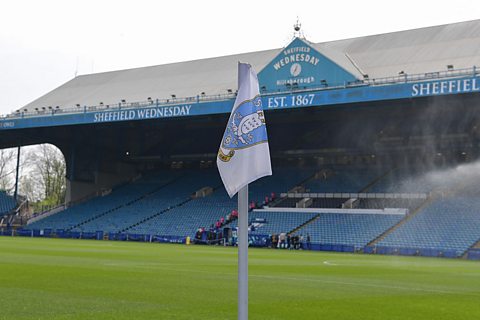
Sheffield Wednesday are a club steeped in history, but what’s with the hump-day name? Well, the origins of this team lie in a different sport - cricket.
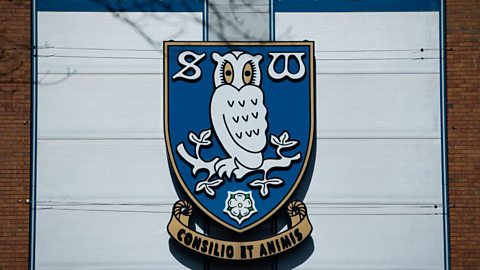
In 1820, six tradesmen in Sheffield found themselves in the fortunate position of working half-days on a Wednesday. They wanted to fill their spare time with some sport, and first up was cricket. The Wednesday Cricket Club was born.
So where does football come in? During the winter months conditions weren’t ideal for cricket, so the team took up playing football as a way to keep their fitness up, of course sticking to their preferred day of the week, Wednesday.
Eventually, The Wednesday Football Club played their first match in 1867 and went from strength to strength. The team adopted their current name Sheffield Wednesday in 1929 - just 62 years, or approximately 3,236 Wednesdays after their first appearance.
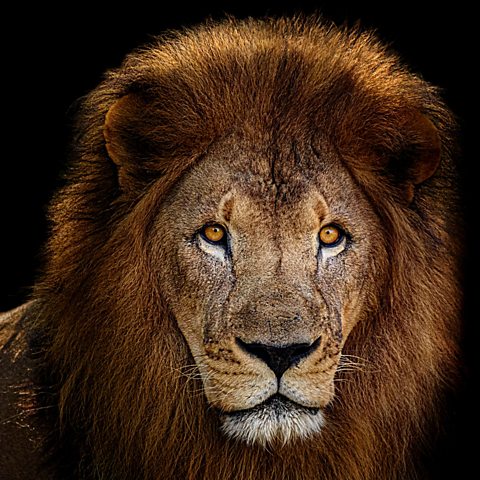
Why are the lions rugby team named after a big cat?
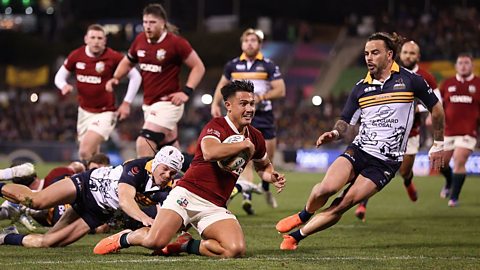
In the natural world lions are powerful, focused, and able to work ruthlessly as a group, meaning any team named after them is one you’d probably want to avoid on the rugby field.
But the team we now formally know as the The British and Irish Lions didn’t always have such a fearsome sounding name.
The Lions have been regularly touring and taking on teams from the Southern Hemisphere for over 100 years. Their very first tour in 1888 wasn’t sanctioned by the Rugby Football Union, meaning it wasn’t given official test status - a bit of a shame given it took the team 46 days of sailing to reach their opponents in New Zealand and Australia.
However three years later in 1891, the team’s second tour (this time to South Africa) was given the go-ahead by the RFU. But the team didn’t travel under the name we call them today, instead they were initially called the English Rugby Football Team. This was despite there being non-English players in the squad - a fact that was later recognised and the team’s name was retrospectively changed, the squad became known as the British Isles.
Fast forward 33 years to 1924, when the British Isles Rugby Union Team were again on tour in South Africa. During the tour, journalists who were reporting on the test series, began to give the team the nickname ‘Lions’ because the players were all wearing ties with lion emblems on them. That’s right, this big fearsome name was a result of something you might wear as part of your school uniform!
It wasn't until 1950 that the big cat species was officially included in the team’s name. Since then there has been just one more change, in 2001, with the team being named ‘The British and Irish Lions and roaring on ever since.

What is the origin of Arsenal's club name?
The names of most Premier League football teams reflect an actual location, like Newcastle, Chelsea, or Bournemouth. But where is Arsenal on the map? A clue before you look, it’s not.
The gunners, as their fans often call them, were founded in 1886, not in the area of North London where you can find the Emirates Stadium today, but in Woolwich, which is south of the River Thames. Here, a group of workers at the Woolwich Arsenal Armament Factory (where weapons, ammunition and explosives were made) came together to form a football team. In December that year they were set to play their first match. But the small club didn’t have a name. After some some swift thinking they called themselves Dial Square (a nod to one of the factory workshops) and bagged a 6-0 win.
Shortly after their impressive debut, the members of Dial Square decided to change their name to something that better represented where they worked - Royal Arsenal. The team began to get successful, and thoughts turned to becoming a professional club. As a result in 1893 a limited company was formed, allowing the team to be elected (that’s right, elected!) into the football league, with a new name - Woolwich Arsenal.
Things got expensive for Woolwich Arsenal, and in 1913 the club made the decision to move north of the river. They left the ‘Woolwich’ part of their name behind and became ‘The Arsenal’ in 1914. In 1919, the ‘the’ was dropped, leaving us with the name that has stuck to this day - Arsenal.

What do the LA Dodgers have to 'dodge'?
When it comes to baseball, the LA dodgers are a pretty successful bunch - with eight World Series championships to date. Like many baseball teams in America, they started off life in a completely different part of the country - Brooklyn, New York.
Despite having various nicknames after forming in the 1880’s one eventually began to stick - the Brooklyn Trolley Dodgers. Why? Well it’s nothing to do with a chaotic trip inside a supermarket. At the time, there were construction projects being carried out in Brooklyn, with many electric trolley tracks being built.
Where there were lots of electric trolleys tracks, there were a lot of electric trolleys shuttling folks around the city. The people of Brooklyn had to be very careful to keep out the way, or dodge, the traffic. The team’s fans became known as the trolley dodgers, with the team then taking on the name, before it was shortened to just ‘dodgers.’
Many years later, the clubs owner relocated the team to Los Angeles, but whilst their location changed, the nickname remained, and the sporting success of the LA Dodgers began.
This article was published in July 2025 and updated in October 2025
Seven rugby questions you were too embarrassed to ask
The difference between league and union - and just who was William Webb Ellis?

Quiz: Can you guess the sport from the rule?
It's one line from the regulations book - will it be enough to identify the game?

Five of the most unique sporting venues in the world
From sandy beaches to snowy terrain, these sports arenas are unlike most others!