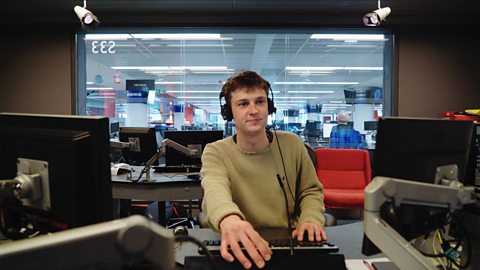
Meet Lee, a tv producer working behind the scenes on children's tv programmes. Part of our Bitesize world of work series.

How would you describe your job?
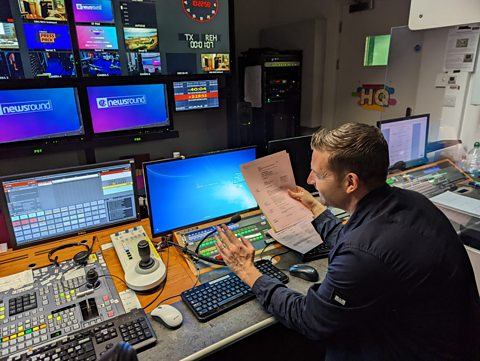
A studio producer's job is both creative and managerial. It’s creative as you are in control of everything that happens on screen, whether that’s the pictures or audio.
The producer is in charge of the content that’s in the script. In the office, the producer decides when the script is finished and ready to be filmed. If they are not happy with the finished script the producer will make notes and changes until they are satisfied with it - we call this sign off process.
When it comes to recording, the producer is also the one in charge of everyone in the studio and will often be expected to manage a number of people. They will be responsible for making sure that everyone is doing their job correctly and to a good standard. They will also support their team with any issues that they might have, these could be work or home related.
It’s a very important role in television and one that takes time to get too, often doing two or three other jobs (runner, researcher, assistant producer) before you have the experience to take it on.
What skills do you use?
There are many skills needed to be a good producer. Being creative and having lots of ideas is vital! If you’re the one in your friend’s group or at school who is always coming up with ideas, then a television producer might be the job for you.
It’s also important to be friendly as you’ll be required to work with lots of different people on a day-to-day basis. You will need team members, crew and guests to feel comfortable around you so you can get the best out of them to make the very best TV content.
You also need to be organised as you will often to be managing lots of different projects and doing multiple things at any one time. The good thing about this skill is that it can be learned and improved on over time, so don’t worry if you’re not very organised right now, practice makes perfect.
How did you get into your job?
After doing my GCSE’s I went to college to do A levels and then went on to a do a degree at university that specialised in television. As part of my course in university, I was required to do a work placement for 16 weeks. In my time there I managed to impress my employer and was offered more (paid) work at weekends while I was doing my degree.
By the time I graduated I was offered a full-time position with the very same company that I had done work experience for. I worked my way up in this company over 7 years before moving to the BBC in Salford in 2011. I’ve now been here over 10 years on and off, working mostly on educational and children’s programmes for the BBC.
Even though this was my route into television, every week I hear someone else’ story of how they got into TV and it’s always different to mine.
Going via university is a popular way into TV as it does give you a lot of the skills needed, especially if you do a course that specialises in that job. But I also think you could come straight from school or college if you have some of the skills I mentioned earlier. All you need to do is look out for work experience/apprenticeships schemes or contact companies directly with your CV and ask for work experience or shadowing opportunities.
What's your career highlight?
I’ve had quite a few during my career and it’s hard to pick one! I've visited some amazing places around the world and making television programmes there - South Africa, Taiwan, Italy, Spain, Poland to name a few!

Top tips
Write down all your good ideas, you never know when they might come in handy!
Don’t give up! You will always have setbacks in this industry but try to remember that tomorrow is just another day to succeed.
For more information about the different roles in tv you can check out the job profiles and career maps on the ScreenSkills website
You can also head to the DCMS-supported Discover! Creative Careers website which has careers information and opportunities from creative organisations
Check out the National Careers Service website for more information about different roles in tv.
Matilda: sound engineer video
Matilda's a sound engineer with the BBC Sound Unit.
Tamsin: camera operator
Tamsin makes films and TV shows.
How to become a studio director. video
Find out what studio directors do at the heart of our BBC news programmes