Our sense of smell plays a huge part in how we perceive the world around us.

The human nose can recognise a wide range of aromas - perhaps even more than we credit it for. A 2014 scientific study led by Rutgers University-New Brunswick found that the human nose can detect more than one trillion smells.
While there are odours that we smell regularly, there are other seldom-found scents which can only be found in certain corners of Earth - and in some cases out of this world! From cosmic aromas to fruity flowers, join BBC Bitesize as we take a look at four of the rarest smells from across the world.

Space

In 1991, Helen Sharman, a chemist from Sheffield, became the first ever British astronaut to travel into space when she spent eight days on the Soviet space station Mir. In September 2024 she told BBC News: “On Earth we have lots of different smells, like washing machine laundry or fresh air. But in space there’s just one smell, and we get used to it quickly.”
The smell she is referring to is known as ‘space smell’ and has generally been described as a metallic odour. It is typically brought into the space station when astronauts return from spacewalk missions.
Other astronauts have other ideas about the smell. While some have described it as like welding fumes or hot metal, former European Space Agency astronaut Tim Peake recounted the smell of space as being like a British summer barbeque - burning sausages on a charcoal grill to be more precise.
In 2008, Nasa commissioned a chemist called Steve Pearce to develop a scent that replicated the space smell that astronauts described. Several years later in 2020, that same scent was launched as a perfume under the name Eau De Space.
Ambergris
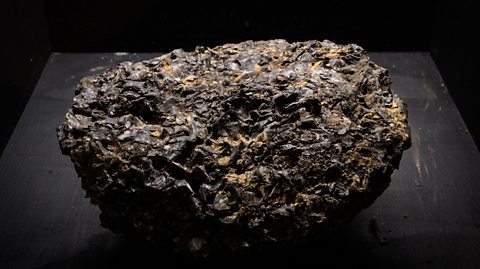
Ambergris was once once of the world’s most sought after ingredients. But while it may have be used in food, medicine luxury scents, its origins are far from glamourous. Frequently referred to as whale vomit, ambergris is a rare substance excreted by sperm whales.
Laws regarding the collection and trade of ambergris vary throughout the world. While the ambergris is not thought to harm sperm whales, the animals are considered an endangered species. By banning the sale of the substance, some countries hope they can reduce demand for it and support conservation efforts.
While it has been used by humans for centuries, there are conflicting ideas about how ambergris is formed. Some scientists believe that it is produced as a way for whales to remove indigestible parts of its diet, such as the beaks of squid and cuttlefish.
What ambergris smells like can change significantly from the stage it is found. When it first leaves the whales body, it has been described as having a strong smell not dissimilar to…well, poo.
But as it ages and dries out, it begins to develop a complex aromatic scent. In 1895, an article in the New York Times described the smell as “like the blending of new-mown hay, the damp woodsy fragrance of a A dense growth of ferns., and the faintest possible perfume of the violet”.
Orris
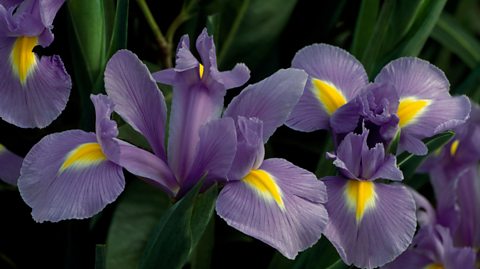
Distilled from the root of the bearded iris flower, orris is one of the rarest perfume ingredients in the world. Despite its high price, which in some cases have cost more than gold, the orris’s scent has been sought out by people across the world.
But the scent isn’t just in-demand with the perfume makers of today. Its history can even be traced back to the Ancient Greeks and Romans, who bottled it as essential oil.
The Dutch artist Vincent Van Gogh even depicted a bouquet of the root’s flowers in his 1890 painting Irises.
So where can this rare scent be found? Known as giaggiolo in Italian, the flowers are almost exclusively cultivated and sold in Tuscany.
Its rare scent is distilled from the flower’s root and its profile has been described as deeply floral, with notes of raspberry, violet and pepper.
Today the ingredient can be found in a number of products, ranging from perfumes and potpourri to medicinal syrups and spice mixes.
Hoatzin

Who would’ve thought that a bird nicknamed the stink bird would be…errr, smelly?
That’s the case for the hoatzin, a blue-skinned, chicken-sized bird that resides in the Amazon and Orinoco basins in South America.
As a folivore (a leaf-eating animal), the hoatzin is required to consume and process a large quantity of greenery to get enough energy.
In order to digest the foliage it must first pass through the crop, a chamber near the hoatzin’s throat which serves as a food storage pouch.
Once it is in the crop, a fermentation process is initiated and the hoatzin begins to generate a bacteria which slowly breaks down the plant’s tissue. It’s at this point that the bird starts to emit an unpleasant smell which has been likened to fresh cow manure.
It can then take up to 45 hours for a meal to pass through their systems. It is the only known avian species to digest food in this manner.
This article was published in October 2024, and updated in November 2025
Fancy making this 2,000 year old recipe?
Need some cooking inspiration? Why not try making this 2,000 year old recipe

Does food taste better when we’re in love?
BBC Bitesize explores the science behind how mood can affect taste.

10,000 naps a day? The amazing world of animal sleep
BBC Bitesize looks at four weird and wonderful ways that animals go to sleep.