What do Slim Shady, Clark Kent and Sasha Fierce all have in common?
They are all examples of alter egos, a fictional persona that acts as an alternative self.
The meaning of alter ego has evolved throughout history, with one of the word’s first recorded uses tracing back to the Ancient Roman lawyer, scholar and philosopher, Cicero. Fast-forward to modern day and it has been embraced by many people, including some famous faces, leading it to become a recognisable part of popular culture.
From sports stars to musical maestros, BBC Bitesize takes a look at five people who have shined, baffled and entertained through their portrayal of a second identity.
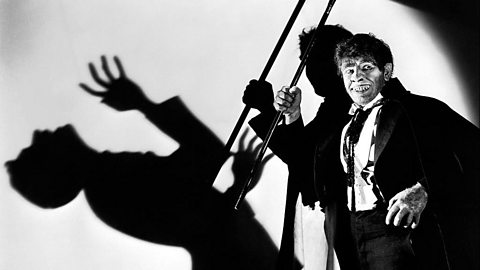
Dr Jekyll as Mr Hyde
Perhaps one of the most classic cases of an alter ego can be found in Victorian literature. The Strange Case of Dr Jekyll and Mr Hyde is a novella written in 1886, by the Scottish writer Robert Louis Stevenson.
The story follows Dr Henry Jekyll, a respected and intelligent scientist living in the West End of London. After meddling with a darker side of science, he begins to transform himself into his evil alter ego Mr Hyde.
Throughout the novel Jekyll tries to control his alter ego, but Hyde eventually takes over with disastrous results.
The 19th Century book explores the conflict between science and religion and the idea that humans have a dual nature. It also investigates the theme of double lives, something Stevenson had written about in his play Deacon Brodie (1880) and his short stories The Body Snatcher (1884) and Markheim (1885).
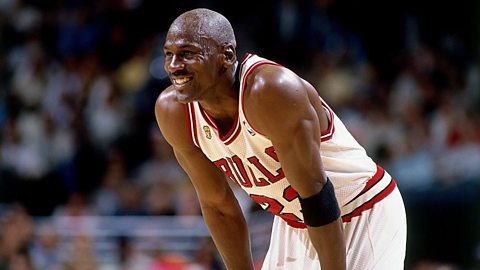
Michael Jordan as Johnny Kilroy
In 1994, basketball player Michael Jordan started to portray a fictional persona called Johnny Kilroy. Jordan’s alter ego was created by the Nike marketing team and appeared in promotions for the Air Jordan brand.
That same year, a Johnny Kilroy TV advert, which also featured comedy actor, Steve Martin, was used for the Super Bowl.
The character debuted not long after the three-time NBA champion decided to take a break from shooting hoops and pursue baseball professionally instead.
Despite Johnny Kilroy’s short time in the limelight, he still had an impact on pop culture. In 1993-94, a popular trading card company issued a basketball card of Kilroy, and in 2012 a collection of Air Jordan “Johnny Kilroy” shoes were released.
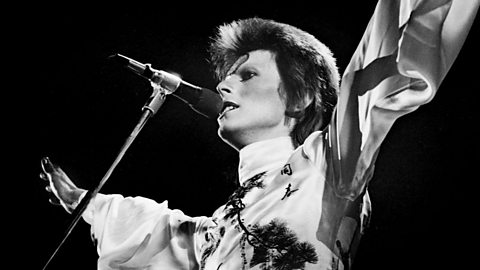
David Bowie as Ziggy Stardust
David Bowie was no stranger to alter egos. In a 1973 television appearance, he told an interviewer, “I’m a collector and I’ve always seemed to just collect personalities and ideas.”
But it was Ziggy Stardust, Bowie’s androgynous stage persona, that proved his most enduring.
With songs such as Life on Mars? and Space Oddity, it was clear that themes of space travel and science fiction had already crept into Bowie’s work. But the release of the album The Rise and Fall of Ziggy Stardust and the Spiders from Mars in 1972 saw Bowie bring an alien rock star alter ego to life.
The album, Bowie’s fifth to be released, combined hard rock and glam pop to produce an otherworldly feel.
In 2017, the album was chosen for preservation in the US National Recording Registry after being deemed “being culturally, historically, or artistically significant” by the Library of Congress.

Lady Gaga as Jo Calderone
She may have released her album Joanne in 2016, but it was Lady Gaga’s portrayal of her male alter ego, Jo Calderone, that first got people talking.
Dressed in a white t-shirt and sporting a greaser hairstyle, Jo Calderone was a joint creation between Gaga and fashion photographer Nick Knight. The character was first revealed to the world in 2010, as a men’s fashion cover star for Vogue Hommes Japan.
In 2011, Lady Gaga went on to open the MTV Video Music Awards, with a performance of her song You and I, under the guise of Jo. She later went on to win the award for Best Female Video.
When asked who her alter ego was by an interviewer that same night, Gaga - as Jo - answered, "I’m from New Jersey. My family's from Palermo, Sicily. And I'm not a singer or a model or actor or anything, I'm just a guy."
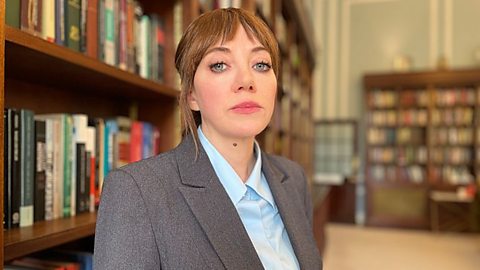
Dianne Morgan as Philomena Cunk
Self-described as the 21st Century’s leading historian, philosopher and thought-thinker, Philomena Cunk is the alter ego of the actress and comedian Diane Morgan.
With her awkward interview style and unconventional line of questioning, the character is perhaps best known for presenting historical mockumentaries, including Cunk on Britain and Cunk on Earth, which began broadcasting on the BBC in 2018.
But Morgan’s character can be traced back to 2013, when she featured on Black Mirror creator Charlie Brooker’s TV series, Weekly Wipe.
And Morgan’s work hasn’t stopped there. Over the years she has given interviews as Cunk and has even published two books, Cunk on Everything and The World According to Cunk, along the way.
This article was published in December 2024
Three times rivals worked together
BBC Bitesize looks at three times that famous rivals put their differences aside and worked together.
Six iconic movie roles that almost went to someone else
Will Smith as Neo? Madonna as Catwoman? BBC Bitesize looks at the famous roles which were almost played by another actor.
Can you guess the location from the film scene
Take the BBC Bitesize quiz all about film locations!