When you think of islands, what comes to mind?
Tropical beaches? A palm tree? Complete and utter isolation?
Around 10% of the world’s population lives on an island – and there are hundreds of thousands of islands scattered across the world.
But while Java in Indonesia, Honshu in Japan and the island of Great Britain are the biggest by population, the vast majority of islands remain completely uninhabited.
BBC Bitesize explores four islands where the population is zero.
Devon Island, Canada
Devon Island is the world’s 27th largest island – for context, the next biggest is the main island of Tasmania, Australia.
But despite its vast size, the Canadian island remains completely uninhabited - and is the biggest island without a population on the planet.
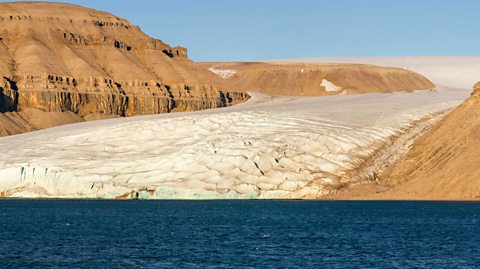
This is mainly due to its incredibly harsh climate. The island, which is part of the Canadian territory of Nunavut and is based in Baffin Bay, in the North Atlantic Ocean, is frozen for almost the entire year, with the ground being snow-free for fewer than two months a year.
There have been various – unsuccessful – attempts to establish settlements on the island, but with an average annual temperature of -16C, it hasn’t proved popular.
However – the harsh, rocky landscape has been of use to scientists and researchers. The climate and setting is similar to Mars – and has been used by Nasa to research potential missions to the Red Planet.
Bouvet Island, Norway
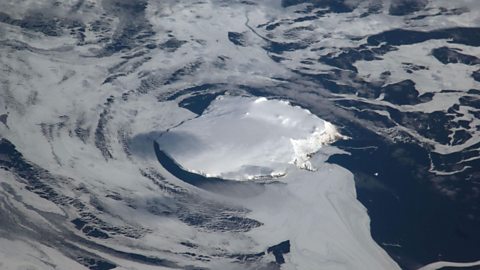
Similarly frosty, Bouvet Island is the world’s most remote – more than 1,000 miles away from other land.
Situated in the South Atlantic Ocean, the island was first discovered in 1739 by French explorer Jean-Baptiste Charles Bouvet de Lozier – but he made a mistake in charting its location and it wasn’t seen again for almost 70 years.
It was rediscovered by James Lindsay, who thought it was a completely different island and renamed it after himself – and it then earned yet another new name when a whaler found it in 1825 and named it Liverpool Island.
A Norwegian expedition then landed on the island in 1927 and claimed it as their own, naming it Bouvetøya after its original discoverer.
Given its location, Norway hasn’t been able to do much with the dependency. It’s home to a weather station, but very little else – 93 per cent of the volcanic island is covered in glaciers.
Clipperton Island, France
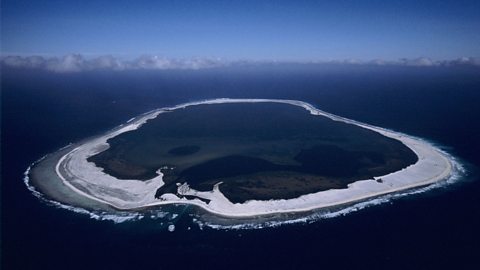
Clipperton Island is France’s only territory in the North Pacific, around 1,300 miles to the south-west of Mexico.
While there were some reported Spanish sightings of the atoll (a ring-shaped island that includes a coral rim and completely encloses a lagoon) in the 15th Century, the island wasn’t charted until 1711, when it was discovered by a French merchant.
The island has been subject of many disputes between France and Mexico over the years and was briefly home to around 100 Mexicans in the early 20th Century – a spell that ended in incredible violence and deaths.
Following , which found in favour of France, the island was formally handed over to the European nation in 1935. The island has been used as a weather station, but is uninhabited by humans to this date. However, despite its relatively small size – the island is just 3.4 sq miles – Clipperton is home to the world’s largest colony of masked boobies, with more than 100,000 of the seabirds.
Middle Mouse, Wales
Wales’ northernmost point is an uninhabited island, curiously named Middle Mouse.
Flanked by East Mouse and West Mouse either side, the island is also known is Welsh as Ynys Badrig – meaning Patrick’s Island.
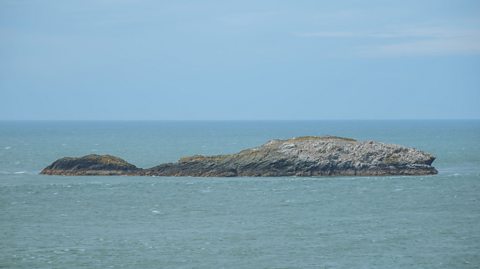
Legend has it that St. Patrick was shipwrecked there in the 5th Century, before reaching Anglesey – giving it its Welsh name.
Around half a mile off the Anglesey coast, the island is very small – around twice the size of a typical football pitch. The terrain is very rocky and subject to harsh Irish Sea winds, making it uninhabitable for humans – but incredibly popular for seabirds.
It’s also a hotspot for divers as well – with rich marine life around steep underwater cliffs.
This article was published in June 2025.
Four animals rediscovered after being feared extinct
What happens when researchers refuse to take extinct for an answer - and keep on searching for species?
Five must-see pieces of public art
From walls to train stations to entire villages – artists have taken ordinary surroundings and turned them into things of beauty
Rewilding: How species are being successfully reintroduced to Britain
BBC Bitesize speaks with a rewilding expert to find out how to successfully reintroduce a species.