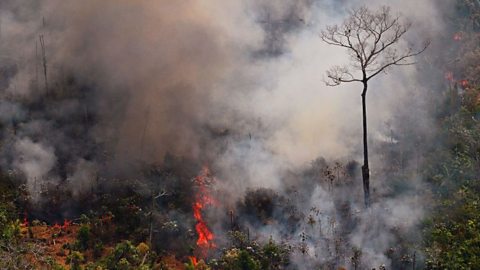
Have you ever had the sneaking suspicion that our summers (and the rest of our seasons) now are slightly different to how they used to be? Well, you wouldn’t be alone.
According to the 2019 State of the UK Climate Report which was published in July 2020, July 2019 saw a record breaking peak temperature of 38.7C. Not only that, but 2019 was hotter than any year between 1884 and 1990. In short, our summers are heating up.
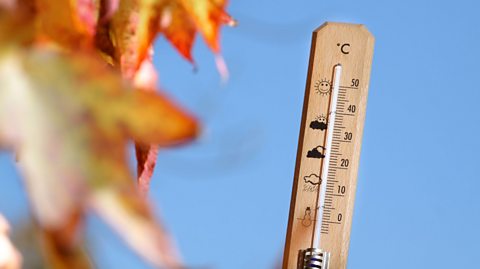
But it’s not just summer that’s changing - all of the UK’s four seasons are experiencing shifts.
While you might already be able to spot some variations from year to year, we wanted to find out if our seasons are changing according to science.
Seasons to remember
First of all, what actually is a season? You may think that’s pretty obvious - summer is warm and around July, and winter is cold and around December, right?
Well, you’re not exactly wrong, but there are in fact multiple ways to define the seasons.
The first two we’re going to look at are meteorological and astronomical seasons. These are fixed points and have strict start and finishing times.
The chief executive of the Royal Meteorological Society (RMS), Liz Bentley, explains that for meteorological seasons, “spring is March, April, May; summer is June, July, August; autumn is September, October, November; winter is December, January, February.
“We keep it to whole months because it allows us to collate data and to compare one season to the next and to look at the climatology of the season.”
Astronomical seasons on the other hand are based on the equinoxes and the solstices. The summer and winter solstices are on or around 21 June and December respectively, and the spring and autumn equinoxes are on or around 21 March and September respectively. They mark the start of the astronomical seasons.
Lastly, we have phenological seasons. Phenology is the reaction of plants and animals to weather and climate. So this could be when animals go in and out of hibernation, or when the leaves on trees start changing colour and falling off. The seasons are roughly measured by when certain groups of events happen within a certain timeframe.
Lorienne Whittle, a citizen science officer at the Woodland Trust, explains that phenology allows for a more fluid definition of what the seasons are and what they mean to us: “Nature doesn't really follow our calendar, it basically reacts to the weather, as we do as people… if we see it raining outside, we put a coat on.”
Whichever method you use, however, all of the historical data comparisons show the characteristics we use to define our seasons, whenever they may start, are noticeably changing.
Spring has sprung
Let’s start with phenology. To track change, you need to compare how nature reacts to the weather in different years. This is what the Woodland Trust, and Lorienne herself, do.
Some of their records go back as far as 1736, thanks to a man called Robert Marsham who noted nature events down in diaries as a hobby. However, this data alone would be extremely limiting, as it wouldn’t give an accurate representation of nature events across the UK. So, they started a citizen science project called Nature’s Calendar to look at when nature events happen up and down the country.
They ask people to record when certain things happen, and they use events for which they already have a lot of records.“It would have been really foolish to go out and choose a different set of plants and animals to record that didn't match those historical data records,” Lorienne explains. They also need to be things that happen across the UK, and things that are easily recognisable by the general public.
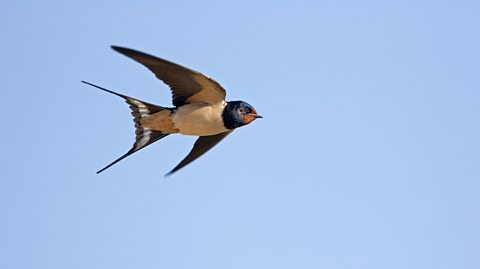
The oldest records are in their spring index. They go back to 1891, and include things like the first sighting of a swallow. All of the events included in the index happen at a similar time of year, and are used as indications of the start of spring. Having these records mean that they can track how spring has changed over the decades, and with Nature’s Calendar, they can do this for other seasons too.
So, how have our seasons changed according to their data?
“What the project is showing us is that our seasons are blurring.”
Lots of species’ events are happening a lot earlier than they used to, Lorienne says. In fact, according to the Woodland Trust, spring now starts six days earlier than it did in 1999.
This may seem like a small amount, but Lorienne insists that it is significant: “The impact is huge in terms of the repercussions down the food chain.”
For example, oak trees leaf earlier in a warmer spring. Oak leaves are really important for caterpillars - it’s their main source of nutrition. The caterpillars don't mind if they come out a bit earlier, as it just means their numbers increase slightly earlier too.
Blue tits, great tits and pied flycatchers all feed on those caterpillars, so you might think more caterpillars = great for them. But the life cycle of the caterpillars is really important for the survival of these birds, as they can only eat caterpillars up to the point at which they form a chrysalis. The chick’s chances of survival increase or decrease depending on the amount of caterpillars there are to eat – if the caterpillars get to chrysalis stage earlier, and the birds don’t realise, the birds’ food supply decreases considerably.
Lorienne explains: “Those birds can't react in the same way that the caterpillar has to the oak tree… in a warmer spring, the birds aren't able to.”
This has massive impacts on the amounts of those birds surviving in the wild. And this is only one example of how a food chain can be disrupted - similar things are happening to lots of other animals and plants, too.
Let it grow
Earlier springs and other changes to our seasons are a result of climate change. This is because our average global temperature is going up, and it has done so already by about one degree Celsius in the last 100 years.
“Phenology has been noted as one of the earliest and easiest ways of tracking climate change,” Lorienne says. But it can’t be used in isolation - it needs to be studied alongside lots of other things to get an accurate representation of how our climate is changing.
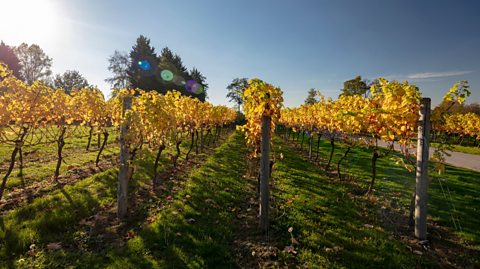
Climate change isn’t just having an effect on the four seasons you already know. Introducing the not-so-new kid on the block: the growing season. This is the period of the year in which crops are able to grow, and is another great indicator of the changes in our climate that can be looked at alongside phenology.
So what do we classify as being the growing season? Liz at the RMS explains: “We start the growing season when the temperature gets to five degrees Celsius or more for five consecutive days. It ends when the temperature drops below five degrees or more for five consecutive days.
Because of the change in our climate, namely that it’s getting warmer, Liz says that since the '60s we’ve started to get roughly a month longer growing season in the UK.
This change has actually been positive in some ways she says: “We can grow things in this country that we never used to be able to partially because it's warmer, but mainly because we've reduced the number of hard frosts that we get in the winter.
However, Liz acknowledges it’s “a double-edged sword.”
“We get some positive things, but we also get some negative things.”
These negative impacts are pretty well documented: rising sea levels leading to mass flooding, extreme weather events becoming more frequent and, as Lorienne mentioned earlier, food chains being disrupted.
In the bleak mid-winter…?
It doesn’t stop there. Not only do we have spring six days earlier, and a month extra on our growing seasons, but according to the Woodland Trust, in 2019 we didn’t have a winter.
Well, sort of. Lorienne explains: “Last winter we didn't have a very cold winter at all… we had an extended autumn.”
In fact, according to the State of the UK Climate Report 2019, a new winter temperature record of was set at 21.2C on 26 February in Kew Gardens (London), and overall last winter was the eighth warmest we’ve ever had in the UK.
2019 was also the one of the least snowy winters we’ve ever had in the UK. You may have noticed this yourself - when was the last time you had a white Christmas?
According to Lorienne “we kind of feel like we're losing winter a little bit.”
Four seasons in one day
Liz agrees, insofar as our winters are getting much warmer.
“Our winters are getting warmer and wetter (we've noticed that change in the last 40 or 50 years), and our summers are getting hotter and drier.”
So does all of this information together mean that we need to redefine what we think our seasons are like?
“That's what we do with climatology”, Liz says. “We look at 30 year averages. Andif you go back 30 or 40 years, the typical climate of a season in the UK could be described in a certain way with a certain average temperature and a certain amount of rainfall. Now, 30-40 years on, the climate of that season has changed somewhat.
“The basic climatology of each of the seasons is changing, has changed, and will continue to change.”
But what does this mean for our seasons moving forward?
Liz says that she still thinks we’re going to have four seasons, but we’re just going to have to look at them differently. Countries nearer the equator only have wet and dry seasons, and she can’t see the UK moving to such a binary landscape.
However: “It just means each of the seasons are going to be different from what we would have had a century ago or 50 years ago, because the temperatures are going up and the rainfall patterns are changing.”
And we should look out for more extreme weather events, too.
So according to the scientists, the answer to the question ‘are our seasons changing?’ is a resounding yes. And it’s literally happening as we speak: “It's not something for the future,” Liz says.
“It's actually happening here, now, on our doorsteps.”
This article was published in September 2020.
Why do leaves fall off trees?
It happens every year, but do you know why?
How much do you really know about climate change?
We are always hearing about it in the news, but have you been paying attention?
What would the world be like without forests?
Deforestation is happening all over the world, but what would happen if we ran out forest altogether?