Did you hear the one about the comedian whose jokes got no laughs?
Usually, that would mean their set was going particularly badly, but at the moment, that’s what's happening with a lot of stand up shows, regardless of how funny they are.
As with all forms of live entertainment during the Covid-19 situation, there are no traditional comedy shows taking place in traditional venues at the moment. But, at a time when perhaps we need laughter the most, plenty of comedians have decided the show must go on.

While theatres are closed, live comedy shows are being streamed online – but how much are these shows affected by a lack of laughter?
Glenn Moore is a comedian who has appeared on Mock the Week on BBC Two, itv2’s The Stand Up Sketch Show and is part of the breakfast show on Absolute Radio.
He told BBC Bitesize that effectively performing to no-one at all has been a big adjustment. He explains in live comedy the audience is crucial as, even if you’re not actively interacting with them, everything is geared towards the reaction you’re hoping to receive from them.
“I remember doing open mic gigs years ago where you’d have about five people in the audience. It was exhausting because you end up filling every single available second with words just to avoid the silence hanging in the air.”
Just as everyone else has had to get used to video conferencing for schoolwork, university lectures or work meetings, so have comedians as a way to continue performing.
And if you thought a maths lesson was a bit strange online, imagine trying to tell a joke to hundreds of people who aren't there with you.
LOL and ROFL
But while the bedroom gig might be an odd experience for comedians, performing without an instant reaction is becoming more and more common in comedy.
Lots of comedians have made the transition from stand up to radio shows or podcasts. Glenn says his background in radio has helped him with online panel show style gigs, as he is able to pick up on visual cues and how to time his responses - and it’s been an interesting experience.
He said: “Doing gigs on formats like Twitch, you see a typed response from an audience member about 15 seconds after you’ve said something. That always feels pretty surreal because it’s easy to forget people are actually watching you when you’re just talking into your computer screen.
“I’ve seen one promoter use a brilliant format for online stand-up gigs, which is to have a front row of sorts, about 10 of the audience members also up on the screen.
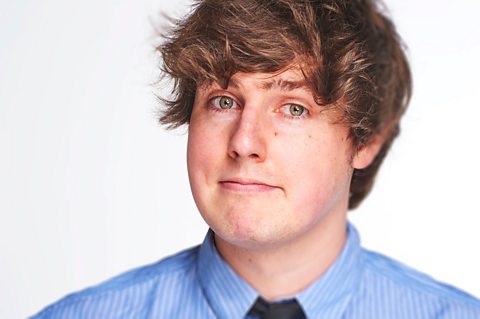 Image source, Natasha Pszenicki
“You can see and hear them react to each of the comics, so it replicates the feeling of a live gig really effectively.”
Keep on laughing
For many comedians, their year is geared around the Edinburgh Festival Fringe, the world’s largest arts festival, where comedy often takes centre stage. Glenn says losing his annual trip to Edinburgh has been difficult to process. With the goal of the Fringe taken away, alongside all other comedy club nights or stand up tours in the immediate future, it's no wonder the online shows have gained in popularity.
But it's not the only way that comedians have been keeping their hand in without audiences to perform to. Glenn is known for his clever word play and rapid fire jokes - and he's continued to rely on his usual outlets to remain creative.
"Social media’s always been vital in trying to grow an audience, and during lockdown it’s been very helpful in trying to keep them. I try to post jokes as often as I can to Twitter and Instagram.
"There’s also more to comedy than live stand up, so lots of acts are writing for TV, writing for other people, making their own video content - there are still plenty of opportunities to get your work out there."
Given the topical nature of so many comedians’ acts, they will be faced with a difficult question – carry on with a previously written show or make changes to reflect the extraordinary events of 2020?
Glenn thinks it will be difficult for comedians to ignore Covid-19.
“I’m not sure if people will just not want to relive it once it’s all over, but at the same time there’s a joy in hearing a comedian talk about a thoroughly relatable experience and identifying with it."
Until comedy clubs reopen, we’ll have to rely on the online gigs and the typed out laughter or front row fun. It may not be ideal, but it's still good for a giggle or two, even if it has taken a little getting used to.
"I’ve found it feels like a completely different skill set - you’ve almost got to tone down your performance online and make it seem more conversational otherwise you look like you’re insane," says Glenn.
"I think the big thing that’ll change once gigs go back to normal will be that these new online ones will remain popular. In fact it could be very difficult after this to convince comedians to leave their homes."
It's the new way they tell 'em.

How to make a socially-distanced podcast
Capture your memories and emotions while social distancing by making your very own podcast
A step-by-step guide to capturing your summer on video
Tips from professional videographers on finding inspiration and getting started.
How to let your photographs tell stories this summer
Professional tips on capturing key moments through a lens