It’s Christmas Day, you’ve eaten far too much and just when you’re dreading the idea of a turkey sandwich, someone suggests a board game.
While we’re being advised not to pass dice and game pieces outside our households this year, a not-so-quick game of Ticket to Ride, Trivial Pursuit or Scrabble is very much a part of many people’s usual festive traditions.
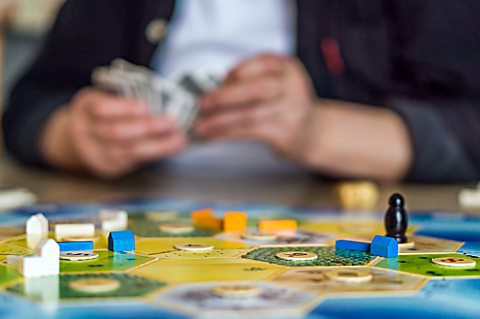
But where did board games come from? And why are they still so popular to this day? BBC Bitesize takes a look – after rolling a six to start, of course.
Go back to the start
The earliest board games were very different from those you may have at home.
Game inventor and historian David Parlett says there are actually some that date back thousands of years.
“Board games come from at least four of the earliest known civilisations, those of the Indus Valley, Ancient Egypt, Mesopotamia and China, between 5,000 and 3,000 years ago.
“Some are known from physical remains, often found in royal tombs, while some are known from illustrations of people playing. Others are known from literary and historical references.”
Senet is often named among the oldest games in history.
Played in Ancient Egypt, with some evidence of the game dating back to 3500 BC, the rules of Senet are often debated. The game board featured a grid of 30 squares in three rows and two sets of pawns of varying numbers, but historians cannot be entirely certain how the game was actually played.
Around 1,000 years later, between 2600 BC and 2400 BC came the Royal Game of Ur – which David describes as “the earliest known game for which we have enough evidence.”
Originally played in ancient Mesopotamia, the game was popular in the Middle East. It was named the Royal Game of Ur following its discovery during excavations of the Royal Cemetery of Ur in Iraq in the early 20th Century.
Initially, no-one knew how the game was played before Irving Finkel, a British Museum curator, translated a clay tablet and discovered the rules.
It is a race-style game – meaning the aim is to get all seven pieces across the board before your opponent.
“You can see an actual specimen in the British Museum and even buy a modern reproduction of it,” says David.
“The game still exists. It is played by the Cochin Jewish community of south-western India.”
The evolution of games
From those early, initial games, others started to follow.
The game Go dates back around 2,500 years to ancient China and is still played to this day. The aim of Go is to surround a larger area of the board with your pieces than your opponent and was even a part of the Asian Games in 2010 alongside events such as athletics, cycling and football.
Chess as we know it today derived from a 6th Century Indian game called chaturanga and reached England some time after the Norman Conquest in 1066.
The middle ages also saw nine men's morris, also known as merrills, gain popularity - the game originated in the Roman Empire but was widely played in England. The aim of the game was to seize an opponent's counters by forming lines of three, known as mills, on the board.
Nine men's morris was said to be so popular due to the ease of creating a board, with makeshift sets found carved into cloister seats in cathedrals and at castles.
But it wasn't until more recent times that story-driven games similar to those found in toy shops today started to appear. So how much do today’s titles owe to the likes of the Royal Game of Ur and Seten?
David believes the ancient board games sparked an evolution of the genre, rather than directly influencing today’s play.
“An essential difference is that for most of their history, games were abstract rather than pictorial, even if they were thought to represent things like horse-racing or warfare.
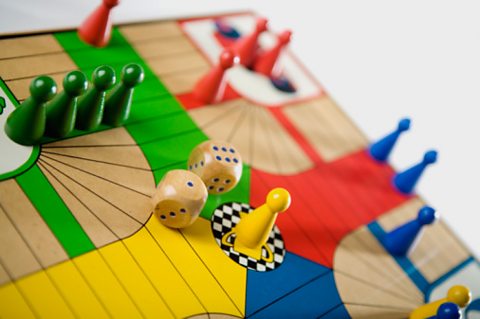
“They were mostly played on grids or diagrams that could be easily drawn or carved. Highly pictorial games only began after the introduction of printing.”
Those ‘high-concept’ games started to appear in the 19th and 20th Centuries – with titles such as The Chequered Game of Life (now known as Game of Life) and Monopoly flying off the shelves.
In recent years, games like Carcassonne, Settlers of Catan and Alhambra have taken the storyline elements further.
“Modern games tend to be much more complicated, rulebooks often reading like encyclopaedias.
“The number of purely abstract games nowadays is completely swamped by games that represent something, as you can tell by just looking at their titles – many are based on popular TV shows and other forms of entertainment.”
A multi-billion dollar industry
Despite being around 5,000 years old, board games continue to go from strength to strength and have arguably never been more popular.
Figures in 2017 put the global board games market value at around $7.2 billion (£5.3bn) and board game cafes have opened up in cities around the world.
Monopoly – which celebrated 85 years in 2020 - has sold more than 270 million copies worldwide and has been played by more than a billion people.
David thinks they remain widespread because they appeal to our natural instincts.
“Board games have remained popular through the ages for the same reason as any other form of culture and entertainment.
“Human beings have a natural urge to play, and we’re conditioned to favour games that have definite names and rules.”
So, if a member of your household collects that dusty board game and suggests a quick spin over the Christmas period or you’re logging on to play one virtually with friends – remember it’s not just a bit of fun, it’s also a part of our global history and culture.
Oh, and no cheating!
Can you solve these tricky riddles from over 1000 years ago?
Maths, plants, astronomy and much more - how well will you do?

Quiz: How much do you know about Christmas in books?
Whether it's books that take place at Christmas or all-out festive fun, how many can you get right?