How many seasons are there?
In the UK, there are four seasons:
- Spring
- Summer
- Autumn
- Winter
Each season lasts about three months and has different weather. The weather is also different in different parts of the UK as well.
How are the seasons different?
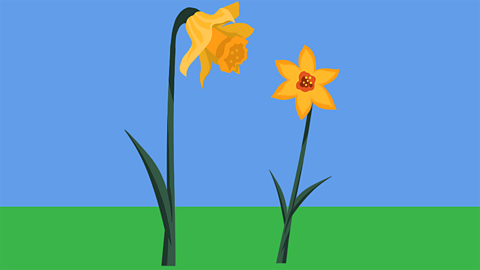
In spring the days start to get warmer, it can be sunny or rainy. Plants start to grow and flower, and lots of animals give birth.
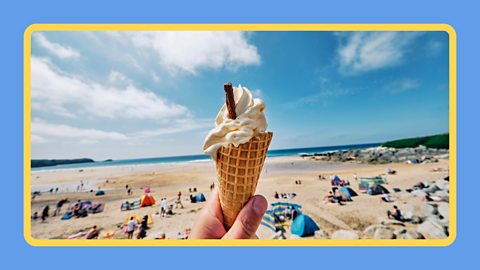
Summer usually has the hottest, sunniest days although there still may be some cooler or cloudier days.
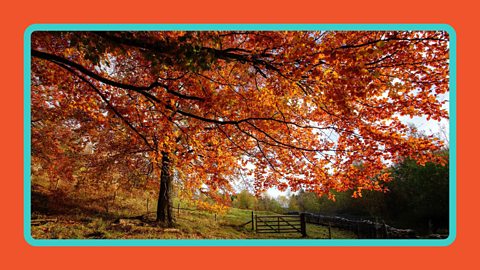
In autumn, the days get shorter and cooler and there is usually more wind and rain.
Winter is the coldest season with the shortest days, it can be stormy with lots of rain, wind, ice and snow.
The number of daylight hours changes throughout the seasons too, for example we get lots of daylight hours in summer and much fewer in winter.
| Spring | Summer | Autumn | Winter | |
|---|---|---|---|---|
| Months | March, April, May | June, July, August | September, October, November | December, January, February |
| Weather | Warmer, rain and sunny | Hot and sunny | Colder, wind and rain | Cold and icy |
| Daylight hours | 11-15 hours | 14-16 hours | 8-12 hours | 7-10 hours |
Watch – Seasonal changes in the UK over a year
Anna: Throughout the year there are four seasons that last three months each. Winter. Spring. Summer. And Autumn. But how do we know which season we're in? We can hear different animals and birds. We can see the way plants look. And we can feel the difference in temperature.
At the start of the year, it's winter, and daytime is at its shortest, so the mornings and evenings are darker. The temperature is cold, and there may be ice or snow. Some trees have shed their leaves, and the sun is low in the sky. We don't hear or see many birds but there will be some in our gardens and parks.
Next it's spring. The weather's changing, some plants begin to shoot and grow, and some trees even have blossom. It starts to feel warmer and daytime becomes longer. Some animals and insects will wake from a deep sleep, and birds such as swifts and swallows come back to the UK, and we hear a lot of noise. The sun is also higher in the sky.
Then there’s summer. It feels so much hotter. Lots more flowers are blooming and daytime is at its longest, which means it's lighter in the mornings and evenings. We start to see some fruit growing and we can hear insects. It's a busy time. Finally, we have autumn. It feels cooler as the daytime becomes shorter. Animals get ready for winter and some birds migrate, and we hear and feel more wind.
The leaves on some trees change colour and even fall. The season we're in at the moment is autumn. We're searching the park for autumnal leaves and seeds. The leaves are brown and red. The leaves and seeds we found are being stuck down, and we're labelling them. Acorns are seeds and are usually found in the autumn. These are looking great.
Can you make a page for each season?
Seymour: Hello! Seymour Science here on a chilly, no, windy, no, sunny day. Today we're talking about seasons, with my expert friend - Gabby.
Gabby: Thanks Seymour, so what are seasons? Well, in Britain, each year has four seasons. Spring, summer, autumn and winter and each season usually lasts three months.
Gabby: Spring is March, April and May and the weather can be sunny, rainy, dry and windy. Look out for frogspawn, birds building nests, caterpillars and baby animals.
Seymour: Done, next!
Gabby: Summer is June, July and August. It's usually drier and warmer, although you can still get rain. Keep an eye out for flowers, bees, ladybirds, frogs and trees full of leaves.
Seymour: Got them, next!
Gabby: Autumn: September, October and November usually start quite mild, but can then get rainy, windy and a bit colder. Most trees drop their leaves in autumn too. Look out for caterpillars in cocoons, slugs and snails under leaves, hedgehogs hibernating, squirrels burying nuts.
Seymour: Done!
Gabby: Last up is winter, which is December, January and February. It can be wet, snowy and frosty. Look out for trees with no leaves, evergreen plants, geese and robins and animals building underground nests to stay warm.
Seymour: Woohoo!
Seymour’s Mum: Seymour! What have you done with the squirty cream?
Seymour: Whoops!
Fascinating facts
Your sense of smell is better in the spring as there is more moisture in the air.
Summer has more thunderstorms than at any other time of year.
In autumn leaves on trees change colour from green to red, orange and brown as the leaves die.
The UK is closer to the Sun in winter than in the summer.
Hedgehogs eat lots and lots of food between October and November so they are ready to hibernate and survive the winter.
Deciduous trees lose their leaves in autumn and grow new leaves in spring.
Evergreen trees keep their leaves all year round.
Plant and animal seasonal changes
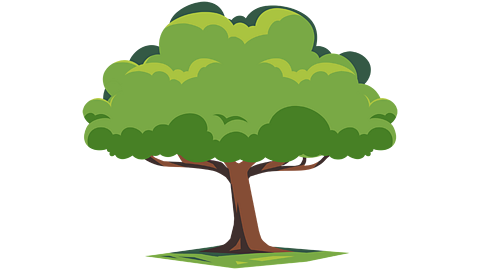
Deciduous trees are a type of tree that goes through changes with the seasons.
In autumn, the leaves of deciduous trees change colour and fall off. During winter, they have no leaves at all. Then in spring new leaves begin to grow again.
Evergreen trees are a special type of tree that keeps their leaves or needles all year round and throughout each season.
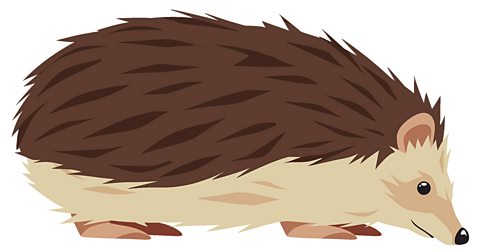
Some animals hibernate through the winter season because the conditions are too harsh.
The cold, dark winter months can make it difficult for some animals to find food and water, so they become inactive to save energy.
In the UK hedgehogs, dormice and bats all hibernate. Other species, like badgers, lower their activity throughout the winter months.
The four seasons
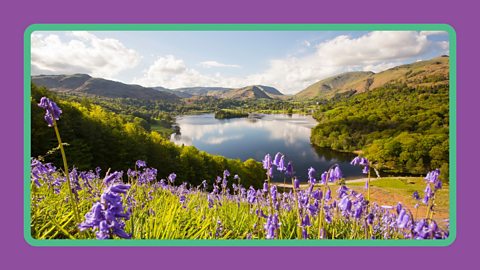
Image caption, Spring
In the UK spring is in March, April and May. The weather can be sunny, wet and windy.

1 of 4
Did you know?
The coldest temperature ever recorded in the UK, during winter was −27.2 °C.
That figure was reached twice in 1982 and 1995, both times in the Scottish Highlands.
The hottest day ever in the UK was 19 July 2022 when temperatures in Coningsby, Lincolnshire, reached 40.3°C.
The Sun
The longest day of the year is in June, during the summer season. London (our capital city) receives around 16 hours and 38 minutes of daylight.
The shortest day of the year is in December, during the winter season. London receives only 7 hours and 49 minutes of daylight.
Remember
It is important that you don't look directly at the Sun, even when wearing sunglasses, as the Sun is very strong and could damage your eyes.
Important words
Autumn - Autumn covers the months of September, October and November, with the weather usually cooler, wet and windy.
Daylight hours - The hours of light and daytime that we see in a day.
Deciduous trees – Deciduous trees go through changes with the seasons. Most deciduous trees lose their leaves in the autumn and grow new leaves in spring.
Evergreen trees – Evergreen trees are a special type of tree that keep their leaves or needles all year round, and throughout every season.
Hibernate – When animals enter a period of inactivity during the harsh winter months.
Spring - Spring covers the months of March, April and May, with the weather usually warmer, sunny and wet.
Summer - Summer covers the months of June, July and August, with the weather normally hot and sunny.
Winter - Winter covers the months of December, January and February, with the weather mainly cold, wet, windy, icy and snowy.
Activities
Activity 1 – Quiz
Activity 2 – Quiz
Activity 3 – Sort the seasons
NEW Creative Lab game - summer update! game
Time to get creative as you paint, draw, build and design. Now with 3D sculpt mode, immersive backgrounds and new materials like wood, marble and gold. Plus summer-themed stickers and templates! Play Creative Lab today.

More on Seasonal changes
Find out more by working through a topic
- count2 of 2