|  | JRR Tolkien - a brief biography |
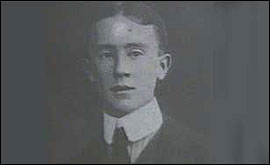
His parents both came from Birmingham but his father, Arthur, who was a bank clerk, moved to South Africa in the 1890's in the hope of bettering himself.
In 1896 Arthur Tolkien died, and the family once again settled back in Birmingham. The city and its surroundings were to have a big influence on the writings of JRR Tolkien. As he later wrote: "the country in which I lived my childhood was being shabbily destroyed before I was ten."
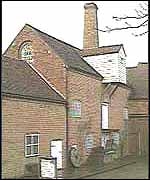 | | Sarehole Mill |
Initially the family lived in the village of Sarehole, which at that time had not been swallowed up in Birmingham's growing suburban sprawl.
The village is widely thought of as the inspiration for Hobbiton and the Shire. The mill that features in "The Hobbit" and "The Lord of the Rings" must owe much to Sarehole Mill, which is now a museum run by the City Council.
The young Tolkien went to King Edward's School in Birmingham from the age of eight, travelling in on the tram from Moseley, where the family had moved to make the journey easier.
Moseley Bog too may have provided inspiration for some of the settings in "The Hobbit" and "Lord of the Rings."
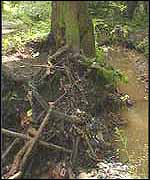 | | Moseley Bog |
Life for a widow with two sons at the turn of the 20th century was not easy, and the family had a somewhat nomadic existence, moving from Sarehole to Moseley and from Moseley to King's Heath.
Tragedy struck again in 1904, when Tolkien's mother was diagnosed with diabetes, which at the time was untreatable.
By the end of the year she had died and Ronald and his brother were left orphaned. The family were devout Roman Catholics, and the priest at Birmingham Oratory became their guardian. The boys lodged nearby in Duchess Road.
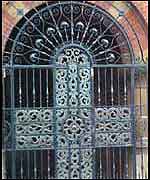 | | Birmingham Oratory |
Tolkien meets Edith
Tolkien met the woman who was to become his wife at this time. He was only 16 and three years younger than Edith Bratt, who was lodging at the same boarding house.
Ronald was forbidden by his guardian to see or even write to Edith until he was 21. He obeyed this harsh injunction, but it could not stop the course of true love, and the couple eventually married in 1916.
A university education
It was a place at University that finally took Ronald away from Birmingham. He swapped life in King's Heath for a place at Exeter College, Oxford. At first he studied classics before switching to English Language and Literature, gaining a first class degree.
He served in First World War as a second lieutenant in the Lancashire Fusiliers, fighting in the Somme offensive of 1916. He contracted trench fever and spent some time being treated at a hospital in Birmingham.
After the armistice in 1918 Tolkien worked briefly on the New English Dictionary project, that eventually formed part of the Oxford English Dictionary.
Soon he returned to academic life, first becoming a reader in English Language at the University of Leeds, and later Professor of Anglo-Saxon at Oxford University. He retired as Merton Professor of English Language and Literature in 1959. It was at Oxford University that he became close friends with CS Lewis, author of the Narnia books.
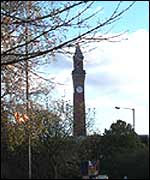 | | Birmingham University Tower |
Tolkien's books
He began his writing to amuse his four children, but his love of language, his Birmingham childhood and his war experiences eventually coalesced into "The Hobbit", which was first published in 1937.
Its success led to demands from the publishers for a sequel, but the tale, as Tolkien later wrote, "grew in the telling", and it was not until 1954/55 that the three part "The Lord of the Rings" was published.
Tolkien wrote many other works. Some were connected to the world of middle-earth he had created including "The Adventures of Tom Bombadil" - some were academic such as "Sir Gawain, Sir Orfeo and The Pearl."
It is for the adventures of the Hobbits and their struggle against the ring of power that he will always be remembered.
JRR Tolkien died on 2nd September 1973, in Oxford. |