| 13 November 2014 |

| |
| BBC Homepage | | |
| |||
| Contact Us | | |
Profiles of local peopleYou are in: Birmingham > People > Profiles of local people > Andris Nelsons- the man behind the podium 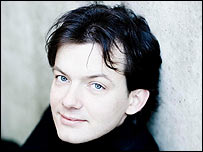 Andris Nelsons Andris Nelsons- the man behind the podiumBy Tessa Burwood The newly appointed Director of CBSO on his plans for the orchestra, life in Birmingham, and why classical music is food for the soul. September 2008 saw Latvian Andris Nelsons’ debut as Director of the City of Birmingham Symphony Orchestra. The announcement that he would be taking over from Sakari Oramo was made at the end of 2007, so CBSO season ticket holders have been on tenterhooks in anticipation of his arrival at what is widely recognised as one of the foremost symphony orchestras in the world. At just 29 years old, Nelsons is not quite the youngest conductor ever to shepherd CBSO through its repertoire- Sir Simon Rattle took on the role at just 25- but this highly energetic individual does much to dispel the stereotype of a crusty old conductor with a shock of white hair, lost from the world amidst piles of crumbling music scores. The youthful, fresh image that Andris represents is something CBSO is hoping to capitalise on, as a means of attracting a younger audience to its concerts.  Andris Nelsons: Richard Battye New beginningsSo what plans does he have for CBSO, what are his impressions of the city, and with such a busy schedule, which sees him flitting between Birmingham, Riga, Berlin and the USA on a regular basis to fulfil his other musical commitments, does he ever find time to relax? In the midst of a hectic working day in the run up to his debut performance at Symphony Hall, I caught up with him for a chat at the orchestra’s headquarters in Birmingham City Centre. He had just come from the library, where he had been studying for his forthcoming performances. He is open, confident and at ease with himself, buoyed up with a creative energy and excitement that is very infectious. I started by asking him what he thought of his new home. Birmingham often suffers from an inferiority complex, being the UK’s second city, in London’s illustrious shadow. So what were your impressions of the city before you arrived here in your new post?The first thing I knew about Birmingham as a kid was the orchestra, that’s what I always associated with the city, along with Simon Rattle and Sakari Oramo. Of course I knew that it had been a very industrial city, the second biggest after London. I was told about the Birmingham accent before I came here, it’s nice, I like it. Wherever I go, it’s always to do with music, it unites all the nationalities, so I don’t feel so much the differences between people. Everyone here has been so welcoming. I don’t know the city so well yet, as I’ve only just started here, and I’m always at rehearsals, then more rehearsals, and meetings, then sleep, then food! 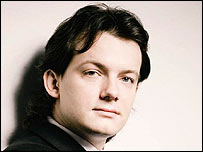 Andris Nelsons: Marco Borggreve I need more time to look around, and maybe I can find a place where I can have some time to play football. I need something physical, you know? I have so much food for my soul, but I need some for my body too! You must have a hectic schedule, and it seems you’re never in one place for long. Where do you call home, or are you a man of the world?When I’m here I rent, during my weeks with the orchestra, but my schedule is very busy. Every week it’s somewhere else for me, so I am two weeks here, one week in America, one week in Riga and then two more weeks here then two weeks in Germany. I still call Riga home though. That’s the place where I rest and study, that’s where my parents are, but I enjoy all the different places I work in, because it always revolves around music. With the likes of Sir Simon Rattle, Sakari Oramo, all the composers whose work you conduct, and the reputation of the CBSO on your shoulders, aren’t you a little nervous?Of course I am nervous, but I am excited too because the management team and the orchestra make a great team. We want the audience to become a big part of that team too. On stage I’m always nervous, but there is so much adrenalin too. It’s strange because I have to turn my back on the audience, and my audience is the orchestra. I communicate my energy to them, and they communicate it to the audience behind me! 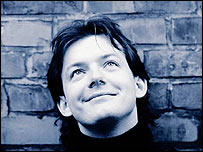 Andris Nelsons: Marco Borggreve There are so many season ticket holders that come to the CBSO for every performance, so you don’t have to worry about filling seats. It is, however, quite a white, middle class audience, and Birmingham is going to become one of the first ethnic majority cities in the UK. Do you plan to take this into account in your new role?Definitely, different ethnic groups shouldn’t be feeling that they’re isolated- CBSO is in the middle of the city, and everyone is very welcome, no one should be afraid of classical music- it’s the most wonderful food for the soul, for me anyway! I think it’s good if you live in Birmingham to say OK, I’ll go once a year, once in half a year. Take your girlfriend or boyfriend, and come to the concert. It’s a great symphony, one of the best in the world! That would give me a really great feeling, if people would just include it as a cultural experience in their lives. It would be great to reach out to more people, be more inclusive. I am an absolutely normal person, I’m 29, going to be 30 soon, and most people in Birmingham may think that classical music is boring, just for old people, but I am young and I have done many different things before settling on this as a career, so in a way I’m proof that this often isn’t the case. It’s been well documented that you have a highly musical pedigree, being born into a family of musicians. You said once that you knew you wanted to conduct from the age of five. Can you remember a time when it wasn’t your ambition to be a musician?When I was younger, I wanted very much to play football. I have always studied music, piano, trumpet, conducting and singing. For about four years, however, I really wanted to play football and go to train as a professional footballer. I was playing a lot in the schoolyard, but at the same time I was playing music. Anyone who loves football can also be involved in music, the two aren’t mutually exclusive. 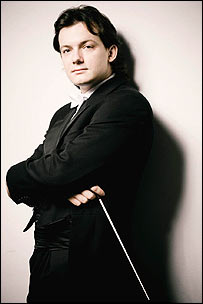 Andris Nelsons: Marco Borggreve I also did martial arts for 8 years, I didn’t want to leave music though, and of course now my life is all about music, so I don’t have much time left to do anything else. You have to study and prepare, and in my position you have to take care of many things, it’s not just playing the music. What is it that drives you to excel in classical music? Why do you love it so much?I believe we have a physical body and a soul. It doesn’t matter what religion you are, whether or not you believe in God, I think people believe that there is a soul and a body. You need food for your body, you need to eat and exercise to satisfy your physical body, but there is a soul that needs to be satisfied too, and it can be satisfied of course through love, but for me music is the most beautiful form of satisfaction. Even going to a rock concert can do this, I wish I had time to go, but classical music fills me up and makes me happy. You started learning the piano at a young age, then took up singing, the trumpet, conducting, even the cello, it’s like you just can’t get enough music in your life! Is conducting the best way you could find to satisfy your all enveloping lust for music? Would you ever compose music yourself?The orchestra is such an instrument, you can be so much more involved in the music making process. All these other instruments, singing, trumpet and piano, led to conducting because the more instruments you can play, the more you know about conducting. I never wanted to be the boss, I just wanted to be involved and to study, because you have to develop as a conductor all your life. It makes me excited, because it’s all around you, and you can analyze and influence it. 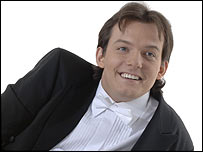 Andris Nelsons: Richard Battye Composing is something I don’t do. I’m scared of it, I don’t think I could do it, so much great music has been written, I don’t think I could follow in those footsteps, I’m too much in awe of what’s gone before me. Many people don’t venture into the world of classical music, because it seems intimidating, highbrow and alienating. Is it necessary to understand the music in depth, in order to enjoy it?Even if you don’t know much about it, it’s not a problem, you just have to find the repertoire you like, or the composer you like. You may see a concert programme and think, “Who is Tchaikovsky? Who is Puccini?” but you can find these things out before booking a ticket, and see if you like what they wrote. It’s an international language, it breaks down barriers. You know, the aim for me and for the orchestra, is to try to involve people in classical music, not so say that they should come every week to a concert, but because people abroad recognise Birmingham through CBSO- it is an important part of Birmingham. So, for a first timer at a classical concert, what would you suggest?Now we are doing La Boheme as a concert. Puccini’s music always has me in tears, it’s great, so melodic, and so sad and beautiful, if you want to take someone on a date I would suggest La Boheme- it’s very romantic! ---------------------------- For details of CBSO’s upcoming concerts and events, and to find out more about Andris Nelsons, visit their website at the link below. The BBC is not responsible for the content of external websites last updated: 19/09/2008 at 17:57 SEE ALSOYou are in: Birmingham > People > Profiles of local people > Andris Nelsons- the man behind the podium   |
| | About the BBC | Help | Terms of Use | Privacy & Cookies Policy |