More about this epitaph
This piece, as the title suggests, is a melancholic poem, but is in praise of this emotional state. It was apparently inspired by his blind great-grand uncle's enjoyment at listening to Burns mother sing of an evening, tears rolling down his cheeks.
The style of the ballad is thought to have been influenced by one of his uncle's favourites, the folk ballad Life and Age of Man.
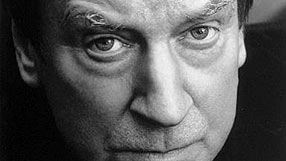
Alistair BraidwoodSet to the tune of Peggy Bawn, 'Man Was Made to Mourn' is one of several poems in which Burns turned to the sentimental to explore the plight of the poor. The poet's brother Gilbert remarked, 'He used to remark to me, that he could not well conceive a more mortifying picture of human life, than a man seeking work.
In casting about in his mind how this sentiment might be brought forward, the elegy Man was made to mourn, was composed.' (James Currie, iii. 384).
Indeed, the subject was one upon which he frequently wrote to friends, such as Mrs Dunlop, where he described his aged uncle who was blind who would cry as his mother sang the song, 'The life and age of man'.
The subject of this poem is an aged, white-haired sage, a frequently-occurring character in eighteenth-century poetry right down to the old man of Wordsworth's Lyrical Ballads and Burns's poem is infused with literary echoes of the sentimental works of Blair's The Grave, Shenstone's Elegies, Young's Night Thoughts and other Augustan churchyard poetry.
There is a strong sense here that Burns was both following in a recognisable tradition but the shift in the speaker's reflection upon the old man to the individual, self-reflecting first person infuses the poem with a fresh sentiment, carried by the memorable refrain, 'Man was made to mourn': 'If I'm design'd yon lordling's slave, / By Nature's law design'd, / Why was an independent wish / E'er planted in my mind?'
The poem's conclusion that Death is 'the poor man's dearest friend', once again echoes Young's Night Thoughts, ultimately offering the cold consolation that unlike 'the Great, the Wealthy' who have much to lose, the poor man cannot fear Death.
Jennifer Orr